BUXTON: F1 and the lessons of New Coke
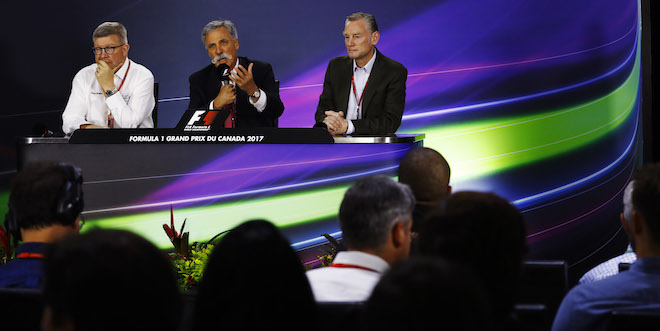
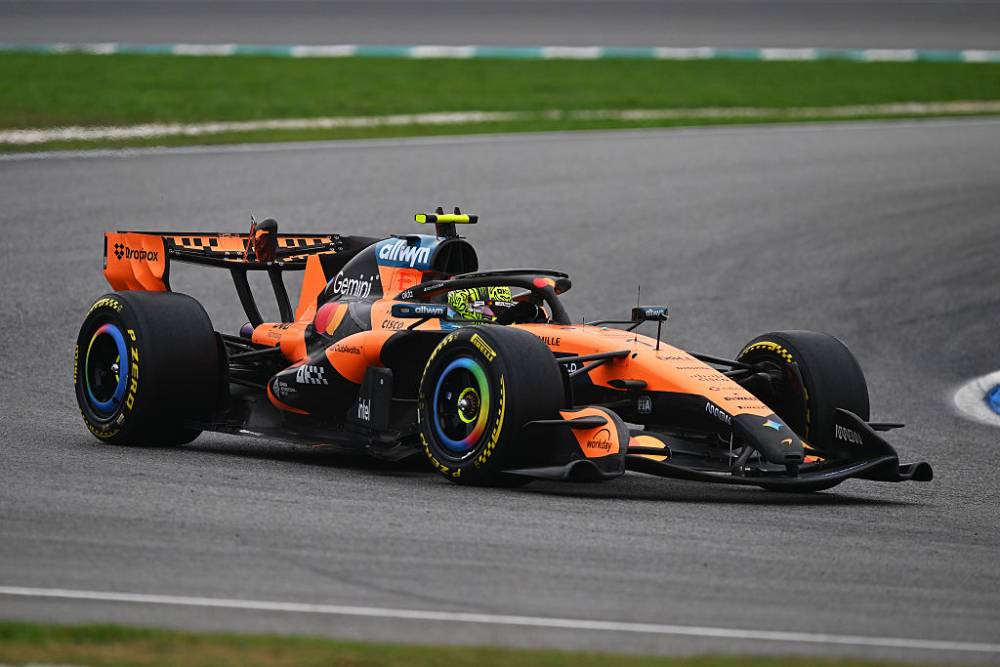
Formula 1's new bosses today sat in front of the media to discuss their first seven races in charge of the sport and their vision for the future. It was a fascinating hour or so, and one which reflected a new positivity within the paddock.
Never in my more than decade and a half in the sport have I felt such overwhelming confidence in Formula 1. This place, once famously described as "The Piranha Club," appears for the first time in a long time to have warm, perfectly swimmable water, and a pool at which everyone is invited to grab their swimsuit and jump in. The previous dog-eat-dog nature of the sport feels as though it has been replaced with a mutual desire for co-operation, in which the notion of the greater good outweighs all other considerations.
That is especially important as we sit here in Canada, at Formula 1's first North American race of the season. This is a market the sport still desperately wants – and needs – to break. But today's message was quite clear. That attempt to make inroads into this market will not be born of an "Americanization" of the sport. Its new bosses are acutely aware that what makes the sport special are its key ingredients, and to deviate too far from any of the things that made it what it is, would be to potentially ruin what they bought, and undermine why they bought it.
There will be no "New Coke" moment for Formula 1. There will be no sudden shift in taste or flavor, no dropping of a time-tested mixture that the bosses think the people want thanks to whatever misguided consultation process they may choose to make.
"The simple fact is that all the time and money and skill poured into consumer research on the new Coca-Cola could not measure or reveal the deep and abiding emotional attachment to original Coca-Cola felt by so many people'" Coca Cola's President Donald Keough stated when the original recipe was reintroduced just months after New Coke hit the shelves.
The lesson has always been clear. Change the packaging. Change how you sell it. But don't change what made it great.
The same is true of keeping the recipe but watering the product down. Such a move would make the end result equally as unpalatable, and with that in mind there was further good news.
There has been much fear in recent days that Liberty's desire to spread the reach of the sport would see the calendar expand swiftly and dramatically to 25 or more races from as soon as 2019. However, the intention seems to be quite the opposite. Rather than adding new races to the calendar, the opinions of Carey and Bratches seemed to be to strengthen the capability of those who currently hold races, or those with a traditional seat at the table, to turn a profit and make the race work for them and their fans. To put "the spectacular back into the spectacle," as Bratches put it.
If there was one thing that Bernie understood very well, having himself run a team and given his life-long involvement in the sport, it was the limitations of what one person can do. There exists for all of us a breaking point, and 20 races seemed to be it. Sure, there was a commercial element to this too, as limiting the number of races meant that exorbitant sums of money could be charged in order to place oneself in this exclusive club. But at the root of it lay Bernie's loyalty and understanding that people had lives outside of this place. That people have families, friends and children. Nativity plays, school concerts, birthday parties, weddings and funerals. Kissing your child goodnight and singing them a song.
Formula 1 races around the world. Its schedule is relentless and exhausting, from one side of the earth to another, crisscrossing time zones and putting the human body through torture. The travel alone is hard work. It isn't cheap, either. But you wouldn't and couldn't do it if you didn't love what you did.
The concept of 25 races thus fills many with horror. If the notion of back-to-backs was dropped, then bills go up. Exhaustion actually increases due to the constant switching of time zones. Far from relieving the pressure, it would increase it. The calendar would extend from January to December, with little time allowed for a summer break. And would only get worse if the calendar increased yet further to 28 or even 30 races.
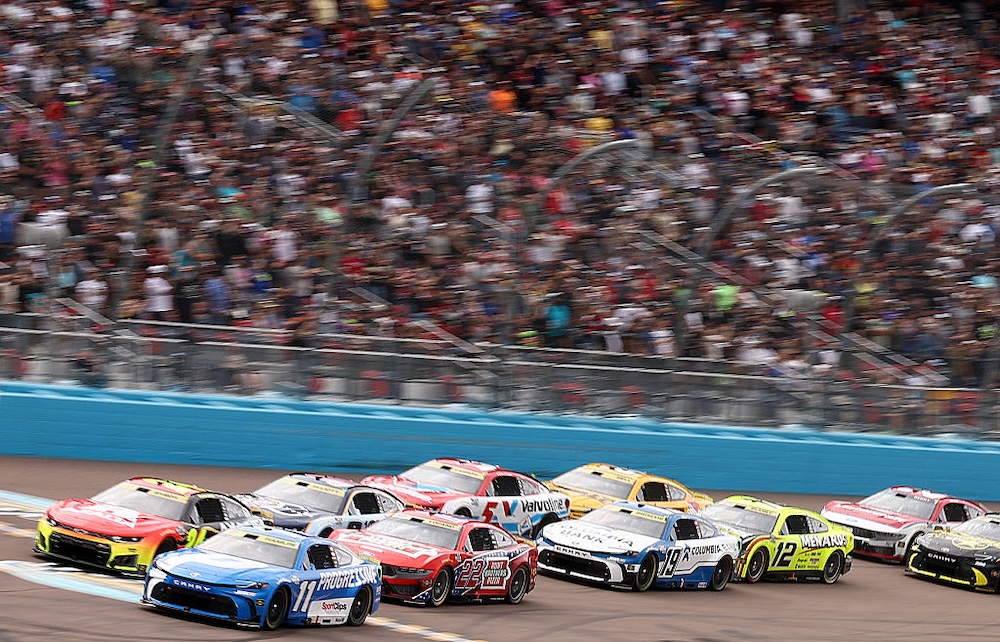
Formula 1 isn't NASCAR. It doesn't race on one continent. Its transportation costs are considerably higher. Yet even NASCAR has arguably watered down its product with its huge calendar, judging from the new ways being devised to keep the excitement of the season's championship fights fresh.
In the short term, at least, that doesn't appear to be on Formula 1's radar. Good news for Fernando Alonso, who voiced many people's concerns when he said he'd quit if the sport ran to 25 races a year. Whether he's still racing in F1 in 2018 is another point entirely, but there were no small number of sage heads nodding along to his words.
The one place where the calendar may yet extend in the short term is the United States. It was Bratches who today told me that for him, New York City is the number one target for a second race in the USA. We've heard rumors of Long Beach, coupled with a long-held belief that another Californian race may be in the pipeline, but it is New York that still holds the allure and would likely fill a slot on the calendar in the coming seasons.
Traditional races in France and Germany return in 2018. Malaysia goes. The Johnny-come-lately's may have to work hard to keep their places on the calendar as Liberty looks to the core principles of what made Formula 1 great in the first place, in order to bolster its appeal, and take it to the markets, such as America, that it deems the most important.
Cost reduction will happen. Engine noise will return. The news is positive.
Because the recipe won't change. Only the packaging.

Latest News
Comments
Comments are disabled until you accept Social Networking Cookies. Update cookie preferences
If the dialog doesn't appear, ad-blockers are often the cause; try disabling yours or see our Social Features Support.