Rear View: Mears' 1992 Indy farewell
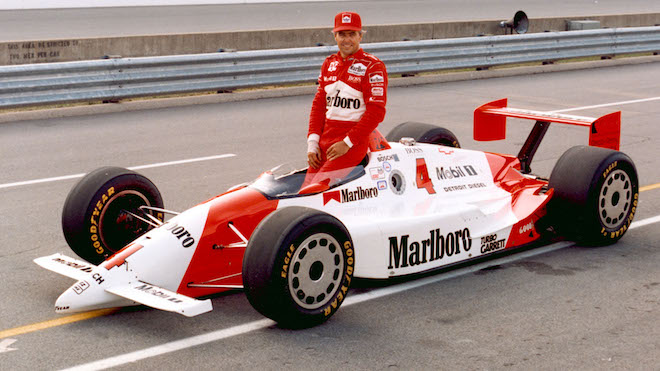
Rick Mears didn't know the 1992 Indy 500 would be his last.
The Rocket, an oval legend seemingly made from the same bricks and asphalt that form the Indianapolis Motor Speedway, walked away from his spiritual home a quarter century ago. And crucially, he did so on his own terms. The circumstances and thought processes behind his decision to retire are nothing less than fascinating.
Mears used his otherworldly physical skills to keep cars dancing on the edge around the Speedway, and outside the car, his innate curiosity pushed Penske Racing through new technological boundaries. With that same analytical mind churning during the latter stages of his career, Mears looked inward – probed and question his motives for wanting to continue after winning four Indy 500s in 12 years.
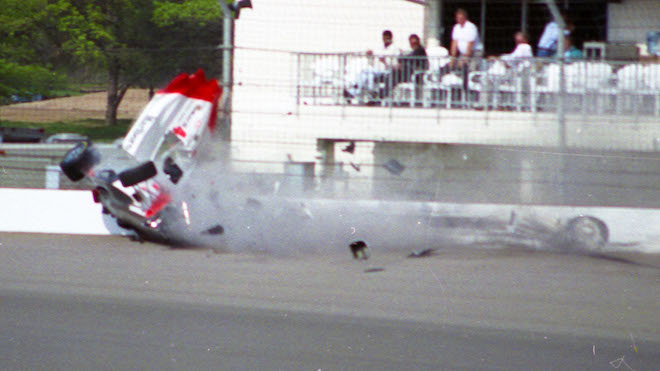
And then 1992 happened. A bone-breaking crash in practice – a definite aberration for Mears at Indy – and another crash in the race would lead the native of Bakersfield, California to reconsider his need for life at the limit.
Twenty-five years after his last 500 start, Mears expressed mixed emotions on the anniversary's arrival.
"It would've been nicer to end on a better note," he said. "But one thing about it, I guess one reason I don't have a lot of feelings one way or the other about it is because at the time I didn't realize it was the last one. And I still hadn't made a decision. I'd been kicking it around a little bit for the past couple of years off and on. It crossed my mind, how much longer am I going to do this? And I'd realize the desire is tapering off so I was keeping tabs on that. That was the first indicator."
If we could rewrite the Rocket's history, he would have left clean in 1991 after winning his fourth 500. That's the perfect memory of Mears – untouchable – as he waged an almighty war with Michael Andretti in the final laps of the race. In every possible way, Indy 1992 simple doesn't fit the Mears narrative, and yet it's where his story ended at the Speedway. Nagging issues with his broken wrist and fractures to his feet from Indy ensured the end was near.
"And then after Indy we were into the season and I had the wrist problems lingering from the crash," he said. We thought it was sprained, but it was actually some torn ligaments and fractures."
If Mears' Indy crash looked frightening, just imagine the scary scene taking place inside the cockpit of his Penske chassis on the Michigan superspeedway with one fully functional arm.
"The car went dead loose and we couldn't fix it, it just kept getting loose," he said of the 220mph oval. "Tightened it up on the [pit] stop and go back out and it would get looser faster and it kept jumping sideways. I would have to turn loose with my right hand to catch it because I couldn't roll my hand under the wheel because of the splint on my wrist.
"And so it was jumping sideways and I was having to turn loose with one hand and catch it with one hand and then come back and grab the wheel again and kept doing that. Finally, I said I'm going to take me and somebody with me. This is not good. And I ended up parking the car."
The hat trick of absurdity was the catalyst for Mears' eventual career change. Being one-handed, while racing on a dangerous oval, all at terrifying speeds, was just too much to accept.
"So I got out of the car and I talked to the doctors and said, we have to do something about the wrists, they're not getting better. We got some X-rays and took a look at it and we saw there was more damage and I was going to have surgery. Now I'm going to miss the next couple of races. That is when I got to thinking about it," he said.
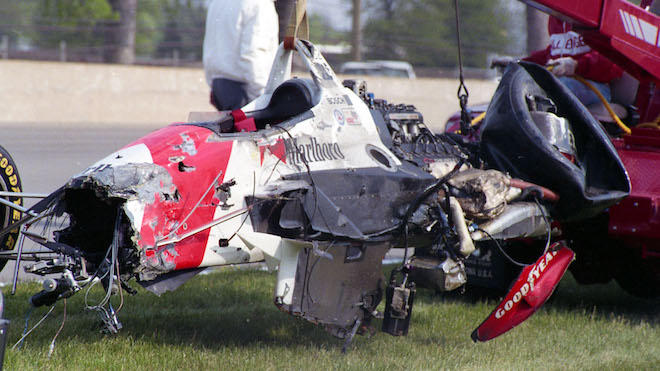
Drivers young and old – especially when they're in their prime – don't dwell on the crashes they've had. It's a defense mechanism. Keeping the bad thoughts at bay keeps the inner fire raging, and at Michigan, Mears found himself caught in a flashback to May and the jarring accident in practice.
"I get out of the car, and then another thought crossed my mind that I thought when I crashed when I got upside down when the water line broke. And I had never thought of it. It went through my mind during a crash and then it went out of my mind. I never really even thought about it again until [Michigan]," he said.
"And I remember when I crashed, I got upside down, I'm sliding along upside down, feet and legs are killing me, I've got fluid running in and I'm starting to breathe shallow so I have a breath in case it ignites, because I can't unbuckle my belt until it comes to a stop. So if it ignites, I'm going to have to hold my breath until I come to a stop and climb out.
"So I'm sliding along there and I'm breathing shallow, stuff coming in, watching the sparks fly in the infield go by and the wall go by and the infield go by and the wall go by, and I remember the thought just flashed through my mind: I don't need this s***. I swear to God. And by the time I got to a stop, it just flashed in my mind: I don't need this s***.
"And then it was on to holding my breath and watching for sparks and hope it doesn't ignite, the fuel, the water. Came to a stop and it didn't light so it was water, I could relax and wait 'til they get to me. And then got out of the car. And I went on through the rest of the month."
It was while recovering from additional surgery to mend the items that caused so many problems at Michigan when Mears knew it was time to step away from his life's passion.
"I was laid up and I woke up one morning I thought, you idiot," he said. "If you're thinking about [the Indy crash], it's past the time. It is past time if you are thinking about it this hard. That's when I decided, you know, it is time to go ... if the desire is not there, you're not going to do the job the way it needs to be done. You won't get the fifth [Indy] win anyway. And that's not fair to the team."
Listen to Mears' extended take on his decision to retire, his feelings about drivers who announce retirement tours, and whether he would have enjoyed hanging on for two more years to drive the all-conquering 1994 Penske PC23-Mercedes-Benz at Indy.

Latest News
Comments
Comments are disabled until you accept Social Networking Cookies. Update cookie preferences
If the dialog doesn't appear, ad-blockers are often the cause; try disabling yours or see our Social Features Support.