Rear View: Mario Andretti's 1987 Indy domination
Take nothing away from Al Unser Sr. for leading the final 18 laps to win the 1987 Indy 500. The popular victory, captured in a year-old chassis that was converted from a show car to compete at Indy, gave Unser (pictured below) admission to the Speedway's most exclusive club.
Joining A.J. Foyt as the only four-time winners of the great race, Unser and Team Penske scored a massive upset on a day where dominance by the Andretti family left the rest of the field playing for second place. Well, at least until fate intervened and recast the outcome.
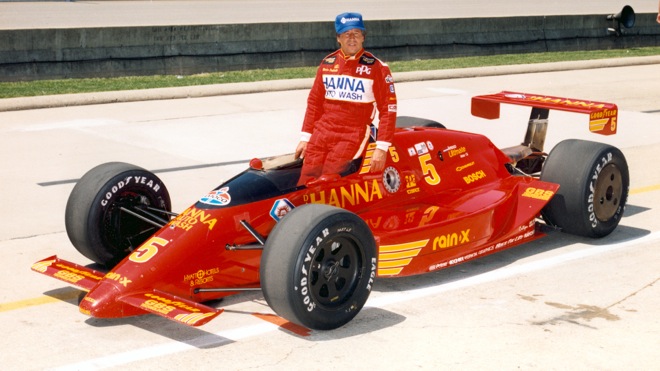
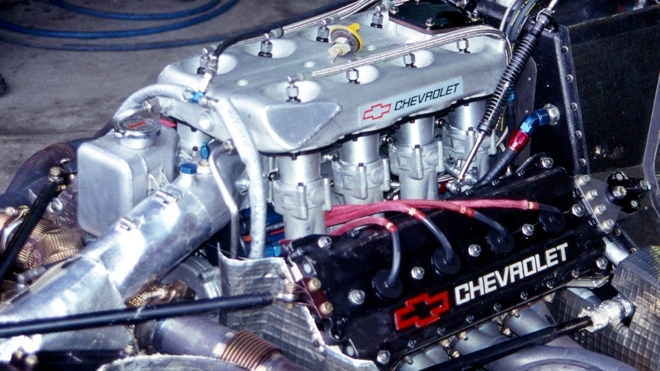
Armed with a Newman/Haas Racing Lola T87/00 and the ready-to-win Chevy Ilmor V8 engine, the patriarch of the Andretti family was confident he had everything required to add a second win to his 1969 Indy 500 triumph.
"What stands out is clearly that we made a decision – and probably I'm the one that is responsible for making the decision – switching to the Ilmor engine," Andretti said. "We were testing in Phoenix, we evaluated the two engines. I had tested a month before with the Cosworth, and we arrived there with the Ilmor and I just loved the way the Ilmor engine worked right through the [rev] range. You could really do a lot of flat footing and the torque would pick up.
"With the Cosworth, everything was at the top and very peaky. I said to Carl [Haas], 'We're going this way.' He said, 'Are you sure? Penske is not even running [it].' I said, 'We are going with it.'"
With the switch from Cosworth to Ilmor, Andretti knew he had an advantage. In hindsight, his race engineer might have been more valuable than the Chevy-badged 2.65-liter V8 turbo (pictured below).
"That was the year that I had Adrian Newey on my car," Andretti said of the Formula 1 world championship-winning chassis designer. "I mean, I never knew how good he was until he wasn't there anymore. He and I just developed a very quick incredible relationship where he could almost read my mind. Here is his forte: He is theoretical and practical. And today's engineers are 99 percent theoretical and one percent practical. And believe me, I hate to say it, but that is a fact.
"Many of them, you take their laptop away from them and they don't even know the color of the car. And he was one of those [types who] would order something on the car and he would watch it. And make sure that every change that was made was exactly the way it was supposed to be."
Andretti had the right team, chassis, engine and engineer to clobber the field of 33, and drove the No. 5 entry to an easy pole. With an average of 215.390 mph, he was more than two mph faster than Bobby Rahal, who started in the middle of the front row. Penske Racing's Rick Mears qualified third, albeit nearly four mph off of Andretti with a 211.497 mph.
The only thing left for Andretti to do was to manage his speedy superiority over 200 laps on race day.
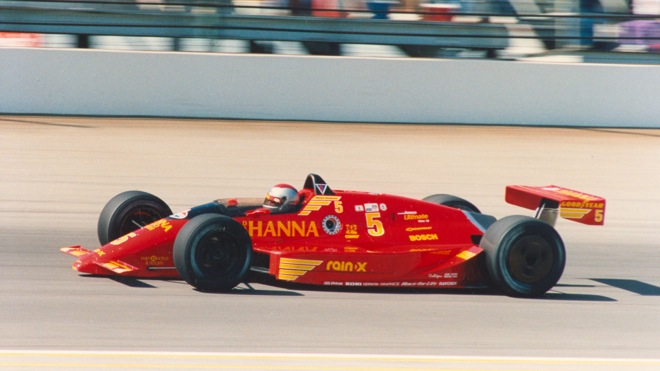
"[Newey] just really understood it. And again, like I said, I couldn't believe it. I never had a car that stayed – it was neutral. Totally neutral the whole race. And I was always worried that it would go loose, it never did."
To say Andretti led the field at the start and pulled away would be a gross mischaracterization of the demolition that followed. Other than briefly handing over the lead during pit stops, the No. 5 Lola-Chevy was untouchable.
Having led three quarters of the race with ease, Andretti decided it was time to dial back the pace, reduce the stress on his engine and drivetrain by shifting into low-revving sixth gear, and count down the laps until the checkered flag.
"[Engine builder] Franz Weiss used to say, 'Keep the revs down, keep the revs down,'" he recalled. "So, we got the six-speed gearbox, and I'm usually running in fifth, obviously, and I figure, oh, man, I'm going to run in sixth [to keep the revs down]."
He had the handling, and he had the power, but it wasn't enough...
"I was cruising and I was running in bad harmonics of the engine," he said. "Can you believe that? That is what took us out."
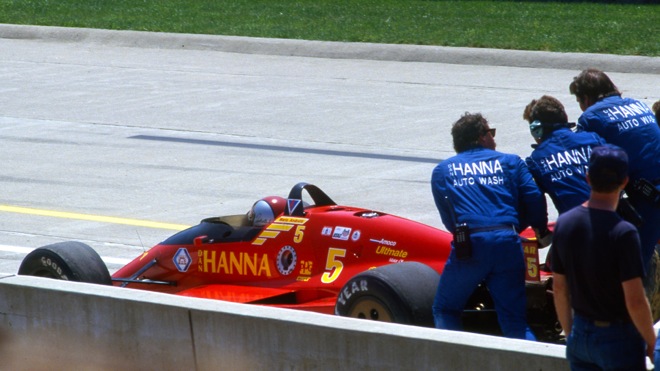
At full song in fifth gear, Andretti was in a race of his own, but the moment he tried to play it smart and take care of his equipment by moving to sixth, the lower revs created harmonics that soon led led to a valvetrain issue inside the Ilmor.
"Tyler Alexander was the team manager at the time for Newman/Haas, and they were so devastated," he said. "They replicated, because even though we had computers on board, they replicated the rev range that I ran in the race, but they [said by running] 600 revs stronger ... I would've made the 500. By running it where I ran it, [the engine] dropped the valve."
Thirty years after authoring one of Indy's most impressive drives, Andretti still gets mad at the thought of losing the race through what he views as a personal error.
"I had some vibration, bad harmonics with the engine, you feel it," he said. "You know what? I'm trying to be [easy with the car] – even Parnelli [Jones] said, 'This kid can break a freaking anvil with a rubber hammer.' I tried to save it and that is what took us out."
Nothing, other than bad luck, was going to catch Mario Andretti in 1987. The one thing he needed most – stiff competition – was the difference between winning and losing.
"If I would've had anyone that was pushing me," he reckons, "I would've run fifth [gear], [and] I would've been fine."
Listen to Marshall Pruett's full interview with Mario via the podcast below.
Presented by:

Latest News
Comments
Comments are disabled until you accept Social Networking Cookies. Update cookie preferences
If the dialog doesn't appear, ad-blockers are often the cause; try disabling yours or see our Social Features Support.