MEDLAND: Why F1 needs races like Russia
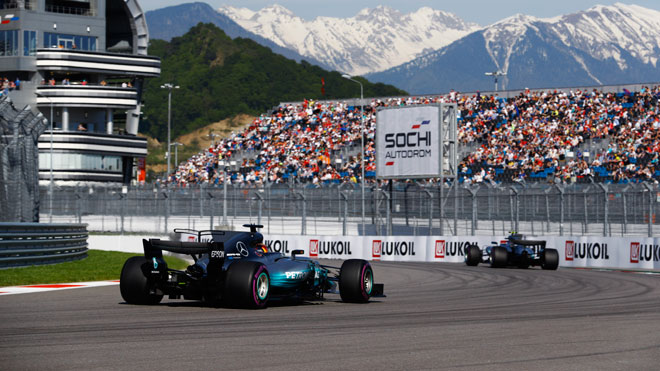
The Russian Grand Prix featured zero on-track overtakes after lap one. None. Not a single one.
OK, that's a slight lie. The Sauber drivers swapped positions on lap five.
While it was a race without passing and little in the way of on-track battles, I'd argue Formula 1 needs races like the Russian Grand Prix.
Something tells me this isn't a piece that is going to get everybody nodding along in agreement, but hear me out...
Firstly, no, I don't think the Russian Grand Prix was a classic, and nor do I think it's a circuit that is particularly challenging for the drivers, or adds much to the sport's spectacle. But that doesn't mean I agree with some of the reaction to Sunday's race.
Afterwards, social media was rippling with declarations that Russia was "the most boring race ever" and "F1 has to change", and while I'm careful not to judge too much based on such platforms – who really tweets "I thought that was OK"? – it's hard to ignore so many comments.
Saying something is boring is fine by me, whether I agree or not, because everyone is entitled to their opinion and will see a race differently. But I'm not a fan of knee-jerk reactions, and criticizing the entire sport for one race that contained little action seems over the top.
What surprises me is the lack of similar reaction in other sports. I follow soccer, cricket and rugby closely over here in the UK, yet a boring 0-0 (I know, we do ties) doesn't lead to calls that the game has to change to increase excitement. Maybe it's labeled boring, yes, but that's exactly why sport is exciting to watch. When you sit down five minutes before it starts, you don't know if you're about to watch an absolute classic or a complete shocker. Sport has no script.
F1 has made a clear step forward. In China and Bahrain, overtaking maneuvers were difficult but possible, exactly as it should be. But you'd be forgiven for reading the reaction to the Russian Grand Prix as a first-timer and believing the sport is doomed. (Admittedly, some press coverage is also to blame, as scaremongering after Australia went too far the other way post-Shanghai).
Listening to fans is an important aspect when it comes to sport, because they're ultimately the people who make it sustainable. But I'd say be careful what you wish for.
Over the past few years there have been numerous fan surveys aimed at gauging what is to be deemed as important in the sport. The majority have delivered similar results: Closer racing, drivers being allowed to push to the limit, and increasing the noise level.
Pirelli was previously criticized for providing tires that drivers couldn't lean on and led to huge pace discrepancies due to degradation, making overtaking far too easy. So it produces harder tires with less degradation – allowing drivers to push flat out – and suddenly Lewis Hamilton is complaining one-stop races are boring and there should be a minimum of two, even though the majority of fans don't want races won in the pits.
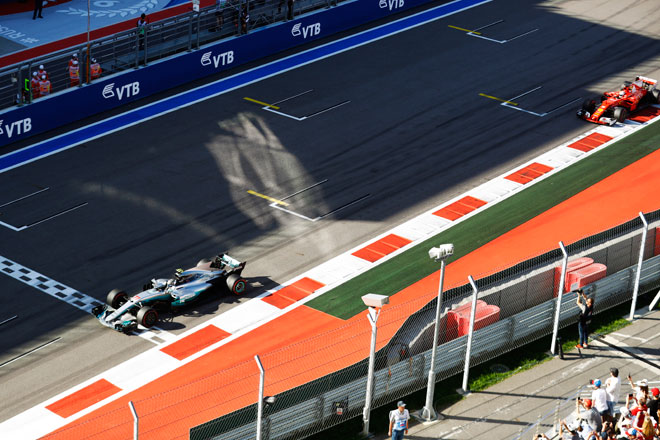
In my opinion, it was the tension of the lead battle that made the race fascinating – or perhaps kept you awake if you were really struggling with it. Valtteri Bottas chasing his first F1 victory, under pressure from a four-time world champion in a different car who had been closing in over the final stint. With 15 laps remaining, the gap was three seconds, and with 10 to go it was down to 1.5s. On three occasions, Vettel crossed the finish line within a second of the leader. It was two drivers pushing hard and – as Bottas showed with his lock-up – permanently on the verge of an error.
Perhaps you're convinced that the fight at the front was good enough, but the lack of action elsewhere was a problem. The midfield this year is actually extremely close, with any one of Force India, Williams, Renault, Toro Rosso and Haas seemingly able to fight for the title of best of the rest at certain circuits. But when you get a close fight, the difference between each car isn't big enough to promote side-by-side racing.
And that's not specific to F1. An advantage of 0.2s per lap is going to make overtaking difficult no matter the category. As long as you attempt to set a grid with the fastest cars at the front and the slowest cars at the back, there is always a greater chance of a processional race. These are the greatest drivers in the world; in broader terms, the differences between them are fractional.
So when the regulations result in closely matched teams, that doesn't necessarily translate into good racing. Closer racing, perhaps – Force India's Esteban Ocon and Renault's Nico Hulkenberg were line astern at the end of the race too – but the definition of whether that is good or not depends on the individual.
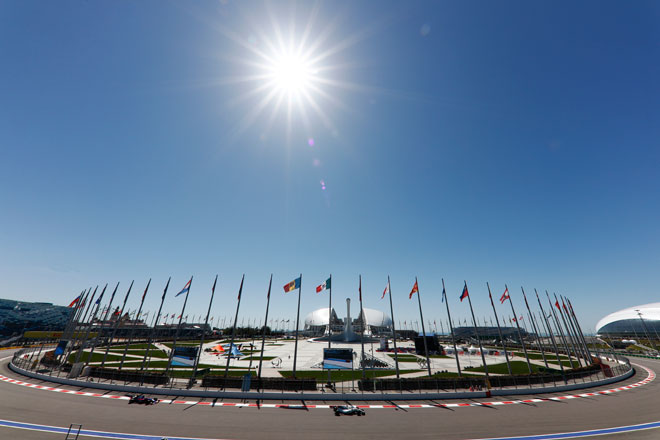
But that type of circuit is still important to F1, because the pressure on the start can then provide a pre-race underdog with a chance of stealing a much higher position and holding on to it. Remember Nico Rosberg locking up at Turn 1, having to pit and then climb through the field to second place at Sochi in 2014? Even with the Mercedes pace advantage, he'd find such a recovery so much harder in these cars, and would therefore be punished for his mistake. Isn't that a good thing?
A much simpler argument to make is the way we view races relative to each other. Dull races/events/games are needed to make us appreciate the better ones, as is the case in any sport. If every grand prix was a "classic," then by default none of them would be, and you'd be far less excited because you'd know what's coming.
With 20 circuits on the calendar, it is virtually impossible to create a formula where great races will be delivered on every track. For years, Hungary provided boring races with little overtaking, but has been the scene of plenty of drama more recently. Valencia was often dull, and then came 2012. Different venues provide different types of races, and therefore the potential for a less predictable result.
So, yes, Russia was a boring race, and tends to be so, but aside from dropping the venue, should the sport look to change as a result? No. F1 has made a big step in the right direction this year and should continue on this path.
Barcelona is unlikely to deliver much in the way of wheel-to-wheel action either, but be honest, can you say with any degree of certainty who is going to win next weekend? And isn't that better than in recent years?
Presented by:


Latest News
Comments
Comments are disabled until you accept Social Networking Cookies. Update cookie preferences
If the dialog doesn't appear, ad-blockers are often the cause; try disabling yours or see our Social Features Support.