PWC discussing change to GT factory teams
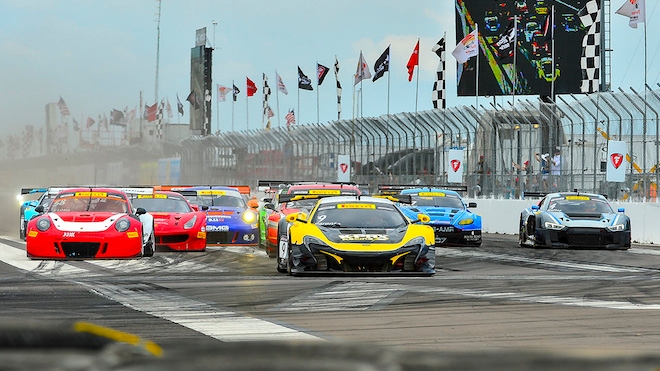
The practice of allowing full-fledged factory teams to compete against privateers in the Pirelli World Challenge series' GT class could be changing. Although PWC took the lead on introducing the popular, customer-driven GT3 category to North America, new safeguards are being discussed to ensure the wealthy factories do not turn PWC's privateers into second-class citizens.
"It is a sensitive area because the class was formed as a customer class," PWC Vice President of Competition and Operations Marcus Haselgrove told RACER. "I always go back to the Penske Porsche RS Spyder P2 situation because before that car appeared, P2 was privateer. After that car appeared, if you didn't have factory support, you were going to be last. [We] don't want this to happen with the GT3 cars."
PWC CEO Greg Gill is keen to establish an environment where every entrant has equal access to the GT3 cars being raced in the GT category, which has not always been the case in its headlining class. Although the exact mechanisms to make it happen are in the early stages of development, it would appear legacy factory programs from Acura and Cadillac could be safe provided their cars are made available for purchase by privateers.
"Our position has been that we want customer-based racing, customer car purchases, not manufacturer-based programs, and we've made this clear to our board," Gill said. "We will honor where there's been existing [factory] relationships in place and existing areas that already have agreements."
Looking to the future, Gill would expect new factory-led efforts to join PWC GT with a detailed plan to quickly develop its cars and then step back to let interested privateers buy and race its GT3 products, or remove the factory involvement with a team like RealTime Racing that fields Acura NSX GT3s on behalf of the manufacturer.
"For instance, we are not running with Lexus at this point in time unless it was a customer-based racing program, but we encourage them to run with us," he added. "On the same token, Acura and [Honda Performance Development] were very clear, from day one, that after a year or two of development, it would become a customer-based program and they would then be moving out."
According to Haselgrove, the group discussion is leaning toward leading manufacturers to enter more formal agreements where customers are the driving force behind any entry into GT3 competition.
"One of the things we are looking at with manufacturers is to increase the guidelines on what constitutes a manufacturer in GT3," he said. "So they would have to give the FIA a basic three-year business plan of how they expect to support the series and sales, and prove that they're going to support the paddock."
It's too early to speculate what the PWC GT class will look like by the end of the decade, or whether the legacy factory programs will continue uninterrupted. What is clear, though, is the days of manufacturers freely entering the series and bringing the full might of factory programs to bear will not happen without strict parameters created by PWC.
"We will obviously be mindful of commitments people have made over the years and their time involved in the series, but at the end of the day, GT3 racing is to be customer based," Gill said. "That is what we want to do with GT3. That is the spirit of the original class definition."

Latest News
Comments
Comments are disabled until you accept Social Networking Cookies. Update cookie preferences
If the dialog doesn't appear, ad-blockers are often the cause; try disabling yours or see our Social Features Support.