RACER@25: Issue No. 77, September 1998 - The Man who Saved Ferrari
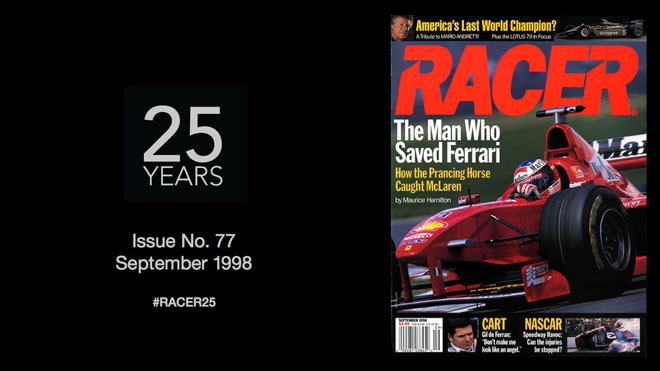
This is the eighth installment in RACER’s ongoing 25th anniversary celebration during which we share the 25 most important issues from our first quarter century.
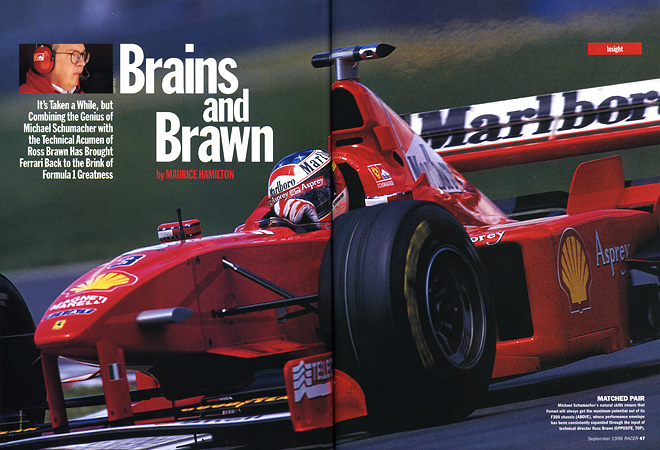
The trouble with being the most revered automotive brand (and one of the world's most revered brands, period) is that your greatness is not just celebrated, it's expected. For those associated with Scuderia Ferrari, that means rock-star adulation when you're winning and relentless commercial pressure when you're not. The joy and relief clear on the faces of the team following Sebastian Vettel's victory in Australia on Sunday was clear evidence of that.
And that was for a Ferrari team that has gone a "mere" 10 years without a championship. In 1998, the passionate Tifosi were wringing their hands over a 19-year title-less streak in F1.
But times were changing. The arrival of world champion Michael Schumacher and the director of his title-winning efforts at Benetton-Renault, Ross Brawn, for 1996 had turned the red cars from mediocrities into contenders, if not quite on the same level as the Williams-Renaults, and the following year Schumacher had fought Williams' Jacques Villeneuve to the last race before their controversial collision ended his hopes.
Another obstacle to Ferrari's resurgence had arisen in 1998 when the McLaren-Mercedes team emerged as the leading constructor out of the gate, but Schumacher had swept to three straight wins at midseason and, as RACER's September issue was in preparation, all was looking promising for the Scuderia.
So, was Schumacher "The Man Who Saved Ferrari"? According to Maurice Hamilton's cover story, team director Brawn actually deserved as much credit. That theory would gain more credence the following year when an injury forced Schumacher to the sidelines and his number two, Eddie Irvine, emerged as a title threat for the house that Brawn built.
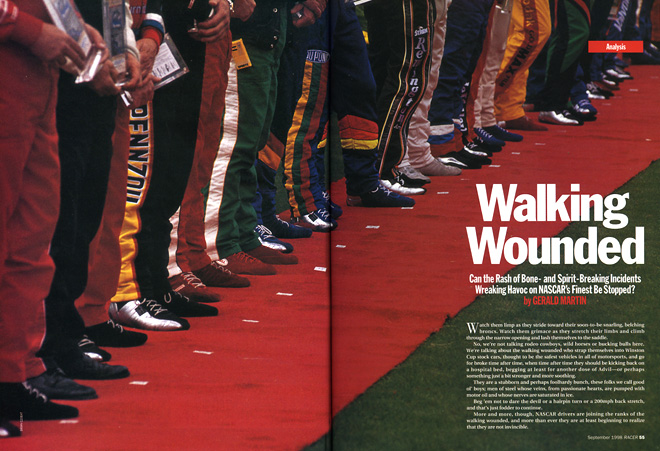
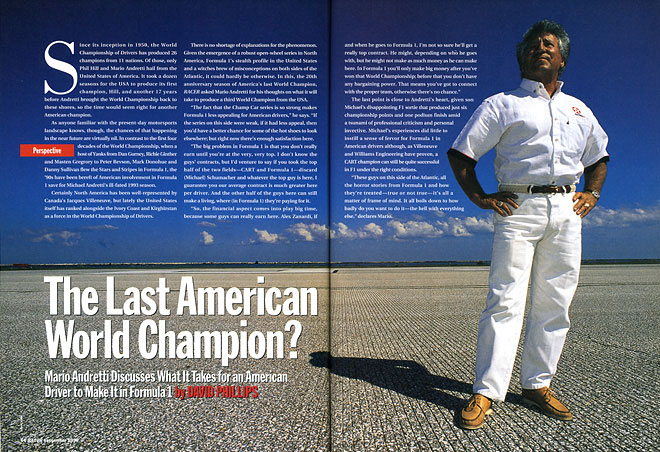
While the USA still has no F1 drivers of its own to cheer for two decades later, the re-establishment of the U.S. Grand Prix and an American-owned team has significantly raised the profile of the sport here, a vital first step. The influence of the sport's new American-based ownership could also change the paradigm.
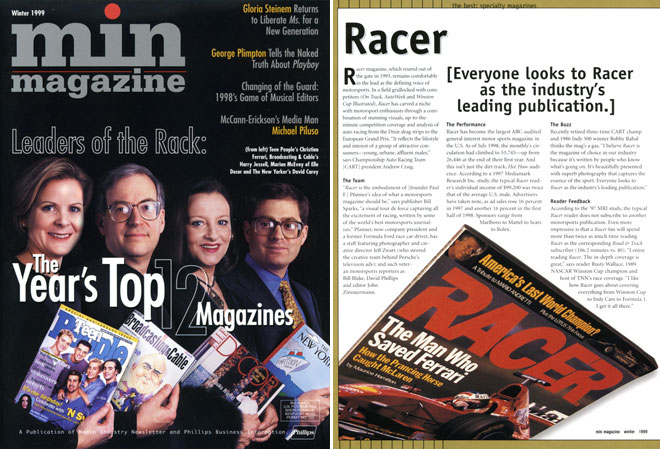
Times were changing on the media front, too. RACER's innovative editorial approach and cutting-edge design were increasingly being noticed beyond the ranks of traditional motorsports media. While working on the July 1998 issue, we learned that RACER had been selected as one of the year's top 12 magazines by min magazine – magazine media's trusted source for consumer and B2B brands – alongside the likes of Elle, The New Yorker and ESPN The Magazine. It was another encouraging sign of mainstream affirmation of RACER's mission that a "racing magazine" could go far beyond tradtional definitions of the category.
Also, by this time Haymarket Publishing had reached out to RACER to inquire about buying the majority of the company and a conversation began that would run until January 2001 before it became reality.

Latest News
Comments
Comments are disabled until you accept Social Networking Cookies. Update cookie preferences
If the dialog doesn't appear, ad-blockers are often the cause; try disabling yours or see our Social Features Support.