Solution in works for IndyCar brake concerns
High brake caliper temperatures encountered during pre-season road course testing have created anxiety and concerns over driver safety leading into this weekend's IndyCar opener at St. Petersburg. The most recent paddock-wide test, held at Sebring Feb. 28-March 1, exposed more cooling issues that have led to a new call for the series to allow brake cooling changes prior to the opening practice session on Friday.
On top of general brake overheating reported by many Honda teams and routine brake lockups experienced by Chevy and Honda drivers at Sebring, at least one Honda team managed to exceed the temperature threshold for the rear brake calipers, which led to rear caliper piston seal failure. Fortunately, the problem was caught before a total loss of braking was experienced.
The cause of the issue stems from an expressed need – at least by Honda – for more cooling to the revised brake package implemented by IndyCar during the offseason.
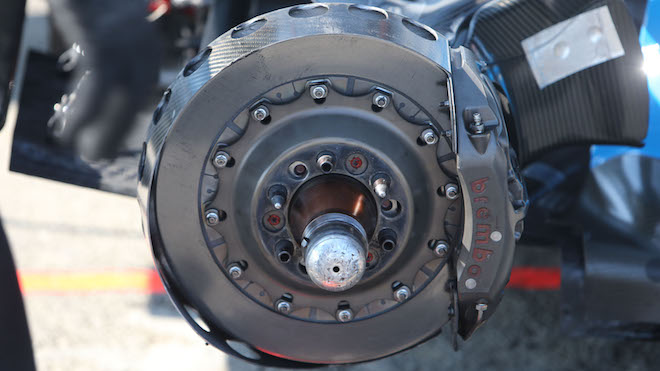
Following years of complaints from teams regarding the consistency and longevity of the spec carbon fiber discs provided by Brembo, IndyCar announced a move to Performance Friction Corporation discs and pads for 2017. As part of the gradual introduction of PFC components, Brembo's brake calipers have been retained this year. New calipers from PFC will be fitted in 2018.
Although many teams have expressed greater satisfaction with the consistency of PFC's discs and pads, a steep rise in heat generation by the new friction material has also been reported by numerous teams. While most of the complaints have come from Honda-powered entrants, it hasn't been limited to the Japanese brand; at least one Chevy team is known to have encountered high temperature issues.
Compared to Brembo's former friction material, PFC's discs and pads are said to create bigger heat spikes under hard braking, and while it's believed the PFC discs/pads dispense that extreme heat at a faster rate, the same cannot be said for Brembo's calipers. With more heat being transferred into (and retained by) the Brembo calipers, the aforementioned piston seal problems – from sticking to outright failure – have been encountered.
As many teams have described, the problem is not so much with the PFC friction material, but rather the mismatched brake cooling requirements found to exist between the Brembo and PFC products. With IndyCar's move to custom aero kits made by Chevy and Honda in 2015, the brake ducting design work completed by both brands was sized to work with the cooling needs of the Brembo calipers and discs/pads.
In light of the series' aero kit freeze for 2017, Chevy and Honda teams have been required to use their Brembo-specific brake ducts, which worked as expected with the cooler Brembo discs and pads. Due to the aero freeze, IndyCar is said to have denied requests made late in 2016 to modify the brake ducts to increase overall cooling to suit the PFCs.
With different approaches taken to rear brake duct designs on their respective road course/short oval aero kits, Chevy's rear brake ducts are said to feed more air than the Honda units, which could explain why Honda teams have continued to press the series for more freedom to fix the caliper overheating problems.
Some have suggested the Chevy teams, despite seeing lower temperatures, could be close to reaching the same threshold during longer runs, and especially after sitting idle for pit stops where instant heat soak occurs.
According to Honda Performance Development CEO Art St. Cyr to IndyCar, a new request has been made by Honda to unfreeze the front and rear brake ducts to allow modifications that capture and feed more air to the brakes.
"Anything having to do with brakes is serious," he told RACER from the paddock at St. Pete. "It's fair to say the brake ducts that were designed for a different brake package are not optimal for the new package, at least with our aero kit. I know my guys are talking to IndyCar and we have proposed changes to the front and rear ducts.
"The front ducts we use are actually made by Dallara, so we're proposing to modify theirs and ours to address this problem. My understanding is IndyCar has tentatively accepted those changes, but we are waiting for final approval at this point."
Separate from the ducting change request, two small allowances were already granted by IndyCar that will be tried on Friday. Teams will be permitted to place titanium heat shields between the PFC pads and Brembo pistons to lower heat transfer into the calipers, and a separate shield on the face of the calipers has been fitted.
In anticipation of IndyCar's approval to make brake duct modifications, Honda has manufactured and supplied pieces to its teams that can be installed in the paddock before Friday arrives.
A meeting between IndyCar's technical department and representatives from HPD Thursday afternoon at St. Pete is expected to produce a positive conclusion to the brake cooling dilemma, but the success of the solution(s) won't be known until cars hit the track tomorrow morning.
Presented by:


Latest News

Comments
Comments are disabled until you accept Social Networking Cookies. Update cookie preferences
If the dialog doesn't appear, ad-blockers are often the cause; try disabling yours or see our Social Features Support.