
INSIGHT: Hunter-Reay's case against Paul Gentilozzi
delivered on Jan. 31, 2017
in the lawsuit filed by Ryan Hunter-Reay against Paul Gentilozzi and his racing teams reveal a complex case that took a decade to resolve.And with Gentilozzi's efforts to overturn the judge's $3.3 million award in favor of Hunter-Reay through the driver's Ryan Racing, LLC business, or to possibly have a new trial commence, the dispute could continue.
In reading through Judge Bell's writings from his decision, the origins of the first lawsuit filed by Hunter-Reay's lawyers in the state of Michigan in 2007, and continuing with the more recent federal lawsuit filed in the same state, the reasons for the lengthy court case are made clear.
In 2005, with a full-season contract to drive for Gentilozzi's Rocketsports Champ Car team that contained a "no-cut" provision, Hunter-Reay was indeed cut from the team – fired with two rounds left to run. He was replaced by a driver who is said to have brought $150,000 to pilot Hunter-Reay's former car. The contract also included a section prohibiting the team from making disparaging comments about its former driver.
The state case was filed on behalf of Ryan Racing against Gentilozzi's Rocketsports team in 2007. It aimed to prove both breaches of contract and to seek financial damages. The case was resolved through arbitration on August 18, 2009, when Arbitrator Theodore Cheslak ordered Rocketsports to pay Ryan Racing $2,720,980.
The next legal procedure for Ryan Racing involved having the arbitration order confirmed by the state. According to Judge Bell's written findings from Jan. 31, the maneuver was successfully completed, but the full payment from Rocketsports was not forthcoming.
"The Ingham County Circuit Court confirmed the award in a judgment issued in September 2009," he wrote. "Thus far, Plaintiff (Ryan Racing) has collected approximately $230 of that judgment."
While the arbitration was ongoing in 2009, Bell says Gentilozzi (pictured) was in the process of shutting down the company being sued by Ryan Racing to replace it with RSR Racing.
"In April 2009, while the arbitration proceedings were still ongoing, Gentilozzi formed a new corporate entity for his racing business, RSR," he wrote. "Gentilozzi is the majority owner and manager of RSR. Plaintiff submitted its closing brief to the arbitrator on or about July 17, 2009. On July 31, 2009, eighteen days before the arbitration award issued against Rocketsports, Rocketsports transferred substantially all of its assets to RSR."
Bell added "Thereafter, Rocketsports effectively ceased operations."
Powerless to acquire the state-approved $2.7 million award from Rocketsports, Ryan Racing's lawyers filed a new federal lawsuit in 2012 to pursue the money from Gentilozzi's new racing team and, for the first time, from Gentilozzi directly.
"Because Plaintiff was unable to recover any significant portion of the judgment from Rocketsports, Plaintiff filed this action in 2012 to collect on the judgment from Gentilozzi, RSR, and the other Defendants, Gentilozzi's real estate entities," Bell wrote.
Four claims were made by Ryan Racing in the federal case. Only two of those claims, the third and fourth items listed by Bell, were upheld in the Jan. 31 decision. The first two were dismissed.
"Plaintiff asserts four claims in its complaint: (1) fraudulent transfer under the Michigan Uniform Fraudulent Transfer Act ("UFTA"), Mich. Comp. Laws § 566.31; (2) conspiracy to commit a fraudulent conveyance; (3) successor liability against RSR; and (4) piercing the corporate veil of Rocketsports against Gentilozzi," Bell wrote.
Extensive research and documentation was completed by the federal court to ascertain whether the reasons for closing Rocketsports and forming RSR Racing were unrelated to the state case and $2.7 million award to Ryan Racing, or if Rocketsports was closed in an effort to subvert Ryan Racing's ability to collect on the sizeable debt.
Determining whether RSR Racing was (or was not) a carbon copy of Rocketsports, and could therefore be held liable for paying the $2.7 million, consumes a significant amount of the 33-page federal court decision and findings from Jan. 31. Judge Bell eventually arrived at a conclusive answer to the core question.
"RSR maintained a continuity of management, personnel, physical location, assets, and the general business operations of Rocketsports," he wrote, and added "The two companies also used the same office equipment, transporters, tractors, and tractor trailers."
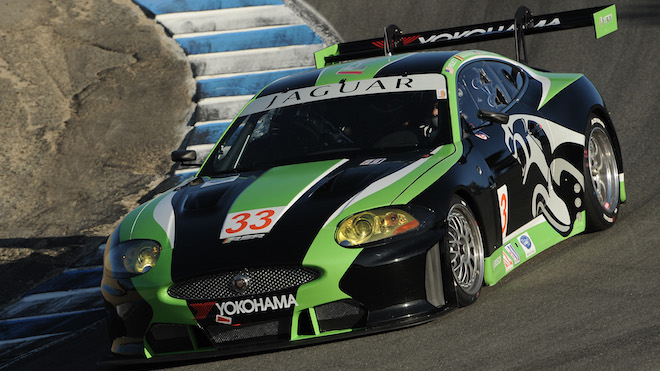
Despite claims that the two companies were unrelated, the judge cited a press release from 2009 where the team used the names "Rocketsports" and "RSR" while announcing a new sports car program with auto manufacturer Jaguar.
"Finally, RSR held itself out as a continuation of Rocketsports," Bell wrote. "A press release issued by RSR on April 17, 2009, two days after its formation, was titled 'Rocketsports enters ALMS with XKR Jaguar.' The release referred to RSR as 'Rocketsports Racing, Inc.,' and explained that it was 'a new entity, formed to build and race Jaguar XKRs in the [American Le Mans Series (ALMS)].' The press release expressly tied RSR to Rocketsports, and even used the two names interchangeably."
In a second citation, the judge found "In a video filmed on the day of the press release, Gentilozzi stated that 'We've been racing Jaguars since 2000. It's been a big part of RSR's culture.' RSR was a two-day old company at the time."
And in a third citation, the judge wrote "Consequently, RSR can be readily understood as an abbreviation for RocketSports Racing, as is suggested by the RSR logo on the promotional materials released on April 17, 2009. In short, the factors weigh in favor of a finding that RSR is liable as a successor to Rocketsports because it is a mere continuation of that company."
"Because Rocketsports consistently relied upon loans from Gentilozzi to fund its business, and because it was insolvent, it was able to pick and choose which creditors to pay," he wrote. "Gentilozzi could breach the contract with Plaintiff knowing that Plaintiff would have no meaningful recourse: Gentilozzi could abandon Rocketsports at any time and leave it uncollectible, which is what he did. At the same time, Gentilozzi personally benefitted from Rocketsports' losses because he used them to offset his tax liability for the income he received from his other businesses."
Based on the court's findings from its financial investigation into Gentilozzi and his businesses, a sum greater than the $2.7 million owed to Ryan Racing was also found to have changed hands between Gentilozzi and Rocketsports. It suggests the ability to settle the original lawsuit was within Gentilozzi's means.
"From 2005 to 2009, Gentilozzi and his real estate entities loaned $7,689,789 to Rocketsports, and Rocketsports transferred $5,462,283 back to them," Bell wrote. "(Similarly, in 2009 and 2010, Gentilozzi and his real estate entities loaned $2,593,503 to RSR, and RSR transferred $2,577,164 back to them.) And continued to state 'Whenever Gentilozzi asked for his money back from Rocketsports, Rocketsports paid it. Other creditors were not as fortunate.'"
Another entry by the judge suggests RSR's profits on income from 2009-11, earned in a partnership with Jaguar to run a factory ALMS GT2 program, were also capable of being used to settle some or all of the debt.
"RSR received payments totaling almost $9 million from Jaguar under that contract, but these payments were made to cover RSR's expenses in order to run a Jaguar-sponsored team in the ALMS," he wrote.
With Judge Bell's written statements connecting Rocketsports and RSR together as a continuation of the same business, and his singling out of Gentilozzi as the person orchestrating those business moves, the federal court ordered an amended sum of $3.3 million – the original $2.7 million plus interest – to be paid with immediacy to Ryan Racing as a result of his Jan. 31 ruling.
"The Court will enter judgment in favor of Plaintiff against Gentilozzi and RSR under Counts 3 and 4 of the complaint (piercing the corporate veil and successor liability)," he wrote. "The Court will enter a judgment of no cause of action as to Counts 1 and 2 of the complaint (fraudulent transfer and conspiracy to commit fraud). Because the Court finds in favor of Plaintiff, Defendants' motion for involuntary dismissal will be denied.
"In addition, the Court will deny the parties' objections to the deposition designations as moot, because the testimony that is the subject of those objections was not relied upon by the Court in its decision. An order and judgment will be entered consistent with this Opinion."
Unlike the original lawsuit that saw just $230 paid from the $2.7 million awarded by the arbitrator, Judge Bell's federal decision has been met with swift action to recover the $3.3 million now owed to Ryan Racing.
Although motions to delay the Jan. 31 decision were filed, they were dismissed last week. And with the nonpayment of the $3.3 million to Ryan Racing, two federal seizure writs were filed approximately at the same time last week against Gentilozzi and RSR Racing.
In the personal order against Gentilozzi, the writ states "The property to be seized under this writ is all personal property owned by Paul Gentilozzi, including without limitation any interest in, and shares of stock in, Gentilozzi Real Estate and Management Company, Inc. d/b/a Gentilozzi Real Estate, Inc."
Gentilozzi Real Estate, as referenced in Judge Bell's findings, is the primary business that has lent millions of dollars to Gentilozzi's various racing teams.
The seizure writ against RSR Racing does not include the same specifics for items to be taken. U.S. marshals descended upon the team's base in Michigan on Monday to start the asset seizures, and according to one source, a variety of vehicles, among other possessions, were removed by the marshals.
In both writs, two major options exist for RSR Racing to recoup the $3.3 million. The seized property can be given to Ryan Racing, or the seized items can be sold and the proceeds given to Hunter-Reay's company. Ryan Racing's lawyers are also pursuing wage garnishment for Gentilozzi to expedite the full payment of Judge Bell's award.
The seizure writ for Gentilozzi encompasses his personal belongings and Gentilozzi Real Estate (GRE) where he holds "100% interest in GRE" as listed in the Jan. 31 ruling. Gentilozzi only holds "a 60% interest in RSR," which prevents the courts – and U.S. marshals – from taking the entire racing business. Gentilozzi's sons John and Tony, who own the other 40 percent of RSR, are not believed to be personally named as defendants in any of the documents filed on behalf of Ryan Racing.
As a result, and as noted in a response provided by Gentilozzi's "3GT Racing" team, which was formed to run the new factory Lexus IMSA GT Daytona program (pictured), the asset seizures will not impact 3GT's ability to field the pair of RC F GT3s in the WeatherTech SportsCar Championship.
The entire affair, stemming from firing Hunter-Reay and taking an alleged payment of $150,000 to run a different driver in 2005, has been met with a costly $3.3 million penalty. In hindsight, keeping Hunter-Reay for the last two races of his contract would have been a bargain.
As Hunter-Reay told RACER in the original news story, "The unfortunate thing is how long this has dragged on."
Provided Gentilozzi's efforts to have Judge Bell's decision overturned (or a new trial opened) are unsuccessful, a lawsuit that began the same year the iPhone was introduced will be put to rest.

Latest News
Comments
Comments are disabled until you accept Social Networking Cookies. Update cookie preferences
If the dialog doesn't appear, ad-blockers are often the cause; try disabling yours or see our Social Features Support.
