NASCAR settles suit with fan hurt in 2013 Daytona Xfinity crash
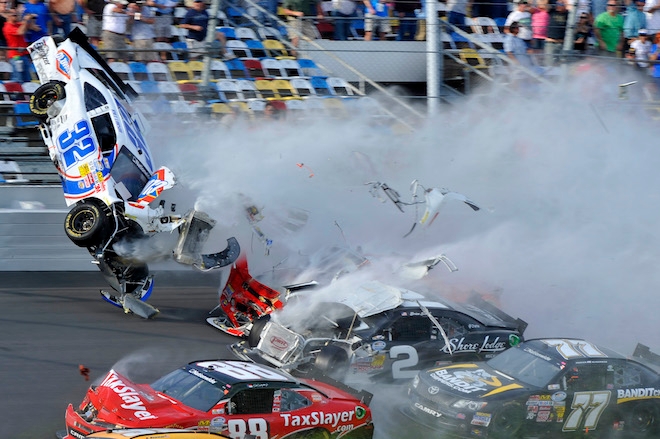
NASCAR and Daytona International Speedway have settled a lawsuit with a fan who suffered serious injuries during the Feb. 2013 Xfinity Series race, when a huge crash at the checkered flag sent Kyle Larson into the crossover gate of the catchfence and caused debris to fly into the stands.
Allen Davis, 41, of Wilkes-Barre, Pennsylvania, "was struck in the head by a heavy piece of debris and suffered a catastrophic, traumatic brain injury," according to the lawsuit. The crash during the DRIVE4COPD 300 injured more than 30 people in the grandstands.
Davis' attorney Dan Iracki confirmed to ESPN that the sides have agreed to a confidential settlement. He said Davis suffered permanent brain damage and will need medical care for the rest of his life.
"He is actively engaged with a rehab hospital and he has a full-time health-care advocate, and he's trying to make the best of his situation," Iracki told ESPN. "This recovery is going to change [Davis'] life – it will help in making sure he is taken care of the rest of his life."
The settlement was filed prior to a planned deposition of six drivers – Larson, Kyle Busch, Dale Earnhardt Jr., Denny Hamlin, Ryan Newman and Austin Dillon. NASCAR and International Speedway Corp. had been denied a postponement of the depositions. Iracki told ESPN he thought it possible that the upcoming depositions – no longer necessary – could have been one factor in the agreement on a settlement.
Davis' lawsuit was the final pending suit, but the statute of limitations for filing a claim doesn't expire until Feb. 22.
NASCAR conducted a crash analysis but did not make its results public. ESPN reports Daytona and ISC refused to give the report to Iracki, citing it as a work document and claiming in an affidavit that the report, along with other investigations by outside experts, were "legal advice" and therefore covered by attorney-client privilege.
"A suit was necessary to promote safety ... not just to figure out what happened and how it happened and why it happened, but to make sure that every NASCAR fan, woman, child is protected," Iracki said. "Safety was paramount, and it was the catalyst to change."

Latest News
Comments
Comments are disabled until you accept Social Networking Cookies. Update cookie preferences
If the dialog doesn't appear, ad-blockers are often the cause; try disabling yours or see our Social Features Support.