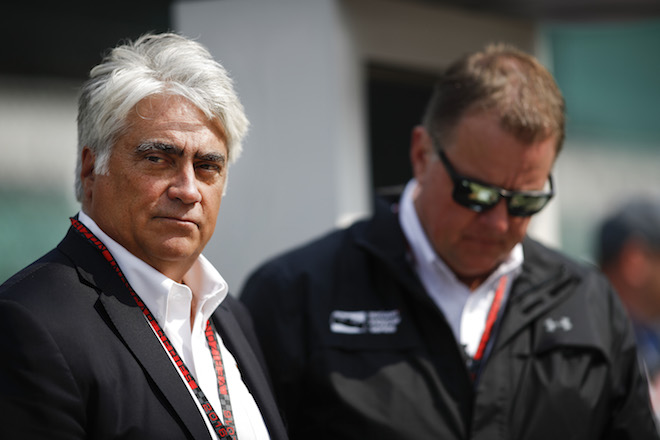
INTERVIEW: Mark Miles on the state of IndyCar
As Mark Miles himself notes, it has been a quiet off-season by IndyCar's recent standards. The calendar is settled; the tech rules are frozen; the 101st Running doesn't raise the temperature in quite the same way as the 100th.
But behind the scenes, IndyCar's brass are spinning as many plates as ever. RACER.com spoke to the Hulman & Company CEO about what IndyCar learned from 2016, the lessons from Boston, and how the series can make itself more viable for team owners.
What were the main takeaways from the 2016 season?
MARK MILES: I kind of organize my thoughts into on the track, and off the track. On the track, if you think back to how last year started, there were all sorts of questions about the competitiveness of the aero kits, and safety with flying parts. And I think the year before wasn't a great year for our officiating. So I feel like Jay Frye and his team had an excellent year.
The racing was very competitive, the championship went down to final race yet again, and Honda and Chevy had a degree of parity that I believe neither of them would have predicted late in 2015. So I think the decisions that our team made related to regulating aero kits worked really well – one [manufacturer] won the 500, the other won the championship.
And then on the safety stuff, we implemented a number of moves, mostly related to tethering parts, that thankfully got us through the year in good shape from a safety perspective. So I think we did really well from a safety perspective.
Off the track, probably the biggest metric, the one that we watch very closely along with social media, is U.S. television ratings. And we were up, depending on exactly how you look at it, another 12 percent or so for the year. That means a 55 percent increase over three years. And that was in contrast to almost all other sorts on U.S. television, including some other forms of motorsports.
So yeah, we feel like it as a really solid year, and we're looking forward to another one in 2017.
What do you attribute the TV bump to?
MM: Two or three things. This was the third consecutive year of growth, but it was not the biggest of the three. So the first big increase was I think in part to the results of the discussions that we had between ABC and the NBC Sports Network, where ABC picked up an additional telecast or two and put them more together, so they broadcast everything in May – all three weekends; four live broadcasts – and then the double-header in Detroit right after that. Plus, the season-opener in St Pete.
But the continuity we get through May and into June is very helpful. It's easier for ABC to promote what they have, and for NBC Sports Network to do the same, because they have more events from week to week through the rest of the season. That's really important.
The next thing – and I think we did particularly well at it in 2016 – was working to carefully schedule NBC Sports Network broadcasts. So we had meaningfully fewer hours of overlap with NASCAR broadcasts, we had occasions where we had our programming coming right out of the NASCAR race, and we collectively did a very good job of not only avoiding Olympic broadcasts, but programming out of Olympic broadcasts, so that there's a big television audience at the beginning of our program. And similarly, at the close of year at Sonoma we hit the window between the afternoon NFL game and Sunday night football. So that kind of careful scheduling, I think frankly, was not the M.O. here years ago, and can only be done with the great cooperation of the broadcasters, but I think we keep taking that to another level.
Plus, our product – the racing – is compelling, and we're doing a better job of communications and reaching motorsports fans and sports fans, and getting that message across.
I spoke to C.J. O'Donnell at around this time last year, and he was talking about the opportunity for IndyCar to slipstream on the hype and excitement around the 100th Running of the Indy 500. Did you capitalize on it to the extent that you hoped?
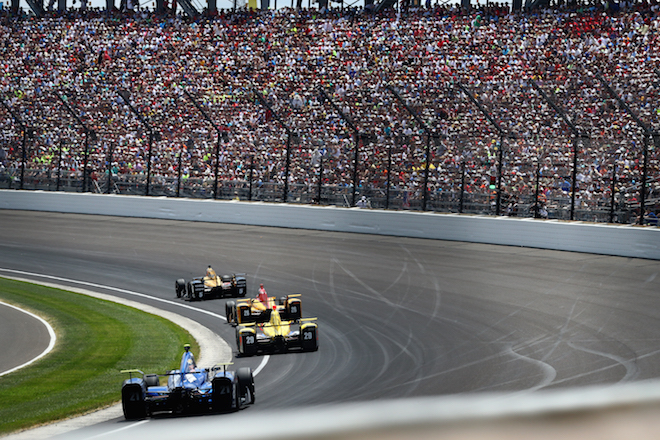
MM: Yeah, I think so. And I obviously should have mentioned that as one of the great highlights of 2016 - the 100th Running, as an event itself, and also as a platform for greater exposure for IndyCar. While the television audience on ABC was not up year-on-year, there certainly was a lot more media coverage of the 100th Running. It was a lot more topical, and we know that from counting column inches and readership. And we worked hard to make it not just a 500 mile race, but IndyCar's Grand Slam – it's IndyCar racing here at the Indianapolis Motor Speedway. So I think it was very helpful.
By the way, another highlight for the year: we think six of our promoters had record attendance for the history of their races. There were three races that were new or newly returned, so you take the six perennials that had record years, three that couldn't have because they were essentially new, and then two that were really badly rain-affected in Texas and Pocono. So all in all, really, really good results for the promoters. We don't have hard numbers for attendances, unfortunately – I wish we did – but anecdotally, it seemed like a really strong year for most of our events.
And I think some of that probably is the work that the promoters do, and some of it is overall IndyCar awareness, and some of it may have been enhanced by awareness of the 500. I sure saw a lot of the 100th Running merchandise on fans at other tracks around the country.
The risks and difficulties of getting a street race up and running are well-documented, as are the events specific to what happened with Boston. Has that experience had any effect on IndyCar's broader strategy in terms of the type of events that it will target in the future?
MM: I don't think so. It has had an effect, but not exactly that one. I think we'll still continue to have a healthy mix of street races, road races and ovals. The effect for us was to begin a reexamination of all of our procedures and policies relating to sanctioning new events. And that has to do with prior experience, creditworthiness, the financial security that is available, and pinning down all of the other arrangements. It's not that those things hadn't been thought of, but we just think we have to go further. So we've tried to take some important learnings from that. As you know it did work out that we landed on our feet at Watkins Glen, and that was a great success.
What have you identified as your main challenges this year?
MM: It's funny. It's quiet – normally there is some sort of controversy about this time of year, so I think that means we've got our act together better at this time of year.
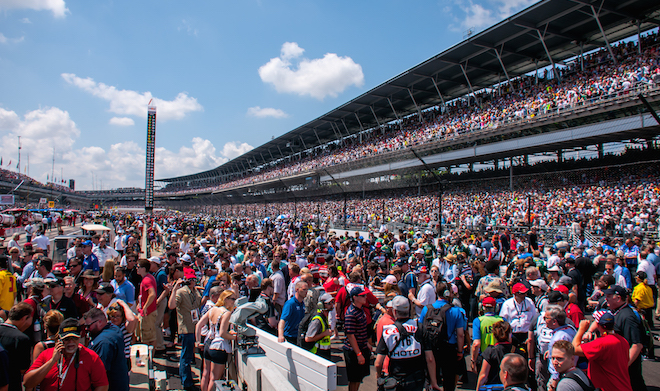
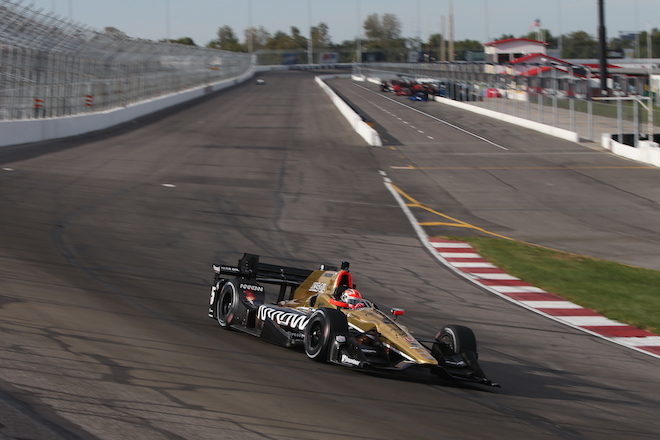
We're about to begin the year with a number of activities to raise the profile of IndyCar and its drivers, so there will be a number of things happening at the Detroit Auto Show, we'll have guys in the Race of Champions in Miami, we'll have guys in the Rolex 24 again, we have the first open-season test in early February ... so you'll begin to see the communications and public relations work gear up very quickly now. And then we'll be off and racing, starting with St Pete. The calendar has been out for a while now, which is a really good thing, but it also means that we're not making news with it. We're only adding one event, Gateway (PICTURED), and I've met with their owner and key staff during PRI and they're very optimistic about having a good first year.
So weather permitting, we're positioned to have a great year. On the car side, we announced some time ago that we'll freeze the kits, so it will be the last year of the Chevy and Honda kits. I don't expect many surprises there. Over the course of this year we'll be rolling out what the car in 2018 will look like, and that's going to be really exciting. And most of the rest of the work has been behind the scenes.
Jay Frye will be talking about this soon, but a number of things have been arranged so that we'll be able to announce extensions of agreements with existing important suppliers, and he's made arrangements so that there will be a lot more flexibility in some parts, and allow teams to make their own or choose different suppliers for some parts. That's not sensational stuff for the fans, but it's important for the paddock and it allows another level of competition, and some cost savings.
It looks like we'll have just over 20 cars this year, but more than half of those are run by three teams. How concerned are you at having three owners propping up so much of the field?
MM: It's something we think about. I think in any business you don't want too much concentration, although you generally think about it more from your customer perspective.
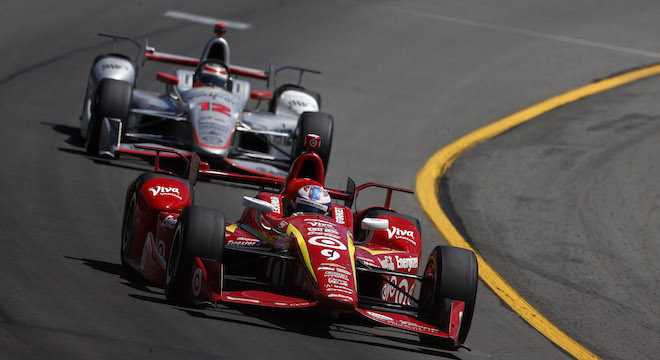
How do you make IndyCar more viable for the smaller teams that are already there? We've lost roughly a team per year for several years, there are serious question marks over KV going into 2017, and there's not a long line of owners waiting to replace them.
MM: I think one of the answers is to find ways to reduce their costs while not affecting the quality of the racing. And again, I think Jay will talk about that, but we're expecting several hundred thousand dollars a year in cost reductions through various supply arrangements, and they will take effect this year. And then in transition to the new car in 2018, I think there will be further help for the teams in that regard.
And the other side of changing economics that we can manage is, if we can find international races at the beginning of the year for 2018 then we will share those sanction fees with teams, and that can be meaningful new revenue to them through the increase of our Leader Circle program. So we'd like to get them some more money, and we'd like to cut their costs more.
It looks like the problem currently has two prongs – there's the high barrier to entry for smaller owners, and then not enough financial incentives within the series to tempt a better-resourced owner from somewhere like NASCAR. Is that fair, and if so, which is the bigger priority?
MM: I think of those as the same thing. It's, do the economics work? It's obviously been true for a long time that it is difficult for teams to make a business out of it; to make money. And there are limits to what people will spend on an expensive hobby. So we've just got to improve that value proposition, and I think we can affect that meaningfully over the next couple of years.
And then the other piece to that is that we just have to keep increasing the exposure of the sport so that the teams' principal source of revenue – sponsorship – is easier to sell at greater values.
And to close, it wouldn't be a Mark Miles interview without the standard question about international races. Where are we at?

Latest News
Comments
Comments are disabled until you accept Social Networking Cookies. Update cookie preferences
If the dialog doesn't appear, ad-blockers are often the cause; try disabling yours or see our Social Features Support.