INSIGHT: A winning in-car radio setup
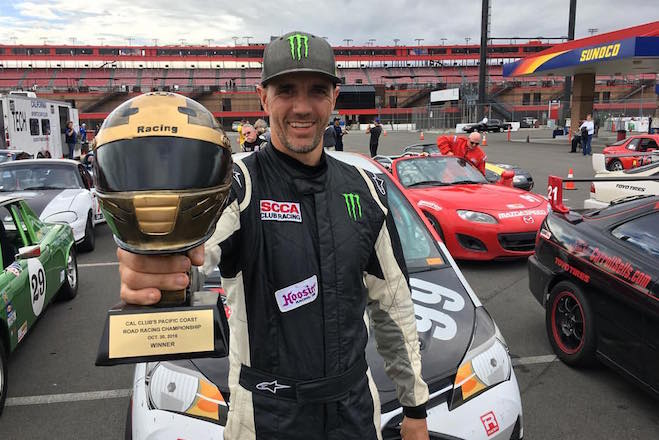
Above: Dew Tour BMX Vert champion Jamie Bestwick at the Cal Club Region SCCA Pacific Coast Road Racing Championships
For years, the editors of RACER.com have seen pros and amateurs alike using radio communications between the crew chief and driver, but at the same time we had little firsthand experience using modern systems. It was time to correct that.
We were recently asked to put action sports star and multi-time X Games and Dew Tour BMX Vert champion Jamie Bestwick (who also owns a Baja 1000 title) behind the wheel of a Toyota Yaris racecar operated by our sister publication, SportsCar magazine. The 2015 Yaris was fresh off the track from the 2016 SCCA National Championship Runoffs at Mid-Ohio Sports Car Course, where SportsCar's Associate Editor Jason Isley drove it to a runner-up finish in H Production.
We've done races with Bestwick in the past, but it had been about a year since his last outing. Additionally, the Cal Club Region SCCA Pacific Coast Road Racing Championships at Auto Club Speedway, where he would be competing, featured mixed class racing. We thought this would be the perfect opportunity to try a radio system; perched atop the front straight suites, it would be easy to call out traffic, helping Bestwick sort the sea of cars.
Rugged Radios answered our call, sending us the NASCAR RH-5R radio system. This system includes everything to get started and is budget friendly starting at $683.91, making it affordable enough for most club-level racers.
At first glance we appeared to be faced with a sizeable wiring task, but you quickly figure out you can't hook it up wrong, so about 15 minutes later we were ready to roll. Rugged Radios also included the optional long-range exterior antenna, but since the layout of Auto Club Speedway allows for a nearly unobstructed line-of-site view, we opted to start with the dual-band, long-range "ducky" antenna installed on the handsets.
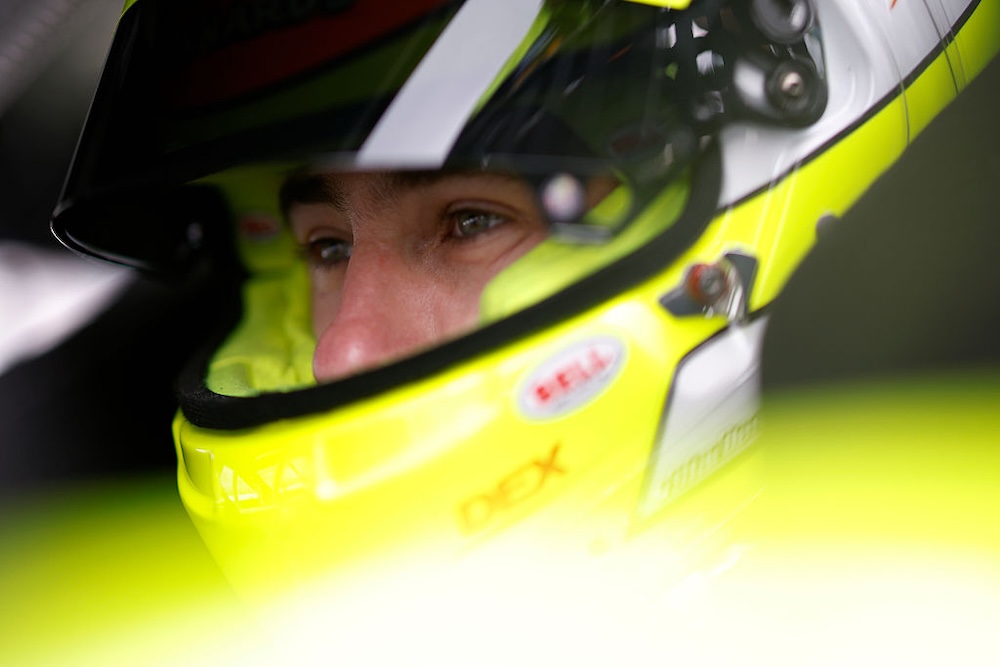
The most important part of successful in-car communications is the microphone in the driver's helmet – it should be located so the driver can essentially kiss the mic. Not wanting to do a permanent installation for this one-off event, we utilized zip-ties and tape to locate the mic and secure the wires.
It had been years since we'd played with any kind of two-way radios and did not have high expectations – all too often, television broadcasts that feature snippets of driver-to-crew communications are not impressive.
"We clicked the radios on for the first time in the garage just to set the volume, and they were very clear," says Isley, who would act as spotter and coach for Bestwick. "It was surprising during the first practice session how clear it was. I expected a lot of ambient noise and static, but it was like I'd called him on my cell phone. And the range on this setup was excellent; even without the external antenna we had communication throughout the facility."
Like with anything new, there is a learning curve to using radios at a race. How much information does the driver want, and how much useful information can the spotter provide? But thanks to live timing apps like Race Monitor and RaceHero.io, crew can pull up live timing and scoring at many amateur races, which is great information to relay.
While the Yaris has an AiM MXL dash that provides predictive and actual lap times, it does not tell you what your competitors are doing – a task easily solved by a spotter equipped with a radio. "I didn't want to fill his head with too much information," explains Isley. "But at the same time, I wanted him to know how he was doing, and listening to him I wanted to make sure he was calm and comfortable, so he could focus on fast, consistent laps."
We also found the radios could be very useful in sharing information about track conditions. "It was great as I was coming down to Turn 12 and Jason was able to give me a heads up about a car spinning ahead of me and that there might be some fluid down," says Bestwick. "It was also a good tool for navigating traffic – he could tell me which cars were in my class and which ones I could ignore."
Our outing went well, with Bestwick winning the closely contested H Production class. As for the radios, they performed beyond our expectations, and it's something we plan to use again at future races.

For Ford Racing NHRA Funny Car ace Austin Prock, it’s a family affair
Latest News
Comments
Comments are disabled until you accept Social Networking Cookies. Update cookie preferences
If the dialog doesn't appear, ad-blockers are often the cause; try disabling yours or see our Social Features Support.