In RACER Magazine: A Lift or a Drag?
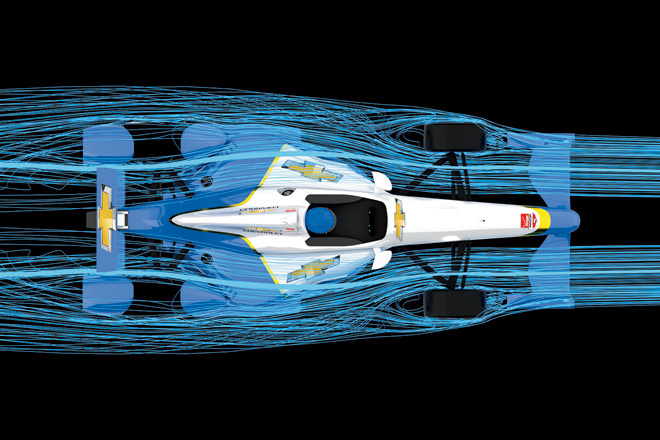
With a freeze on IndyCar aero kits next season, and spec bodywork back in for 2018, what exactly was achieved in two years of high-downforce, high-spend competition?
Former Honda Performance Development technical director Roger Griffiths proved to be something a visionary back in 2012. With the first of many false starts for the Verizon IndyCar Series' aero kits sparking the conversation, he feared the arrival of custom body kits from Chevrolet and Honda would send both brands down a path that was both costly and unnecessary.
"We'd all be the wiser to forget the idea of aero kits, and instead have both manufacturers come to an agreement to pool the money set aside for them and put it into better TV each year," he said. "That's where the budgets would be better spent."
Given the slow uptick in TV ratings since 2012, and the recent decision to freeze aero kit development after two uneven seasons, Griffiths' musings seem prescient.
And with IndyCar preparing for a return to a single-spec aero kit in 2018 – one that should remind open-wheel fans of the low, wide, sleek Champ Cars – it's worth asking whether the frightfully expensive aero kit era of 2015-'16 will go down as a wasteful mistake, or if manufacturers managed to gain something from the brief adventure?
"There were two things that came out of it that hit the objectives," says Mark Kent, Chevrolet's director of racing. "One was the visual differentiation between the manufacturers, and the second was the opportunity for the manufacturers to truly compete in aerodynamics, to try to out-perform and out engineer the opposition. Both of those did result from this program. I don't see any areas where it didn't fulfill what it was meant to do."
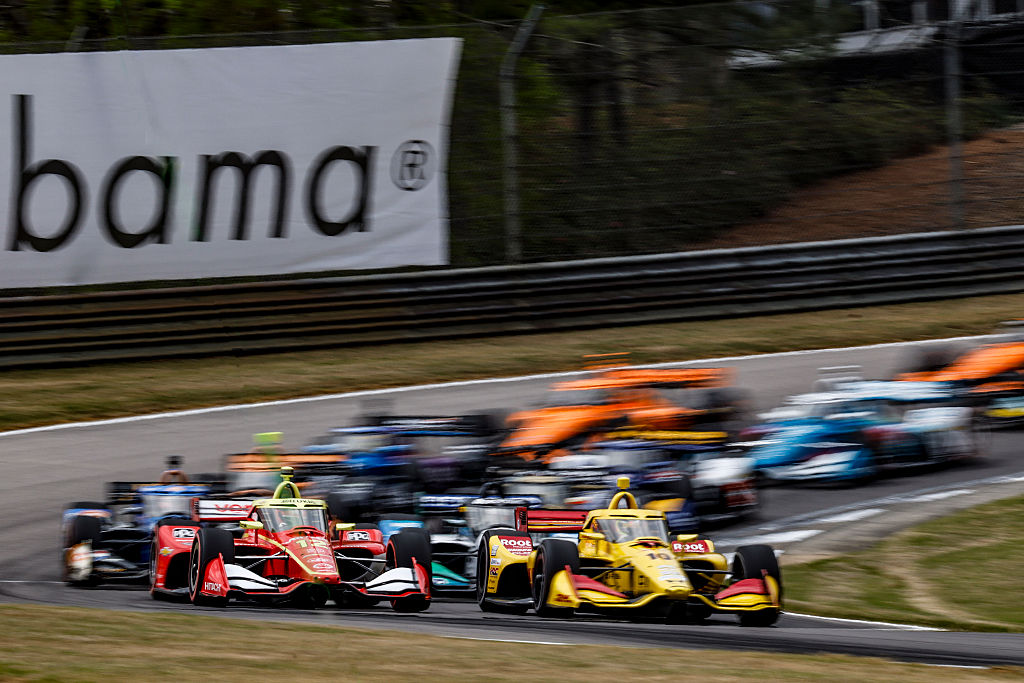
Kent's positive appraisal comes in the wake of the Bowtie's utter dominance of the two-season aero kit era. Its teams won 24 of 32 races, a pair of Drivers' Championships, and extended its Manufacturers' Championship streak to five. Chevy's 88-percent win rate in 2016 alone represents one of the most successful outcomes in any open-wheel season where multiple manufacturers were present.
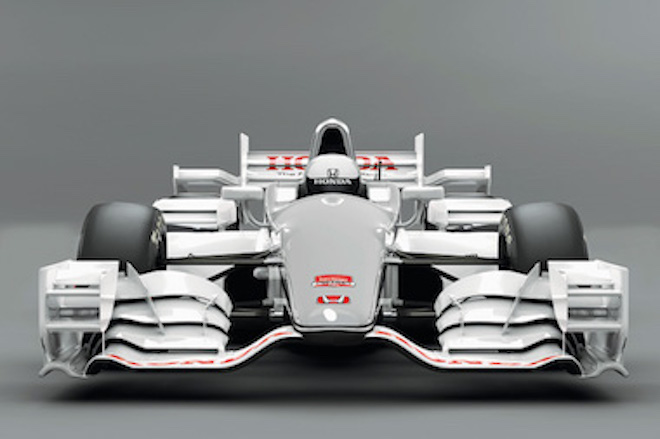
Honda's experience with aero kits has made it harder to find positives in the experiment. In light of its struggles in 2015, the offseason redevelopment for its road/street course kit leading into '16, and the decreased competitiveness that followed, the vibe from its competition arm, Honda Performance Development, is that the upcoming universal kit will be welcomed.
"We've made no secret that we weren't in favor of aero kits, which is why we started late," says HPD president Art St. Cyr. "Our initial impression was we didn't think it was good for the series to do, and we've gone through some well-documented trials and tribulations with our 2015 kit, the 2016 redesign, and those types of things.
"The theory was that if we could bring this kind of technical innovation to IndyCar, we'd be able to increase our exposure, increase our fan base, and increase our cutting-edge image. In true reflective mode, did it make sense? It was more expensive for the manufacturers, and it was definitely more expensive for the teams at a time when we need to make our teams be strong. Going to the universal kit can only help in that regard."
With the aero kits frozen for 2017, then destined for the scrap heap a year from now, the knowledge earned by both brands over the two-year span is the only legacy item that will survive.
"By doing this, we went from being an engine company, to partnering with other [aero] companies – most recently with Wirth Research – to taking this project over for ourselves," St. Cyr says. "We've built our internal capability. The direct result of building that internal capability allowed us to do the [Acura] NSX GT3 project. With the IndyCar aero kit project as the starting point, you can trace HPD's capability to take on a new GT program's aero, and to figure out how to extract the most performance from any vehicle in ways we couldn't have done five years ago. In that respect, it was good for us as a company for growth."
The Technology Issue of RACER magazine
, on sale now. Click here to take a video tour of the issue.click here
, or to buy The Technology Issue online, click here.RACER is also available digitally for Apple, Android and Kindle Fire devices. RACER Digital has the complete content of the magazine's print edition formatted for mobile viewing. With RACER Digital, you'll have access to your RACER content all the time, wherever you are.
The RACER app can be found by searching for "RACER Magazine" in the Apple, Android or Amazon App stores. The app is free and includes issue previews and the RACER.com newsfeed. Individual issues can be purchased for $1.99 and an 8-issue annual subscription is $9.99. Back issues are also available.
Presented by:

Latest News
Comments
Comments are disabled until you accept Social Networking Cookies. Update cookie preferences
If the dialog doesn't appear, ad-blockers are often the cause; try disabling yours or see our Social Features Support.