In RACER Magazine: Speed Limit
Back in the day, NASCAR founder Bill France Sr. saw speed as a way of putting stock car racing on the map. Now, miles per hour is just one aspect of the sport's optimal package.
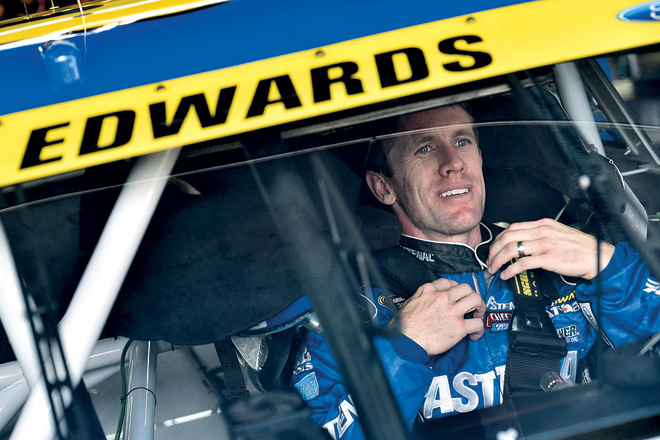
Carl Edwards climbed out of his car and shook his head as he talked to reporters at Michigan International Speedway. It was August 2014, and Edwards had just posted a qualifying lap of 206.115mph.
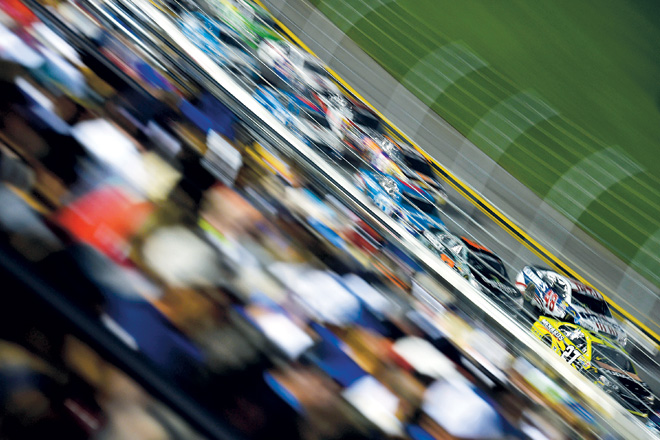
Astonishingly, that didn't put Edwards on the pole for the Pure Michigan 400. In fact, it didn't even put him on the front row. Jeff Gordon took the pole with a track record speed of 206.558mph, just ahead of Joey Logano's 206.381mph. All told, 32 of the 43 cars that made qualifying attempts smashed the 200mph barrier.
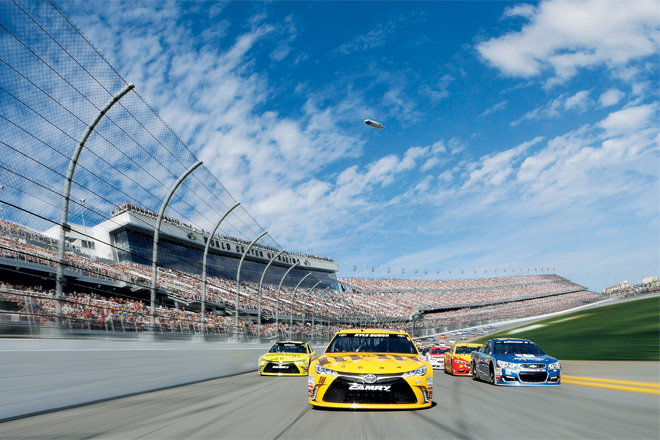
Speed matters. NASCAR founder William Henry Getty France knew as much. Speed was a huge motivator behind France's creation of, first, Daytona International Speedway in 1959, and then Talladega Superspeedway a decade later.
In the mid-1950s. Indianapolis Motor Speedway was the epicenter of auto racing in the United States and NASCAR was a relatively small, regional player compared to the "big car" open-wheel races put on at the Brickyard and elsewhere.
So France reasoned that building a high-banked, 2.5-mile oval would put stock cars closer in speed to the open-wheel boys running on the essentially flat IMS track. In his biography of France, "Big Bill, The Life And Times of NASCAR Founder Bill France Sr.," Herb Branham wrote that France's vision for Daytona was "a design that would allow stock cars to chase unprecedented speeds."
Those heady post-World War II days were a time of enormous optimism in the United States and a time where barriers were being broken everywhere – on racetracks, with ever-faster street cars, jet airplanes and even the early days of the space race. So building the nation's fastest oval was in tune with the zeitgeist.
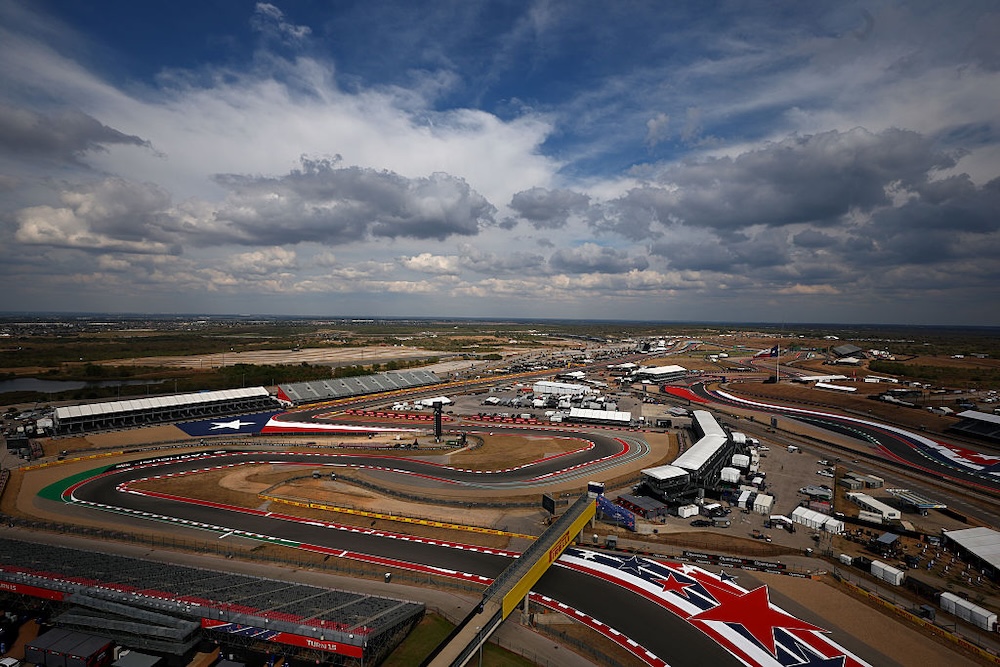
A decade after opening his Floridian temple of speed, France opened an even bigger and faster track, the 2.66-mile Alabama International Motor Speedway, known today as Talladega Superspeedway.
At Talladega, the pursuit of ever-higher speeds continued unabated for almost two decades after the first race in 1969. On April 30, 1987, Bill Elliott set the all-time NASCAR qualifying record of 212.809mph there. And Elliott's lap was nearly as fast as that year's Indy 500 pole, set by Bobby Rahal at 216.609mph.
But in the May 3 race at 'Dega, Bobby Allison cut a tire and his Buick got airborne, hurtling into the catchfence and tearing nearly 1,000 feet of it down. Miraculously, there were only minor injuries, but NASCAR immediately took steps to slow the cars down and even now periodically tweaks the rules to limit lap speeds at Daytona and Talladega to no more than 200mph.
France built those two superspeedways to play catch-up to Indy. But thanks to the disastrous CART IRL split in the mid-1990s and a host of other factors, NASCAR has long since blown by Indy car racing in terms of popularity. And its approach to speed today is much, much different than when "Big Bill" was chasing his dream.
"Obviously, it's racing, so speed is very important to us and generally the more, the better," says Gene Stefanyshyn, NASCAR's vice president, innovation and racing development. "But we're not going to optimize everything for the sake of speed. Think of it like a triangle: There's speed, there's the entertainment for the fans and then there's safety."
To that end, in each successive season since 2013, NASCAR has introduced a different aerodynamic package designed to make the racing more competitive, although not necessarily faster...
The Speed Issue of RACER magazine
, on sale now.Click here
to take a video tour of the issue.click here
, or to buy The Speed Issue online, click here.RACER is also available digitally for Apple, Android and Kindle Fire devices. RACER Digital has the complete content of the magazine's print edition formatted for mobile viewing. With RACER Digital, you'll have access to your RACER content all the time, wherever you are.
The RACER app can be found by searching for "RACER Magazine" in the Apple, Android or Amazon App stores. The app is free and includes issue previews and the RACER.com newsfeed. Individual issues can be purchased for $1.99 and an 8-issue annual subscription is $9.99. Back issues are also available.

Latest News
Comments
Comments are disabled until you accept Social Networking Cookies. Update cookie preferences
If the dialog doesn't appear, ad-blockers are often the cause; try disabling yours or see our Social Features Support.