INSIGHT: State of the PWC Union with CEO Greg Gill
Turn the clock back to last year's Pirelli World Challenge series season finale at Mazda Raceway Laguna Seca and the paddock was a hotbed of displeasure and dysfunction.
Half the teams and manufacturers seemed headed for the exit door, wide-ranging complaints about balance of performance inequities were rampant and, at the top, PWC had an openly hostile CEO that was doing more harm than good.
The crisis, which came to a head in Monterey, pointed toward one of two eventual outcomes for the 27-year-old championship: PWC would either collapse under the weight of its mounting problems or it would start a rapid rebuilding process to address its deficiencies.
Thankfully, the latter took place.
PWC: 11-weekend 2017 schedule unveiled
Monterey 2015 proved to be the first stake in the ground for what we have today; CEO Scott Bove was removed and Greg Gill, his No. 2, was quickly installed as its new CEO. Marcus Haselgrove's position as director of competition was bolstered and the technical department was given greater autonomy. And to ensure its paddock and business core was not decimated from the lingering effects of the previous regime, Gill and company sought to bring peace and stability to the paddock with great haste.
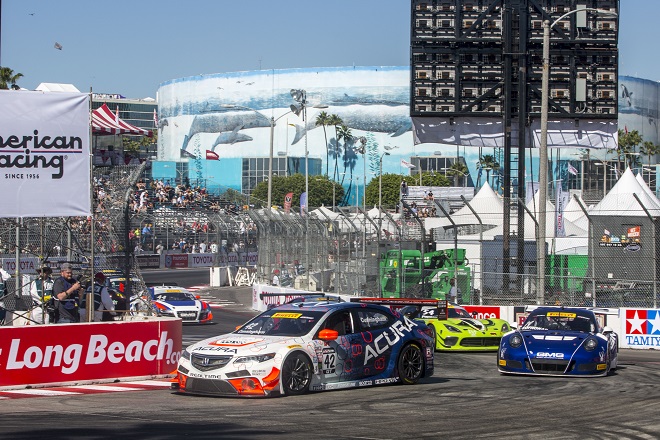
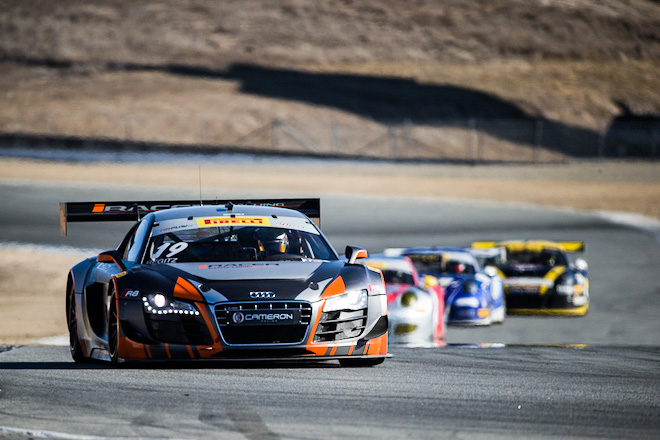
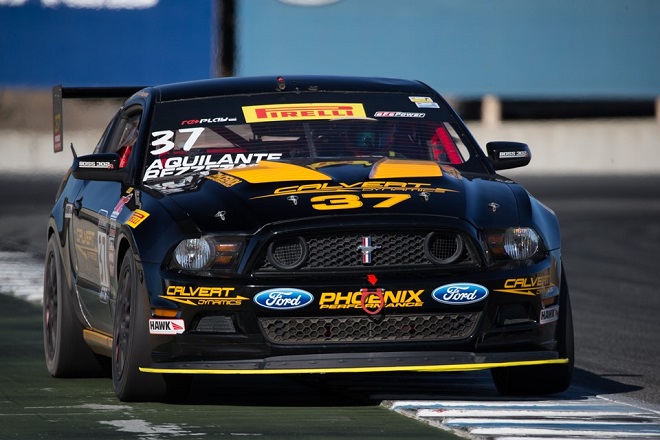
One year later, back at the same track for its 2016 season finale, PWC – at least from the inside – is barely recognizable. And after witnessing PWC's largest field of cars to date – 127 in total – for the Monterey finale (pictured: touring cars, Richard S. James photo), the visual evidence of the year-to-year improvements was clear for all to see.
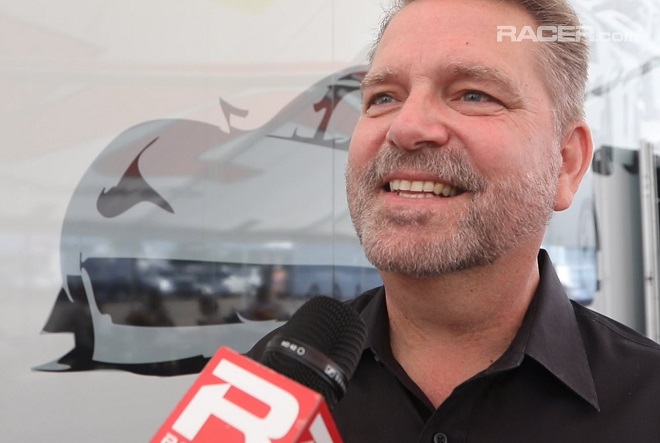
"Thirteen months after our last race of the season, we have a larger paddock, a more diverse paddock, and the big issue that we heard from the paddock was a need for transparency and communication," Gill (below) told RACER during a long conversation at the famed road course.
"You can't drive transparency and communication if you don't have the right staff, and if you don't have enough staff. All those symptoms were there. And then there was a dramatic change at the top with CEO. The [PWC] board was wise in that area. The board's job is an oversight position and as the board has explained, the sole responsibility of that oversight is to hire and pick a new CEO when the time comes to do that.
"Beyond that, then it comes to the team the CEO has in place, and they have to execute. As we found out, all the race teams and the manufacturers were there to support us. We had a perception at the time – I don't know how accurate it was – that half the paddock was not going to come back, and half the manufacturers were not going to come back. The more we dug into that perception, the more we found it was close to becoming a reality.
Among the areas where trust had eroded in the paddock, the direct influence by PWC's former CEO on BoP changes stood out as a combustible item to fix. The proverbial separation between church and state – in this case, PWC's CEO and its technical department – was paramount to rebuilding confidence among teams and manufacturers for 2016
"I was initially named as interim CEO, and I had to be completely independent of the competition issues so that there would not be a sense that the CEO could influence an outcome of a BoP decision," Gill said. "Secondarily, Marcus had to become completely empowered to know he was not going to be second-guessed. That message had to come out for everyone to hear.
"Now, that was in October, and we weren't racing until March, and you can tell people what you are going to do, but they had to be able to observe it. Getting to the Circuit of The Americas for our first race, they were finally able to observe it. And the good news is in that five-month period between seasons we were able to adopt fully the SRO BoP and that gave people a greater comfort level in our direction on the technical side. We certainly saw it immediately.
"The nice thing is by November 1, we were able to announce the SRO BoP, we made clear the decision there will be no interference from the CEO, and the director of competition is using the SRO BoP so you won't have any further issues of confusion of how the process works."
"The history in business is if you go to one extreme or the other you will not be successful," Gill said. "In our business what we've seen is, yes, there's a history of having an engagement with the paddock, and that has been part of the success when we are connected with them. And when we haven't included the paddock, success has been diminished.
"A team manager made a comment as I was walking through the paddock yesterday. He said, 'You spoke to our team owner yesterday,' and the feedback from the owner was 'How unusual, the series wanted my opinion.' That is something we're committed to, and it benefits everyone, we believe."
"We have to lead – we have to take the information and say, 'Here's where we believe the future is going,'" Gill said. "Now, as customers, you can decide to participate with us or you can vote with your checkbook or your feet and not participate and that gives the opportunity for us to learn if what we're doing it working or not.
"Sometimes when you bring something new in like SprintX, they ask, 'Is this a good idea? Why are you doing this?' We said, 'Let us show you, let us run the races and if we see growth like we believe will happen, let's keep doing this.' And [in SprintX] we saw eight cars for the first race, then 11, and finally now 27 entries this weekend.
"People were very skeptical. I believe they are still skeptical and they have a ton of questions. Some will be answered this weekend, and we will be in full Q&A mode with the paddock after this weekend so we can really get that information back to people to hear what our stakeholders are staying.
"But the growth in any business is not just from your existing customers, it is from creating products that the new customers can enjoy. The big thing for me is always new customers, and where are we getting new fans from? Getting more people racing and more people involved is a passion of mine. And you do that sometimes by bringing a little level of discomfort with new ideas. You don't do it by being a dictator. You don't do it by not listening to your customers. You do it by listening and then leading."
PWC was put through its greatest stress test in many years when drivers Andrew Palmer and Jorge De La Torre were heavily injured at Lime Rock Park. De La Torre has since returned to race in PWC, but Palmer remains under regular care after suffering crash-related head trauma in May.
As a smaller series that rarely deals with life-threatening situations, the Lime Rock experience provided a report card on PWC's preparation and readiness to deal with major adversity.
"I wondered if I was going to get that question this year," Gill said. "I thought it was an important moment for our series, and really defined who we are and what we are doing. It was an honor to work with our crew and our people during that time.
"I am the father of a son the same age of the two young men that were hurt there. I was there with both fathers, one more than the other. And I won't intrude on their personal space other than to say I know how they felt and I certainly felt the same way at that moment.
"I went back from that hospital after we had stabilization reports for people were at coming back from the hospital to the track and I grabbed our team and pulled them aside and thanked them for their integrity and their response. For being respectful to the families, and the fact that we did train for this.
"And I thanked Pat di Natale; Pat is retired as our chief steward, but he pulled me aside several years ago and said, 'Here is something we need to understand. It is a rare moment that these things happen. Here is your process and your role in this,' and that is what I worked from in the heat of the moment."
Palmer's family was very protective of their son's condition at the time of the crash, and the media blackout has continued in the months that have followed. Their reluctance to provide information, as was their right, led to complaints and overzealous reporting in some segments of the media that only made the situation worse. Effectively managing the crash site, the emergency response for De La Torre and Palmer, and the communications side of the crash proved to be a tall task.
"We saw some aggressive behavior from some in the media, and I think that because the world we live in now grants us 24/7 access to everything, it's hard for the media to accept when it isn't given full access," Gill said.
"We go on social media and talk about our meals, we talk about our underwear, we talk about our shoes; we have way too much information. Initially, some people, both media and members of our paddock, felt entitled to that same information on the crash. They wanted the gory details and to share misinformation.
"There was no respect for privacy. We had to remind some people, and we had to get personal about it and get up in front of people and said, 'Look, you have sons and daughters. Would you want people speculating about your son or daughter's health? Is that any of your business?'
"It was not their business. That was personal. It was deep. It was something that I really appreciated the paddock response after that, because people began respecting boundaries. And I was really pleased with some people that said, 'I just pulled all my stories down about it; I just didn't think of it that way.' The media were the same way: 'I'm sorry, I handled that wrong.' We don't believe in schooling people; it was about having a level of respect. Our communications team handled the situation with class."
PWC's move from NBCSN to CBSSN has given the series a significant uplift in airtime. The series has also made great strides in its live streaming offerings, and with its cable TV presence added in, PWC can boast its strongest package in more than a decade.
"I stopped and saw CBS Sports when we were at our Lime Rock weekend, and gave them nothing but high marks," Gill said. "They continue to develop CBS Sports and this relationship has such gravity and value because of what they have done with the NFL and other areas. They have a lot of racing series on the channel, and we are a significant portion of it – about one-third of their racing programming.
"When we started with NBC, had a good relationship. We had the opportunity to stay with NBC, but with the continued growth of NASCAR there, we were never going to have an opportunity to go to live television. CBS Sports has offered that to us. The key metric that I like to point out is we went from having about 30 hours of racing on NBC, with re-airs. And this year, including re-airs, we will have 105 hours of racing with CBS Sports.
"As you know, we went to a separate broadcast for GTS, we developed a separate broadcast for TC classes, we developed a separate broadcast for our SprintX championship. All of that became possible with CBS Sports. It has been a growth in content, and we became a valued partner to them."
Gill also anticipates making steady advancements in the quality of PWC's live stream.
"We all understood cord cutting," he continued. "We know live streaming is the future of individual entertainment. Just as we have gone through the change in written media to more digital platforms, we are now seeing our friends in the broadcast world are going through the same thing.
"We pushed digital for a long, long time and [although] we dealt with the equivalent of dial-up level of quality, it is now much better. There is going to be a constant push for us to keep improving the quality. We have a great broadcast team, and a great group of production people on-site. We have asked everyone to continue to work with us next year, and we think continuity is very important in that field.
"Live streaming and serving everyone's digital devices is the future. We've added satellite connections, and we have continued the partnership with Motor Trend On-Demand. We have another year on that relationship that we are trying to work with them to expand and grow."
"Next year is our 28th year and sprint racing is our bread and butter," he added. "Remember, the addition of SprintX is an extension of our sprint race format. It is one of those examples we talked about earlier in our conversation of a new thought that's outside of the comfort zone for many people.
"However, SprintX is where many of our new customers are coming from. If you look at the entry list for SprintX [at Monterey], probably half of them are names that are not actively in our series right now. That is good for sportscar racing because it means new teams are using SprintX to look into our series for the future.
"We think we've got a pretty good formula with SprintX, but we are going to take our time, and learn what you need to learn. And we have already done that with each race. We brought back things from our competitors to improve with each round we've had so far. We're going to take everything we've gotten for feedback, take more after the season, and put all of it into SprintX in 2017."

Latest News
Comments
Comments are disabled until you accept Social Networking Cookies. Update cookie preferences
If the dialog doesn't appear, ad-blockers are often the cause; try disabling yours or see our Social Features Support.