INSIGHT: A farewell to Daytona Prototypes
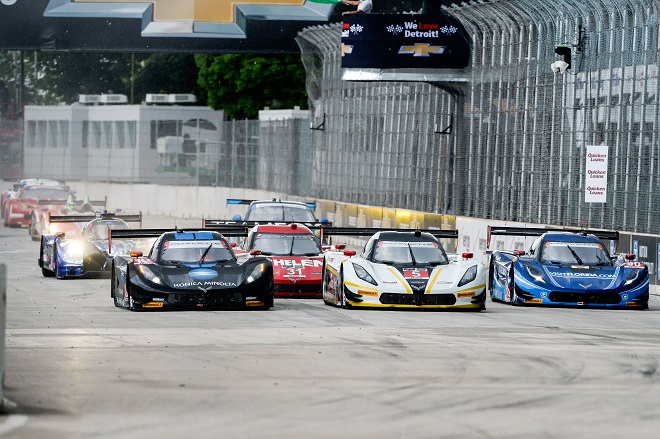
IMSA's Grand Touring Prototype formula spanned 1981-'93, its replacement, the World Sports Car concept, took over in 1994, and with Saturday's season finale at Petit Le Mans, the WSC-inspired Daytona Prototype formula will bid farewell after its lengthy reign.
The tubeframe prototypes ushered in Grand-Am's top-tier Rolex Series category in 2003, and are responsible for many of the businesses, team owners, drivers, and crew members that populate today's WeatherTech SportsCar Championship. Positioned between GTPs and LMP1s, DPs fostered limited enthusiasm among fans, but their value in keeping North American sportscar racing alive and moving during turbulent financial patches cannot be denied.
To give DPs a proper sendoff, RACER spoke with the father of the DP formula, IMSA's Mark Raffauf (below), Bill Riley – whose DPs won more poles, races, and championships than any other model – championship-winning DP driver and team owner Wayne Taylor and Michael Shank, whose junior open-wheel team used DPs to build a privateer team into a program that has recently earned its first major factory racing contract.
RAFFAUF: "We knew there was going to be a change in the early '90s, and the easiest thing to do would be to take the basis of GTP, a customer-type car, put a reasonably powered engine in it, and take some of the downforce out of it. It resulted in the Ferrari 333 and the Riley & Scott, and a number of other pretty good cars.
"That project went through the '90s and eventually became LMP1 in Europe. The WSC was the car that the ACO adopted. They then proceeded to make decisions to use big BMW V12s, and things like that, which really the class was never conceived for. It was always conceived to be a 4-liter, 5-liter class, because that power level was more than enough than what was needed here, and was sustainable. It was definitely economically viable for customer guys to go race.
"Wayne Taylor had a WSC program, Gianpiero Moretti had a program, there were a bunch of Ferraris out there, a bunch of Rileys. It was smart, it fit the times. And it looked different from GTP, because we basically took the roofs off.
"We carried that WSC style of car in Grand-Am when it started in 2000 as the top-class car. As time progressed and the decision was made to develop a new Grand-Am car, we based it on the same concept, which was essentially flat bottom, low downforce, with a minimal amount of power. We figured out pretty early on that you didn't need more than 500hp to go 200 miles an hour at Daytona.
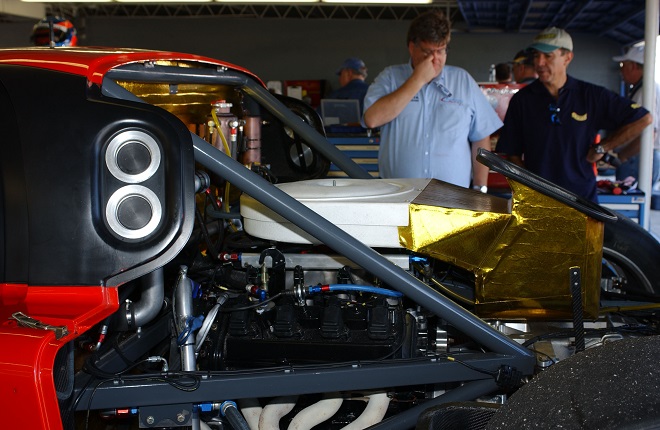
"We tried to use a lot of off-the-shelf componentry; let each constructor choose how to skin it, what kind of engine to put in it, and use production-derived engines, which was basically the lineage of WSC as well.
"DP was a continuation of WSC, no question about it. It was a closed [top] car, with a more NASCAR style to it. It was roll cages, steel construction, which anybody can do well. You didn't have to be a rocket scientist to weld steel tubes together. And it all worked.
"I think the best comment I've heard in my career is there was never as competitive a competition as there was in DP. The commonality of things made the really good guys shine, and even the Pro-Am drivers could shine."
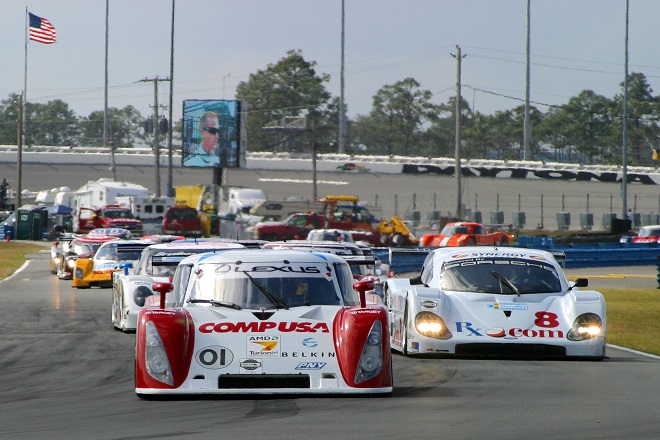
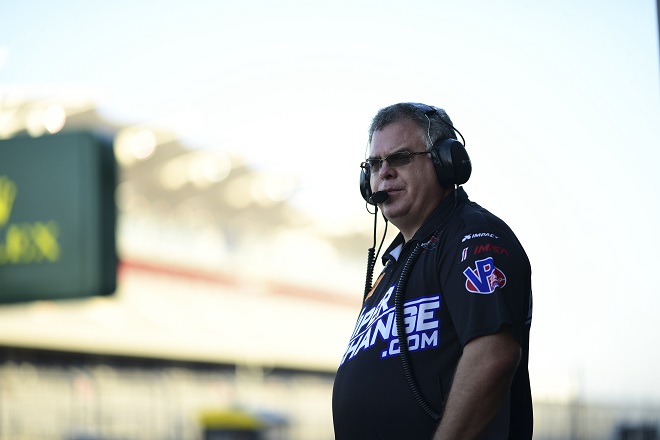
"But I am not getting teary-eyed about it being the last year of it, because it has run its course. The rules that were laid out in 2003 far exceeded everybody's expectations for longevity, and the cars did exactly what they were supposed to do. They were supposed to be a robust, safe car. They had a lot of life in them, so teams didn't have to buy a new car every year. As you know, teams are still running pretty old cars. I think it did hit all the marks of what the France family and Grand-Am laid out to do."
On a similar theme, but in many different ways, Shank (below) credits DPs for turning his Ohio-based operation into something solid in ways junior open-wheel racing could not provide in the early 2000s.
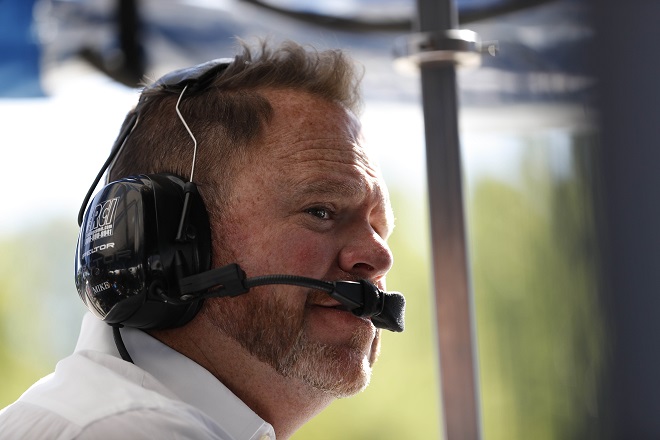
"And it worked all the way through the Daytona Prototype era. The ability to tell people, 'we have a real shot to win overall at major sportscar races' really had not been around until then. You could take a solid crew and a good pair of drivers, and establish yourself. That was compared to other [sportscar] series, where something new and very expensive was required every year, or year and a half. In DP, I had three to five years between updating my cars from Gen 1 to Gen 2 and Gen 3, and that was critical. And it didn't require me to buy all-new cars.
"If you are in racing for a living, the biggest problem I had was when I ran Atlantic cars [was], from September 1 until Long Beach in April, we were out of business. There was no way to span that gap financially after the season was over. The way I did it was with a credit line.
"With sportscar racing, we're done October 1 and we're back going November 1, theoretically. So the downtime is much, much less. It's a better business model for people to do it for a living, and you got that with the DP because you could run it affordably."
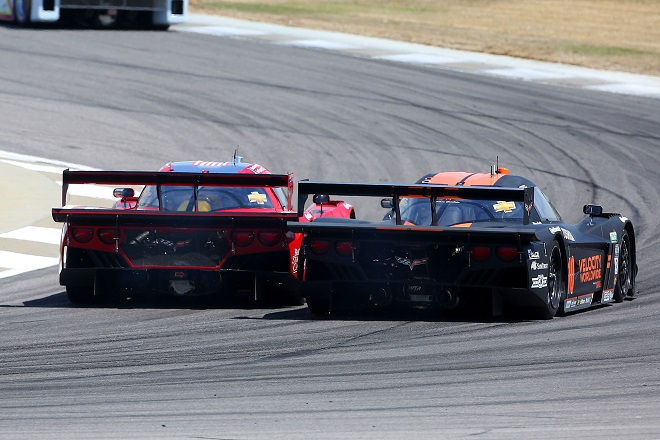
RAFFAUF: "There's no question, you could hit each other and drive away from it. The cars were built like tanks. And in many cases they were driven like tanks. But they had the ability to take a lot more downforce and a lot more power. They were over-engineered in every regard.
"I remember in the beginning guys bought a spare gearbox, and two years later that gearbox was still bolted to the pallet that it was shipped on because the original gearbox was bulletproof. Guys used to argue about the axles. We put axles in the car that were mandated to handle 1000hp. They ran them for two or three years. We over-engineered just about everything we could.
"Other components, like A-arms and other pieces, the smart guys realized you don't need to make one that weighs 3 ounces and has got an aero shape to it that if it falls on the floor it's bent and it's no good anymore. You can make it out of steel tubing and it will last forever, and you can bang wheels and it won't bend.
"Some of those experiences came from taking good guidance from some of our NASCAR brethren in the early days of Grand-Am about how to do that kind of stuff, [and it] really panned out over the long run. Talk to Chip Ganassi and ask how many miles of racing some of his chassis have, because it is in the [range of] 30,000 to 40,000 miles of racing. There isn't another racecar series out there that can say that."
The fond memories of close DP racing are a recurring theme among our panel.
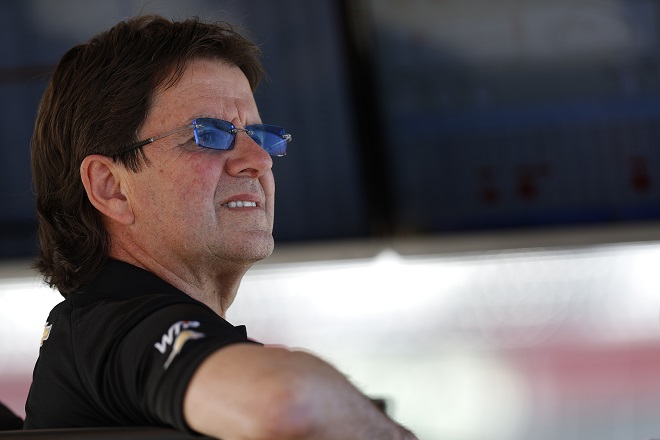
"People forget that there are a lot of people that come into these things and think they can instantly win. I watched Adrian Fernandez come to our series with Lowes and they struggled; they soon left. I watched the Penske organization come in with two superstar drivers; they soon left. Ganassi and I have been there from the beginning, along with Action Express, Spirit of Daytona and Mike Shank. And so the guys I think that have been around from day one; we've all benefitted from the quality of racing.
"If there's one aspect we don't get any recognition for, it is that the racing is tremendously competitive. Given the different engines, given the different chassis manufacturers, I think Grand-Am, and now IMSA, has done a good job of managing the cars. With a DP, you can go into every race thinking, 'I can't guarantee the win, but I can guarantee I will be racing for the win.'
Establishing parity between a variety of body shapes and engine suppliers was one of the greatest achievements to come from Grand-Am's technical department.
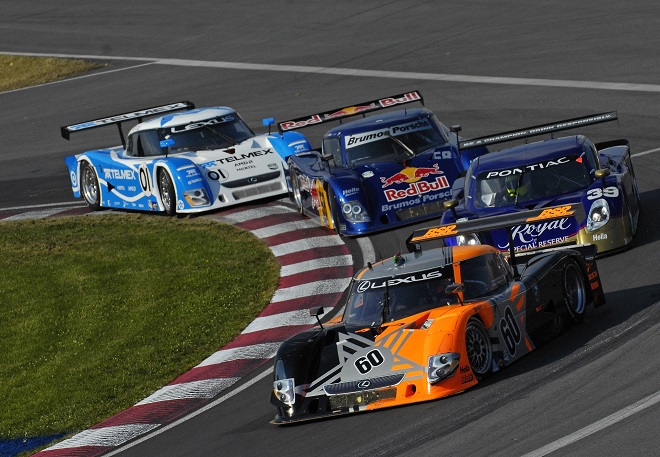
RAFFAUF: "In my opinion, the best years of DP was when we had 5-liter V8s from GM, Ford, BMW and Lexus. Porsche was in there with a V8 eventually, but for most of the time, it was the odd man out because it used a 4-liter six-cylinder boxer.
"That was the hardest thing to balance. Before it was all about the V8s, guys used to complain all the time. We were pleased when almost everyone was using V8s because you could show them a dyno sheet with everybody's numbers on it and graphs and say, 'pick yours' – and nobody could. That's how good it was. To be successful was all down to tuning the car and the guy driving it, which was the whole idea in the first place."
The costs to operate a DP changed significantly when Grand-Am bought the American Le Mans Series and re-emerged as IMSA. Upgrading the Gen 3 DPs to keep pace with the faster P2s was an expensive process, and with many of those performance items being consumed at a higher rate, and more time spent on-track with the blended schedule, a championship-caliber DP entry moved north of the $4 million mark. With midfield IndyCar budgets running just over $5 million, the formula said goodbye to its cost-friendly ways in 2014.
TAYLOR: "The unfortunate part about DP is it has just become too expensive. It is just the nature of the sport. The thing about what we have now is, we really have the cream of the crop in terms of sportscar races. We have Daytona, we have Sebring, we have Petit Le Mans, we have the Six Hours of Watkins Glen, Long Beach, Laguna Seca...we have great venues.
"But the costs involved for those races...you get it to the end of the season, and your car is pretty worn out. And then you have to rebuild it for Petit Le Mans, and then at the end of Petit Le Mans it is worn out again, and then you have to build it again for Daytona. At least for us with DPs, adding all of the long races came at a heavy price."
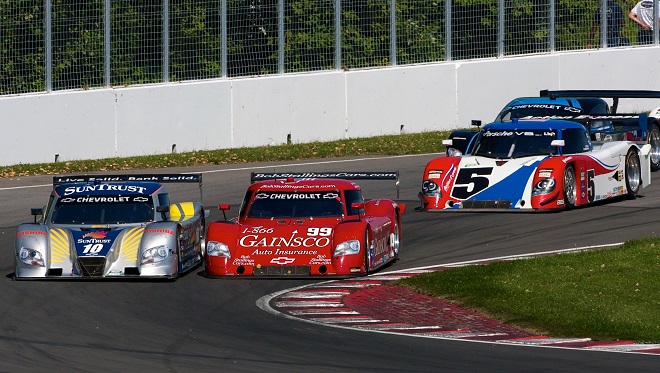
RAFFAUF: "In that regard, yes, they weren't the prettiest things ever made, but they were functional, and they probably hit their mark for their purpose better than anything else in that regard."
SHANK: "I get that some people think they are ugly dinosaurs, but the competition was fierce. The drivers are excellent, and the teams were top-flight."
Shank switched to P2 prototypes in 2015, but says his affinity for DPs has never waned. Taylor believes the timing is right to move to the P2-based carbon fiber prototype formula that will replace DPs, while Riley was raised to focus forward.
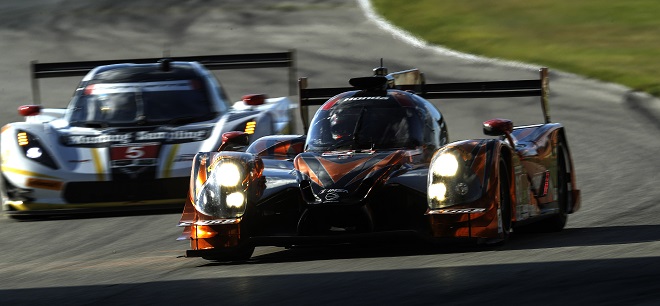
"Over time, from the standpoint of what's better to drive for a guy that would be willing to spend some dough, a P2 car became a bigger consideration. If you're spending about the same on either car, the P2 became what more people said they wanted, so that has led us to this formula change. I understand all the reasons behind it, and I can't really argue with any of it, but the DPs were something really unique that gave a lot of us a chance we'd have never gotten elsewhere. I can say that without any hesitation."
TAYLOR: "I'm not sad about it, because the change had to be done at some point. These tubeframe chassis have been arounds for a long time. It's time to build new cars. I think from a safety standpoint and everything we've got coming with this P1 monocoque-type of car, the timing is right."
RILEY: "The way that my dad programmed me, I don't get too hung up on old cars because I'm too excited about building the next one. I know I should have a room full of old racecars that are worth a bunch of money, but unfortunately I am too focused on buying a new piece of equipment like our new 3-D printer, rather than have an old racecar sitting around the shop. The DPs have been great, but there's always going to be something new on the horizon."
Both Riley and Raffauf see some of the GTP, WSC, or DP DNA carried forward into the P2-based Daytona Prototype internationals that will lead the WeatherTech Championship for years to come.
RILEY: "I think so, for sure. If you look at best concept of either production based engines or GT3 engines, and then have stylized bodywork so the manufacturer has a lower cost solution to being involved in a top class in the U.S., it definitely hits the marks that DP set out to do. Obviously, Corvette did a great job on styling its body. And everybody knows it is a Corvette. In the future, if we get a lot of OEMs signing off on this and getting involved, it's really going to be a great series for everybody because all the cars will look a little different."
RAFFAUF: "The Daytona Prototype name is not just a carryover; there's a lot of elements of that new 2017 car that are related to what we have done in the past. You can even take it back to WSC, GTP; the lineage probably goes back that far. Some of those things we learned from that GTP and WSC experience have worked out very well, and we expect in our [DPi] environment that they will work out again. It's another long period of four to five years of homologation for the new cars, which is more of that stability we had.
"One of the things that people used to ask with the DPs: why did you change to Gen 1 to Gen 2 to Gen 3? I said this from the beginning: If we are racing the same thing in five years that we are our racing today it will be boring, because it'll simply look the same. It's not acceptable in sportscar racing for everything to look the same for five or six years. Three? Yeah. Four? Yeah. But I the visual change-up...people expect to see that.
"There's a certain element of that in the new cars. We're going to have a good basis to start with in January of 2017, and it will run for four years as-is. After that, it may well be finely tuned and improved to carry on well beyond that period with some visual changes in a very similar fashion that worked with DP."
STATS: The DP era, by the numbers
• From the first event in 2003 to the final this weekend, DPs competed in 171 races (141 Rolex Series, 30 IMSA).
• Chip Ganassi Racing with Felix Sabates earned the most DP wins with 46 (41 Rolex Series, five IMSA), followed by Wayne Taylor Racing 33 (26, six) and GAINSCO/Bob Stallings Racing (16 Rolex Series).
• The greatest number of DP wins earned by a driver goes to Scott Pruett (pictured) with 44 (40 Rolex Series, four IMSA), followed by his teammate Memo Rojas 31 (27, four); Max Angelelli 27 (26, one), and the combo of Alex Gurney and Jon Fogarty (16 Rolex Series).
• The greatest number of DP pole positions earned by a driver goes to Jon Fogarty with 24, followed by Scott Pruett with 17, Ricky Taylor with 14, Memo Rojas with 11, and David Donohue with eight.
• The largest fields of DP cars in a race were all found at the Rolex 24 At Daytona in 2006 with 30, in 2005 with 29, and in 2007 with 28.
• And finally, here's a breakdown of the 103 DPs produced by nine manufacturers, starting with Riley, the numeric kings of the class, with 47, Crawford with 15; Fabcar with eight and Coyote eight, the angular Doran with seven, Dallara with six, the description-defying Multimatic with four; Lola with three, the unforgettable Picchio with three, and the rare Chase with two.
Click on the thumbnails below for larger images of Daytona Prototypes through the years:
{igallery id=9327|cid=566|pid=5|type=category|children=0|addlinks=0|tags=|limit=0}

Latest News

Comments
Comments are disabled until you accept Social Networking Cookies. Update cookie preferences
If the dialog doesn't appear, ad-blockers are often the cause; try disabling yours or see our Social Features Support.