PRUETT: Pagenaud's American dream
After many years of trying, Simon Pagenaud finally became the complete package. His career-defining season was a byproduct of immense effort, and was only made possible once Pagenaud transformed himself into a genuine ass kicker.
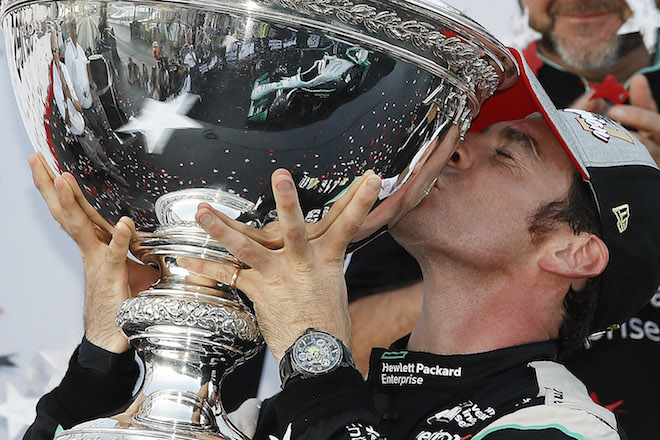
The numbers don't lie: He earned more wins and poles, led more laps and races, and also led the standings for 15 events – from Round 2 in April through the checkered flag on Sunday in Sonoma – to secure his first Verizon IndyCar Series championship.
He also brought poise, character, humor and humility to his championship bid, and displayed an unending hunger to improve with every lap. If you're searching for an athletic role model to put in front of your kids, Pagenaud fits nicely among the Scott Dixons and Ryan Hunter-Reays.
His journey from being forgotten and exiled at the end of 2007 to a super-sub in 2011 to reaching the top of the mountain in 2016 completes an incredible nine-year journey, and it's another aspect of Pagenaud's narrative that deserves praise. Having been there for most of that wild ride, I've come to appreciate a few things about the pride of Poitiers, France.
First, he's an unapologetic throwback. Sure, when he speaks, he sounds an awful lot like the character Jean Girard from Talladega Nights (which he's aware of, and has fun with), but accents aside, the new IndyCar champ would fit perfectly in the romantic 1960s where drivers from every corner of the world met to race at Monaco, the Indianapolis 500, 24 Hours of Le Mans, Pikes Peak, and even the Daytona 500, to the delight of racing traditionalists.
In the finest tradition forged by the Andrettis, Foyts, Gurneys and Unsers, Pagenaud will race anyone, anywhere, at any time. He's strapped into a wider variety of racing machines than any of his contemporaries, and continues to search for new driving experiences.
Open-wheel, sports cars (in three different flavors – prototypes, GTs and sedans), rallying, hill climbs, endurance racing, sprint racing ... amateur endurance racing ... karting. Throw in a stock car race and a few jumps in a monster truck, and he'll have every base covered.
Simply put, hand Pagenaud a steering wheel and half a chance, and he's game.
Hell, after a long season that started in January at the 24 Hours of Daytona, the champ isn't headed for a month-long vacation to celebrate his title; you'll find him at Road Atlanta next week, sweating his balls off in a Corvette Daytona Prototype, to try and help the Action Express Racing team win an IMSA title.
And why would he choose roasting in a DP over tanning himself on a beach in the Caribbean? Because they asked. I'm not suggesting Pagenaud is as good as the Andrettis, Foyts, Gurneys or Unsers; he hasn't done enough to enter that conversation, but there's no question he's driven by the same tradition and all-rounder spirit that built those men into legends and icons.
It's also easy to appreciate how Pagenaud has achieved the American Dream. He doesn't come from wealth, has earned everything he's received, and lives in North-freakin-Carolina with his American girlfriend.
As far as feel-good stories go, Pagenaud has written a damn fine script since crossing the Atlantic: A skinny European kid comes to America barely out of his teens, wins the Atlantic championship, scores a ride in the Champ Car series – during what proved to be its final season – and impressed everyone, including his teammate (and future Penske star) Will Power on his debut.
His sophomore Indy car season never materialized after Champ Car collapsed (and was bought by IndyCar) in early 2008. Out of an open-wheel drive, and with his career all but stalled, he held onto the dream by accepting a lesser one as a sports car pilot in the American Le Mans Series.
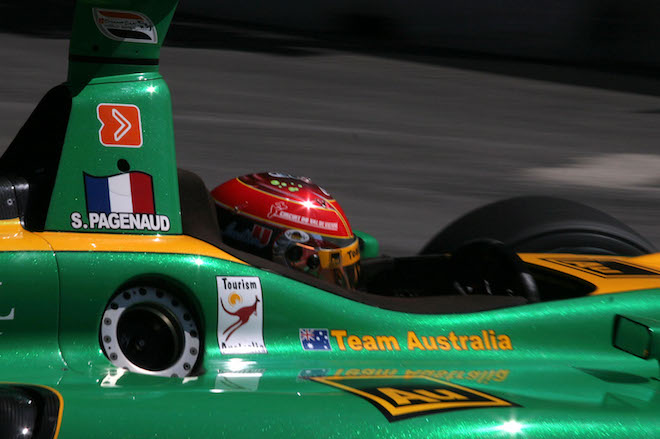
Gutted by the lack of interest shown by teams in the blended IndyCar Series, he used that anger to elevate his name. It happened far away from IndyCar's bright lights, but Pagenaud's stock began to rise as a fierce competitor within the Honda/Acura factory LMP2 system. He'd go on a three-year prototype campaign that regularly delivered shock and awe, and in his final ALMS season, it produced the 2010 LMP championship with Highcroft Racing.
Undeterred by the IndyCar snub, Pagenaud actually benefitted from being sent down to the minors at just 24 years old. Champ Car was a good introduction to top-tier open-wheel racing, but his blade was properly sharpened behind the wheel of scary-fast prototypes. Thrust into LMP2 against Penske Racing's factory Porsche RS Spyders and the sister Acura programs from Andretti-Green and Fernandez Racing, Pagenaud was pitted against absolute animals that surpassed whatever Champ Car offered in 2007.
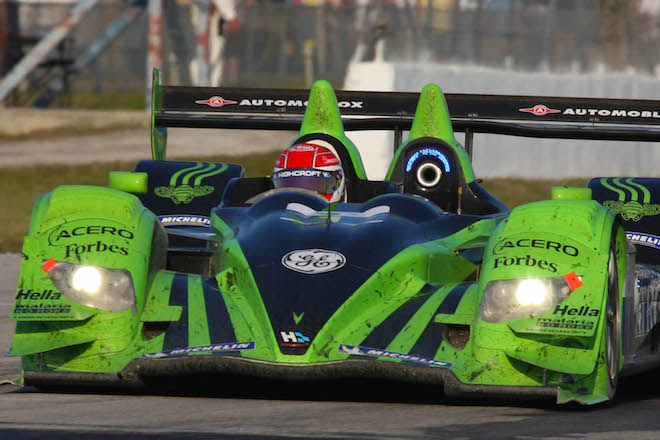
Penske would also draft in his IndyCar stars on occasion as Helio Castroneves and Ryan Briscoe saddled up for the LMP2 dogfights. The pressure-packed environment allowed Pagenaud to test himself against IndyCar's best in his domain, to learn from de Ferran – the old Brazilian wizard, and expand his skills in ways Champ Car could not offer. And in 2010, with his move to Highcroft, he was passed to another wizard – of the Australian kind – with David Brabham.
Teaming with Brabs after de Ferran was like earning a second PhD by the age of 26. As the enduring star within Honda's sports car camp, and with the brand about to exit the ALMS as a full-fledged factory participant, Pagenaud's value as an IndyCar option became apparent to all those who watched his magical performances at Sebring, Road Atlanta, and every ALMS stop in between.
He'd also caught the eye of the home team. Pagenaud made his 24 Hours of Le Mans debut with the French ORECA team weeks after de Ferran Motorsports launched its program in May 2008, and by 2009, he was signed to drive for Pescarolo Sport in a works-affiliated Peugeot 908 FAP at Le Mans. His relentless pace at Pescarolo was rewarded with a full factory drive in 2010 – for the French national Peugeot team – and again in 2011 where he finished second overall with mentor and countryman Sebastien Bourdais.
His eight wins from 31 ALMS starts and 16 overall podiums made a clear statement in the world of sports car racing, and with a Le Mans podium added in, not to mention three wins in the precursor to today's World Endurance Championship, Pagenaud was regarded as a certified G and a bona fide stud. It was also becoming painfully obvious he was ready for a return to the major leagues.
The diversion to sports cars was an odd road to follow, but it prepared Pagenaud in ways that moving directly from Champ Car to IndyCar would not have provided. Although it might not have felt like a positive move at the time, he was able to develop his racecraft and technical education in an intensive environment that would eventually lead to taking his first IndyCar crown.
And then we have his persistence. Pagenaud's first three starts in the IndyCar Series came under trying conditions, and in each case, the situation was a perfect encapsulation of his career. Three seasons removed from Champ Car, new open-wheelers had come along and made splashes in IndyCar. His old teammate Power had become Penske's gunslinger, Indy Lights champions JR Hildebrand and Alex Lloyd were starting their careers in the big show, and the only opportunities for an outside came with bags of cash or last-minute surprises.
An injured hand for Dreyer & Reinbold Racing's Ana Beatriz opened the door to his first super-sub drive at Barber in 2011 where he crossed the finish line in eighth while chasing future Penske teammate Helio Castroneves. The next drive came later in the season at Mid-Ohio when DRR's Justin Wilson injured his back during practice. Stepping in cold, and in borrowed driving gear for his first session, he raced hard and finished 13th. Another strange circumstance – stemming from a visa issue which barred HVM's Simona de Silvestro entry into the US – gave Pagenaud another shot to step in and perform at Sonoma.
Although his 15th-place finish in the wine country might not have jumped out in the final results, teams were watching. The HVM engineers also marveled at his feedback and efforts to turn a last-place car into a mid-pack challenger in such short order. Those three IndyCar samples – produced in less than optimal circumstances – confirmed his readiness for a full-time gig.
Signed by Schmidt Peterson Motorsports to lead its Honda-powered program in 2012, Pagenaud put his enhanced body of skills to work and finished fifth in the championship. He toppled numerous giants the following year, scored his first and second wins, and split Penske's Castroneves and Power on the way to taking third in the standings.
Two more wins and fifth overall in 2014 prompted Roger Penske to realize it would be smarter to race with the Frenchman than against him. The Captain picked up the phone and set Pagenaud on a course that handed RP a championship on the team's 50th anniversary.
Pagenaud's path, thanks to the supreme heights and depths he's encountered along the way, produced a fine and worthy champion. Watching his American Dream come true has been a pleasure, and as compelling as his story might be, something tells me Pagenaud has more feel-good chapters to add.
Click on the thumbnails below for larger images.
{igallery id=5348|cid=565|pid=9|type=category|children=0|addlinks=0|tags=|limit=0}
Presented by:

Latest News
Comments
Comments are disabled until you accept Social Networking Cookies. Update cookie preferences
If the dialog doesn't appear, ad-blockers are often the cause; try disabling yours or see our Social Features Support.