.jpg?environment=live)
F1: Williams posts profit in first half of 2016
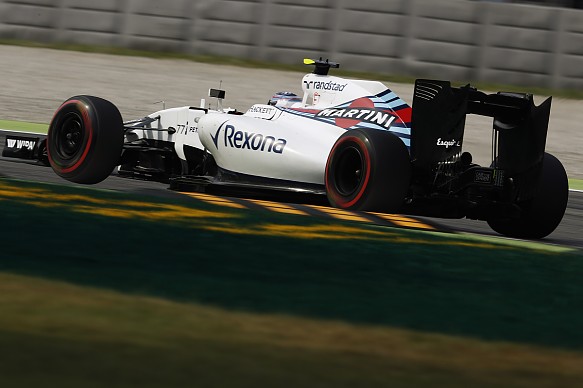
The Williams Formula 1 team has made a profit of more than $5.276 million during the first half of 2016, according to its latest financial results.
returned to profitability at the start of this season
thanks to a substantial increase in prize money for finishing third in that year's constructors' championship.The team's interim financial results report a pre-tax (EBITDA) profit of more than $5.4 million for the F1 arm of the operation over the first six months of this year, compared to $2.1 million over the same period in 2015.
Related Stories
Williams Group CEO Mike O'Driscoll said this was due to "a non-recurring sponsorship payment."
Although revenues for the F1 team are slightly down – $67.7 million so far this year compared to $67.8 million over the first part of 2015 – that is offset by an improved performance for the Advanced Engineering offshoot of Williams.
This branch of the company has brought in revenues of $27.2 million over the first part of 2016, compared to $14.25 million in the first six months of 2015, and has made a profit of $4.62 million compared to $132,000 last year.
O'Driscoll said this was down to WAE branching out into the defense and health industries, beginning this year with "over 40 projects underway, many of which are long term."
That has helped Williams Grand Prix Holdings PLC, the Williams F1 team's parent company, make a pre-tax profit of $10.3 million over the first half of this year, after posting losses over the same period in 2014 and '15.
Williams will again receive prize money for finishing third in the 2015 constructors' championship.
But is likely to take a financial hit next year thanks to slipping back into a fight with Force India for fourth in this year's championship, and the fact all teams face increased costs adapting to revised technical regulations for 2017.
"The evolving Formula 1 regulations dictate a significant change in car design for the 2017 season, which we embrace enthusiastically as an opportunity to make a step forward in our track performance," O'Driscoll said. "There are headwinds that we must face in the second half of 2016 and into 2017, notably the increased costs that are incurred during a period of regulatory change in the sport, and predicted uncertainty in many world economies, and this will impact our near-term results."
Presented by:


Latest News

Comments
Comments are disabled until you accept Social Networking Cookies. Update cookie preferences
If the dialog doesn't appear, ad-blockers are often the cause; try disabling yours or see our Social Features Support.