In RACER Magazine: Stock Car Space Age
When Dodge unveiled its Charger 500, it was the first shot in a brief, but spectacular aerodynamic arms race that changed NASCAR and produced some legendary cars.
As years go, 1969 was one of the most remarkable and turbulent in the recent history of the United States: Neil Armstrong and Buzz Aldrin walked on the moon; half a million people partied for four days and nights at Woodstock; Richard Nixon was sworn in as the 37th President as the Vietnam War raged on, and Joe Namath stunned the world by leading the upstart New York Jets to victory over the Baltimore Colts in Super Bowl III.
And, fueled by millions of dollars from Detroit, an arms race escalated to unprecedented proportions in NASCAR, where the sanctioning body's founder and chairman "Big Bill" France sought to keep a competitive balance between Ford Motor Co. and Chrysler on race tracks across the country.
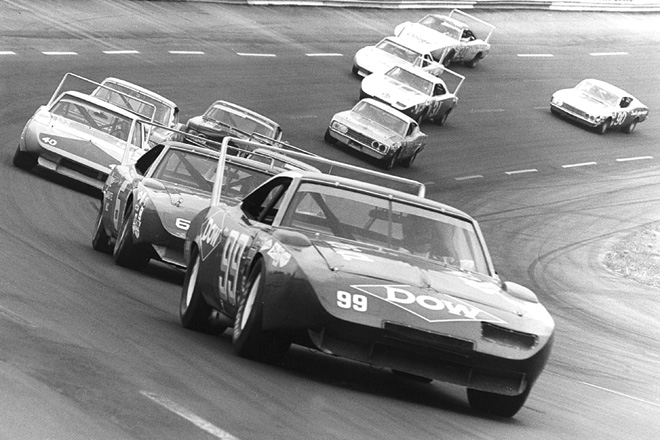
But by the time the 1969 season rolled around, the two automakers found new ground on which to escalate their NASCAR rivalry: Aerodynamics. Chrysler started '69 with a new version of the year-old redesign of the Dodge Charger. Called the Charger 500, it featured a blunt front grille and flush rear roofline, both substantially better from an aero perspective than the standard Charger, with its draggy recessed front grille and recessed rear window.
The late team owner Cotton Owens described the problem thusly: "The new 1968 Charger hardtop was a beautiful, sleek design, but it wasn't aerodynamic enough. Something more was needed." And so the Charger 500 was the first shot fired in the aero wars – but it would be far from the last.
Dodge actually unveiled the NASCAR version of the Charger 500 prior to the National 500 at Charlotte Motor Speedway, Oct. 1968. The racecar was on display at the track, but then the race was delayed for a week by rain.
That allowed Ford's racing division to scramble to come up with an alternative of its own. Charlie Gray, Ford's then-NASCAR program manager, said a prototype of the extended nose Ford that would become the Torino Talladega was put together from scratch during the rainout week.
"Chrysler did us a big favor by showing us the car they were going to race the next year," says Gray. "Ralph Moody and I looked at it and knew they were going to have a distinct advantage. And during the week when the race was originally scheduled and was actually run, the Talladega was born."
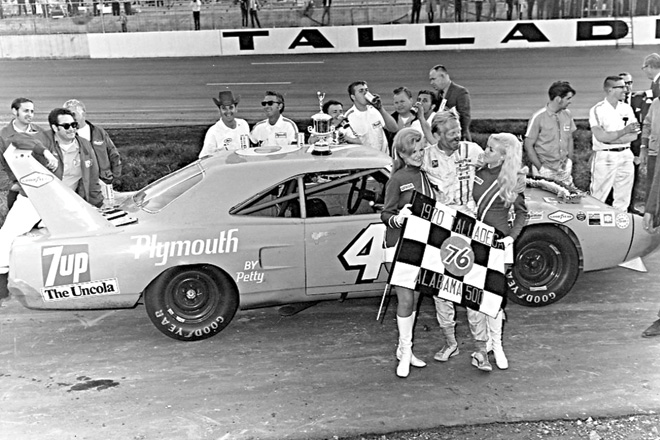
Why did Ford name their aero Torino the Talladega? Because at the time the car was introduced, NASCAR's boss, Bill France, was building what is now known as Talladega Superspeedway.
"We'll call it the Torino Talladega and nickname it the Model T," Gray says he told a fellow Ford executive. "Bunkie presented it to Big Bill when he called him Tuesday morning [after the Charlotte race] and Big Bill approved it on the spot."
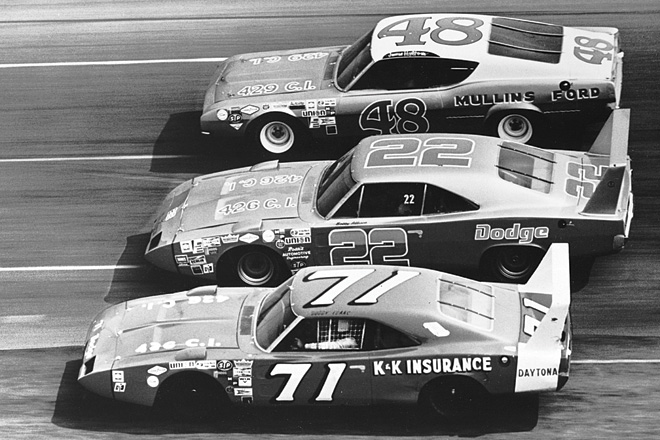
Like with the Charger 500, the long-nose Ford Torino Talladega and its stable mate, the Mercury Cyclone Spoiler II, were big improvements aerodynamically. And from the outset, the new cars were very successful on track. LeeRoy Yarbrough won the 1969 Daytona 500 in a Torino Talladega fielded by Junior Johnson, with Donnie Allison and A.J. Foyt finishing third and fourth, respectively, in their Fords.
And the slippery Torino Talladega was enough to lure Richard Petty over to the Ford camp. That was certainly a stunning and surprising defection by the guy who'd won 27 races with his Plymouths in 1967.
the Great Cars Issue of RACER
, on sale now. Click here to take a video tour of the issue.click here
, or to buy the Great Cars Issue online, click here. To learn where to buy RACER in your area,click here
.RACER is also available digitally for Apple, Android and Kindle Fire devices. RACER Digital has the complete content of the magazine's print edition formatted for mobile viewing. With RACER Digital, you'll have access to your RACER content all the time, wherever you are.The RACER app can be found by searching for "RACER Magazine" in the Apple, Android or Amazon App stores. The app is free and includes issue previews and the RACER.com newsfeed. Individual issues can be purchased for $1.99 and an 8-issue annual subscription is $9.99. Back issues are also available.

Latest News
Comments
Comments are disabled until you accept Social Networking Cookies. Update cookie preferences
If the dialog doesn't appear, ad-blockers are often the cause; try disabling yours or see our Social Features Support.