In RACER Magazine: Grand Touring Perfection
Did Group 44's Jaguar XJR-5 win a GTP title? Nope. But did it kickstart IMSA's golden age and Jag's Le Mans return? And was it gorgeous? Yes to all of the above.
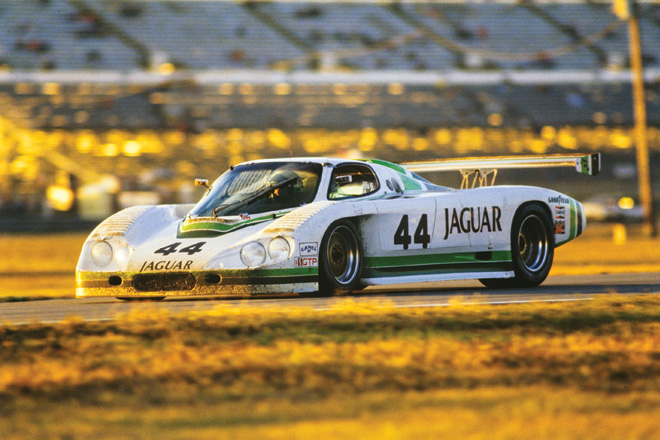
What a sight to behold. Those wonderfully curvy lines, dressed in that impeccably understated, tone-on-tone livery. And then there was the trumpeting scream from its V12 engine that saturated the air with the richest of wails.
There were faster and way more successful Grand Touring Prototypes during IMSA's golden era, but when it comes to making a visual and sonic impact, every inch of Group 44 Inc.'s Jaguar XJR-5 was carved from perfection.
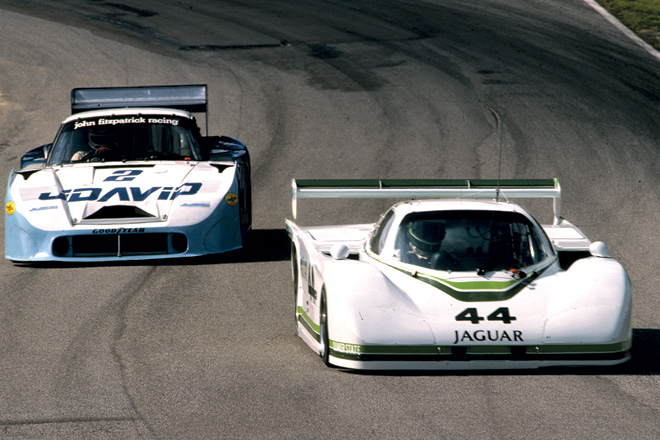
Stats alone tell part of this Jag's tale, but its greatness isn't built upon numbers. History shows the XJR-5 found Victory Lane on six occasions from 1982-'85, and propelled Tullius to a GTP championship runner-up finish during its first full season of competition in '83, but what was its greatest contribution?
Before more potent, and arguably more famous, prototypes arrived on the scene, Jaguar's XJR-5 was GTP's first superstar, and from that fame, IMSA's big manufacturer boom was ignited.
The sublime chassis design by Lee Dykstra and styling concept from Randy Wittine could stop crowds without turning a wheel. The soundtrack generated by a single blip of the throttle during warm-up was enough to create lifelong fans. Once it was moving, Group 44's XJR-5 was like a 200mph art installation. It shrieked to the heavens, made bold use of a white canvas with impossibly precise green stripes. And once the wins and podiums began to arrive, it validated the idea that beauty and speed could coexist without sacrifice.
Group 44 would transition from production-based racing on behalf of Jaguar to designing and building a GTP car from scratch. Restoring the brand's reputation through high-profile competition would also involve taking the manufacturer back to sportscar racing's grandest stage.
"Jaguar director John Egan said, 'There are two things we want you to do: Win as many races as you can in the U.S., and take us back to Le Mans,'" recalls Tullius. "What we came up with was the XJR-5."
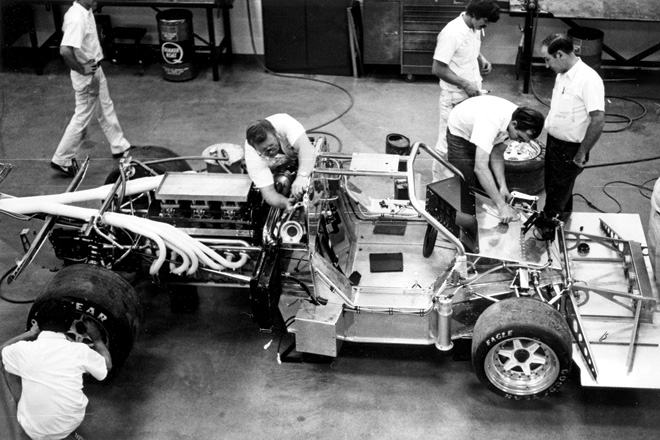
Finding the beating heart for the soon-to-be GTP car was easy. Group 44 had considerable experience with the production-based 5.3-liter, V12 powerplant that propelled its SCCA Trans Am and IMSA GTO Jaguar XJS XJR-4s. But unlike Group 44's road-based GT cars, every single piece that surrounded the 525hp masterpiece would be shaped by hand.
"Randy did the body – the styling – and Lee did everything beneath the shell," Tullius says. "And I did the graphics. We built the car at our base in Winchester, Va."
Key for the XJR-5 was maximizing downforce through ground effect. But the sheer length and width of the engine forced Dykstra to find creative packaging solutions to make room for a sizable underwing, with its large venturi tunnels extending back from the flat-bottom cockpit floor. As Formula 1 had found, having a vee-layout engine was half the battle for a viable venturi tunnel, but optimizing it meant cleaning up the ancillaries.
"Ground effects was in its infancy, so getting the maximum tunnel height was important," Dykstra says. "We cleared out everything we could around the base of the block to make space for the tunnels. Once we'd figured it all out, we actually took the car to the Williams [F1] wind tunnel [in the UK] and ran a series of tests...and they were pretty impressed."
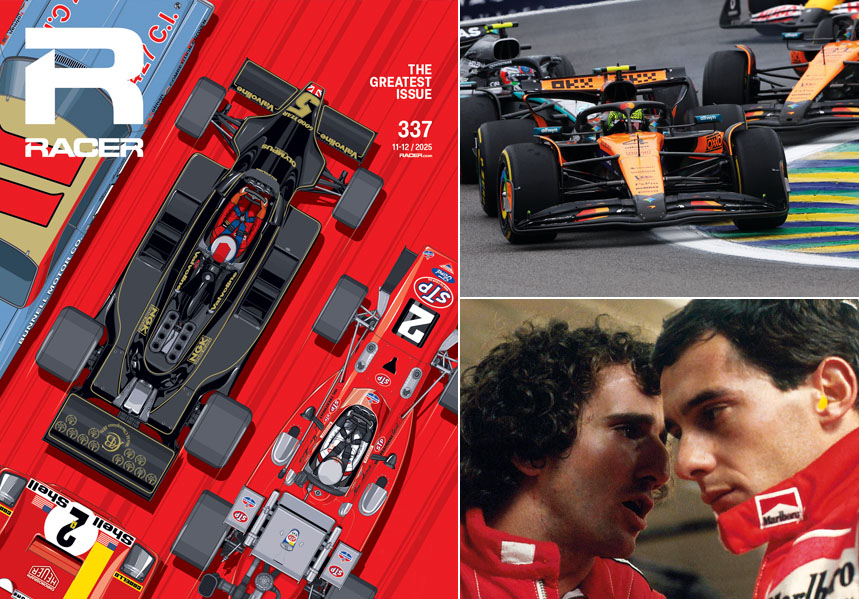
the Great Cars Issue of RACER
, on sale now. Click here to take a video tour of the issue.click here
, or to buy the Great Cars Issue online, click here. To learn where to buy RACER in your area,click here
.RACER is also available digitally for Apple, Android and Kindle Fire devices. RACER Digital has the complete content of the magazine's print edition formatted for mobile viewing. With RACER Digital, you'll have access to your RACER content all the time, wherever you are.The RACER app can be found by searching for "RACER Magazine" in the Apple, Android or Amazon App stores. The app is free and includes issue previews and the RACER.com newsfeed. Individual issues can be purchased for $1.99 and an 8-issue annual subscription is $9.99. Back issues are also available.

Latest News
Comments
Comments are disabled until you accept Social Networking Cookies. Update cookie preferences
If the dialog doesn't appear, ad-blockers are often the cause; try disabling yours or see our Social Features Support.