Robin Miller's Mailbag for July 27, presented by Honda Racing / HPD
hpd.honda.com
and on social media at@HondaRacing_HPD
and https://www.facebook.com/HondaRacingHPDYour questions for Robin should continue to be sent to millersmailbag@racer.com We cannot guarantee we’ll publish all your questions and answers, but Robin will reply to you. And if you have a question about the technology side of racing, Robin will pass these on to Marshall Pruett and he will also answer here.
terrible turnout at the Brickyard 400
. Then I read about Tony Georgebecoming Chairman of the Hulman & Co Board
. Then I start to read the haters' remarks about the split. After going to races around the country for some 55 years I think we race fans are in trouble.Let's be honest: tracks are closing and attendance is falling. Many things are being done that are not fan-friendly. Why would you run a major race at 3pm on a Sunday afternoon when history shows that it was close to a full house when it was run on a Saturday, leaving Sunday to return home to go to work on Monday? Why wouldn't NASCAR and IndyCar get together and work out some crossover drivers for the 500 and the Brickyard? That would generate some interest. I wonder if the fans are really necessary - or is it all about the TV money? Someone better get a grip and get some new ideas. What's the story here?
Bob "The old man" Lauman
RM: You nailed the story. Racing attendance is down everywhere because it no longer holds our attention, or because people would much rather watch television (NBBSN had a record five million watch the Brickyard 400) than drive to a race.
Nothing, not the day, starting time, bringing back the apron, switching to the road course or crossover drivers, is going to save the Brickyard. It's a terrible race and always has been, but that NASCAR frenzy from the last decade that carried it has long since faded away. NASCAR takes down seats but still only fills half of them, while a bad NASCAR crowd everywhere would be a huge IndyCar turnout at most places. The Split crippled open-wheel but, as you correctly stated, that's not why attendance has fallen off – it's apathy – because the racing is better than ever. And people aren't going to show up and sit around all day until 3 o'clock for something to happen. There must be constant action, like at a street race.
Q: Surely you have tons of questions following the news of Tony George's position. What does this mean for IndyCar's progression, changes, promotions, and tracks? I understand part of the statement was that nothing will change, or at least significantly, but even that will surely change with time.
Cody Carrete from Hillsboro, OR
RM: Mark Miles' quote in my story indicated TG's transition to chairman of the board has no bearing on management or the game plan of IndyCar. But Tony is blood and the most active of his family in racing, so I don't think it was any big surprise he's now chairman of the board. What might happen down the road is anybody's guess.
Q: I'm sure I know what the reaction of most race fans is to the announcement of TG being named Chairman of the Board. What's the reaction from the racing community?
John Fulton, Akron, Ohio
RM: A huge volume of emails and texts, with a lot of fans fretting, or cussing that Tony is back in charge and a fair number that were happy to hear of his promotion. But I haven't spoken to any drivers or mechanics or owners about it because it only just happened.
Q: How does IMS survive on just one real race per year? In a discussion I had with Parnelli about Ontario when he was in charge there, he said with only a couple races a year and a rock concert or two, they just couldn't pay the bills. I find IMS in the same situation. So what was the real attendance for the Brickyard this year? I realize that the camera coverage is cleverly positioned to not show the empty seats, but I saw more empty seats than occupied. The Xfinity race on Saturday was the worst attendance I have ever seen at any race.
My other observation is market saturation. There are just too many racing series to capture the market. NASCAR remains tops,but even it is suffering. Is it time to put the for sale sign on 16th and Georgetown Road and just have the museum and a gift shop? Why doesn't the raceway hold the aura of what it once was? I attended all the F1 races there, and the MotoGP events for their short stay. There was just no traction to keep it going. I get it, the 100th anniversary race was a huge success, but as a race fan that has spent many, many race days there, it was something else. I found the track full of people just there to party and hadn't a clue who they were even watching.
Grumpy Gary
RM: What if I told you that IMS had $17 million in the bank before it sold one ticket to the Brickyard 400? Between the television money ($15 million) and Crown Royal sponsorship ($2 million), the Speedway turns a profit even with last Sunday's pathetic turnout. Couple that with the monstrous gross last May, and it's been a pretty profitable year. My guess was about 35,000 and that's probably being generous, but there couldn't have been 3,000 people on Saturday.
The NASCAR races at IMS are unwatchable, and another problem is that the Speedway simply has too many events and the luster of the place has worn off. But my old pal Dave Cassidy (TG's real godfather) once told me he figured about 50,000 of the Race Day crowd at Indy were truly fans, and everyone else was there for the party, the experience and the social value.
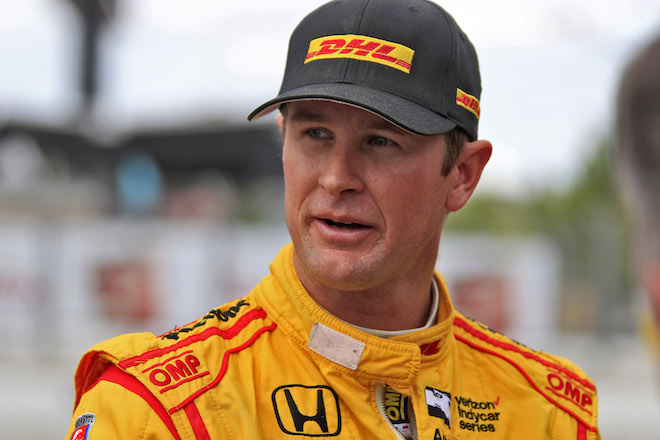
Q: Robin, while I love your continued push for Josef Newgarden, c'mon. All this talk about Newgarden and Penske is a pipe dream for now. If indeed Roger wants someone new, all you need to do is look over at Andretti Autosport and Ryan Hunter-Reay. RHR is still very much in his prime, a series champion, Indy 500 winner, a fan favorite, great with media, a sponsor that would probably jump ship with him and a sponsor Roger already has had a relationship with. That is Penske perfect.
Steve, Chico CA
RM: No doubt that's what RP was thinking when he was talking to RHR a few years ago, and he's easily one of the five best in the series. But JoNew is 10 years younger and just as quick – the perfect pick to replace Helio or JPM whenever they're headed for sportscars.
Q: Given how incompetently the Toronto track was built, I think the management needs an overhaul too. There were a lot of things wrong that should never have gotten to the stage they were, when a last-second attempt at a fix had to be hastily found.
As for the future, what if 24 or 26 cars are regularly entered next season? There's no room to accommodate them. The grandstand views are worse than ever, and that's saying something. It's both sad and infuriating that over the 30 years the event has declined as much as it has. By some measures, it may have been a success, but it was also an embarrassment.
Rick in Toronto
RM: I don't think we have to worry about too many cars. The pits are insane right now with 21, so making it wider and safer would be priority number one. Not really sure what the promoters could have done (they moved the wall back in Turn 8 after Friday's practice) because it's just a vanishing track due to construction. But some of those seats by the bridge offered very little in terms of a view. It's sad to see how far the race has fallen from its heyday, but it likely remains one of the six best-attended on the circuit.
Q: Has Toronto turned into a Mickey Mouse track before our eyes? Are there plans for cleaning it up after some of the construction has been completed, or is this the best Toronto has to offer? We just shut off more of our cable access as we start to go more and more online. Problem is, watching the races live via Twitter or a leader board (not a Verizon customer, sorry) has proven to be quite a challenge. I'm old compared to many of the younger generation that have already disconnected. What is the best way to watch for those not at the track and without cable?
John Merli, San Diego
RM: The construction has certainly taken its toll on a once-great street course and I don't see it getting any better but the pits must be fixed by 2017. There are a lot fewer grandstands, and don't forget that the old Molson Indy used to draw 70,000 on race day alone, and I imagine a third of that showed up this year. You don't have to be a Verizon customer to watch the IndyCar app – at least, that's what I was told – and that would be your only outlet without cable.
Q: I was wondering something about the Toronto race. Are we getting squeezed out? Space seems to be getting awfully scarce and tight. Regarding the Houston race, I read somewhere that IndyCar had a contract through 2017, but this is year two of no race. How far away do you think the series is from getting to the ratios of CART 1999? I'd very much be in favor of a 21-race schedule with seven street races, seven ovals and seven road courses. It would be cool if the series would bring back the oval and road course trophies, or maybe do like what they do with the Tour de France – IndyCar could have an overall champion, King of the Streets, King of the Roads, and King of the Rings. I'm really hoping 2017 brings big things.
Kelsey Shoemaker
RM: Thanks to Turns 3-4 (and Juan Pablo Montoya), there was still some decent racing at Toronto, but the last three turns and pit lane need help. Not sure owners can afford 21 races right now – 16 seems like a stretch, and I think you'll only see one race added to the schedule in 2017, but 2018 might see a couple more. And your "king" idea is great, provided you have a financial incentive/sponsor to promote it and make it worthwhile. I recall Sebastien Bourdais winning the Canadian Challenge in Champ Car and his prize was a wooden statue of a Royal Canadian Mounted Police.
Q: IndyCar should be happy it still has attendance. NASCAR is down, and was about half-full at New Hampshire: that's only about 44k, which is a huge drop in the past three years. How many do you think attended Toronto on Sunday?
Mark Fellows
RM: Let's put it into perspective. A crowd of 44,000 on race day would beat anything IndyCar draws except Indy, Long Beach and Road America. I think Toronto was lucky to have 25,000.
Q: Wow, has NASCAR at IMS gone downhill. They used to have more people on Thursday night at Indianapolis Raceway Park! TV money must be paying the bill, because attendance sure isn't. What do you think about Tony being back in charge?
John T. Feeser
RM: Television money is very, very good (see answer above) and it would be smart to move the Xfinity race back to Lucas Oil Raceway ASAP. To quote my good friend Jim Roeder about our former ESPN colleague Marlo Klain: she had more people at her wedding than showed up last Saturday. And TG is not back in charge.
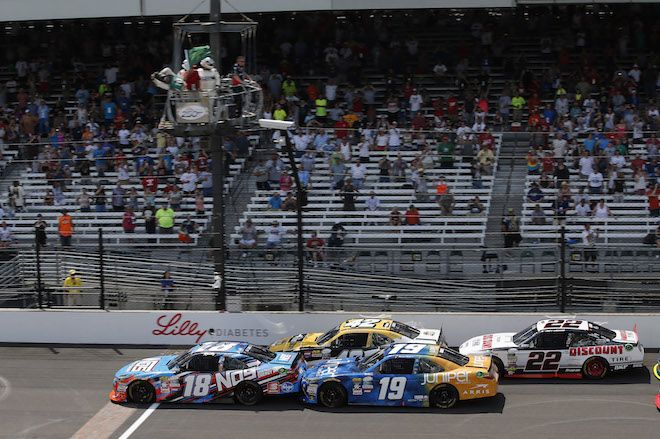
Q: IMS needs to send NASCAR packing. No one is interested in seeing them race. I've seen more fans at Anderson Speedway than showed for the Xfinity race (above). Sprint Cup race was worst at Speedway since F1 tire debacle!
Mike S.
RM: I expect IMS will keep it going as long as those big TV checks keep coming in, but I would think NASCAR might be wondering why it pays all that money for one of its worst and lowest-attended events.
Q: Well, it happened again at Toronto. Minor contact between Montoya and Newgarden results in a rear bumper falling off, causing a caution, and ruining Newgarden's race. It's the third such incident I've documented this year, following nine similar incidents last year where minor, incidental contact makes these flimsy things fall off, causes a caution, and impact the outcome of the race. And when they come off after such minor impacts, they don't keep anybody from wheel-to-wheel contact, so it's not a safety issue. Plus, when the owners continue to squawk about costs being out of control, they sure could save a bunch of money by eliminating them.
I read that Bobby Rahal and Michael Andretti supported their removal, so I was wondering if running without these would be part of the test at Mid-Ohio? Not only would the owners save money, we'd quit screwing up drivers' races with minor contact, we'd eliminate some of the downforce everybody says they want to reduce, and wouldn't it be nice once again to have the cars look more like true open-wheel race cars than they do today?
RACER's test story from Mid-Ohio
did not have all that garbage hanging off it, and looked like a real Indy car. And I think the aero kits will be phased out for good after next season.Q: I just got back from the IndyCar testing day at Mid-Ohio. Two things that I noticed there: 1) A few guys with Cosworth were there with telemetry equipment set up around the track. Is this a sign that they are interested in bringing their engine program back to IndyCar? I sure hope so! 2) Kanaan and Hildebrand (filling in for Newgarden) were on the track together all day, never more than 30 feet apart from each other. They seemed to be helping each other out. Is there anything to be read into this?
Mark Suska, Lexington, Oh
RM: Jay Frye is hopeful another engine manufacturer can be secured by 2018 and, if so, it's possible Cosworth could partner with them like Ilmor does with Chevrolet. But I don't think it will be a Cosworth, per se. In the meantime, Cosworth is an electronics supplier to IndyCar teams, which is why you see Cosworth guys in pitlane T.K. and J.R. were testing aero options for IndyCar for 2018 so I'm sure they tried running together as much as possible.
Q: There are occasionally comments about not being able to run IndyCars on Circuit X because it would be too expensive to bring them up to current IndyCar safety standards, yet it seems perfectly fine to run on street circuits with configurations that have them running around two-lane-wide curves with concrete walls at the track edge. While I will admit that most permanent circuits may have higher top speeds, some of the street courses of late have been pretty high speed as well. Whatcha think?
Martin Bose
RM: Road Atlanta and Mosport are the two tracks most mentioned as great venues that are too fast for IndyCar because there's not enough runoff area. But, to quote Bob Rahal, how much runoff area is there in Turn 1 at Indy? Maybe IndyCar has to help replace some Armco (although Watkins Glen still has plenty of it) at those two tracks, or chip in for sand traps, but I'd love to see them both on the schedule. And you are correct, the runoff areas at some street circuits are a wall.
Q: At Phoenix in April, there was no passing at all. At Iowa there were passes constantly, despite the fact they had the same aero package, and the speeds were very similar. Why?
1954 Mike
RM: Over to Marshall Pruett:
"The easy answer is the tracks are very different to drive and wear out tires at different rates. Phoenix flows, has one lane, and is easier on tires, while Iowa requires sharper turning, allows drivers to try multiple lines, and places higher loading on the tires for a longer duration. It turned Phoenix into a follow-the-leader race where very few drivers had ill-handling cars, and Iowa had a lot of passing with tires/handling falling off and multiple lanes being utilized."
Q: I'm a regular reader of your column for all the IndyCar news, truth and rumors. I've read twice now that Portand may find its way back on to the schedule. Who do I tell that I'll be there with my family and at least one other family, if it happens? And what do you think the odds are, and when it might reappear? We were regulars in Vancouver and Portland until they shuttered both venues for Indy. Our West Coast options are limited, although we've flown down for the weekend to Sonoma!
A loyal west coast fan,
Dan Schmidt, Vancouver, BC Canada
RM: Nobody to tell just yet, but there are people working hard on trying to get back to Portland by 2018. I'd say if the two promoters I've spoken to can find a good title sponsor or gathers good corporate support and the city gets behind it, it's 70/30 it's going to happen. But nothing to report yet. Thanks for reading.
Q: Has Road America ever announced a final attendance number for the Kohler Grand Prix? Just curious if they broke 100,000 for the weekend.
Jim Scott, Wisconsin Rapids, WI
RM: Not sure I ever saw an official number but I'd day yes to your question – a legit 100,000.
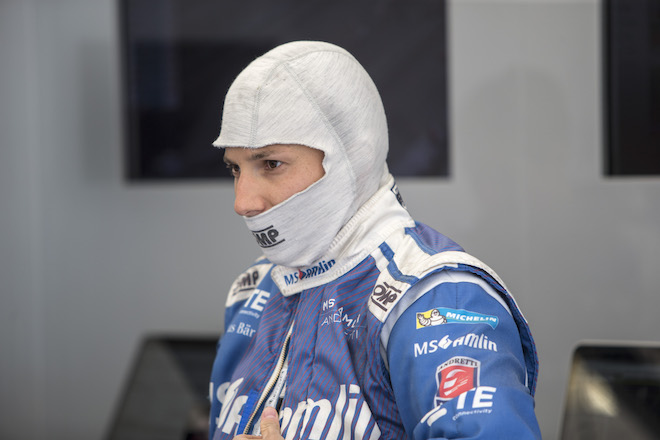
Q: I am curious to know whether you think Simona de Silvestro (ABOVE) will ever get another opportunity in IndyCar? I think she is a better driver than her record shows. Would it be possible for Formula E to run at Indy or other tracks in the states? I am trying to be a fan of Formula E, but find following it rather difficult.
JR Katt
RM: I certainly hope so, because she's the best female road racer ever and certainly capable of winning if she was with one of the powers. She's also a great person who was gaining fans every year with her savvy and spirit. I'm glad some local teams like Andretti are making money with Formula E and I'm glad Dario Franchitti is the analyst on television, but for me, it's just one more series I don't care about.
Q: I've said this before and I'll say it again: The future of IndyCar racing is on natural road courses. If you need any proof of that, look at this season: Road America was a huge success, the anticipation of the series' return at Watkins Glen is palpable, people are begging every weekend for the series to return to Portland and for the series to visit COTA, and races at Circuit Gilles Villeneuve in Quebec and Autodromo Hermanos Rodríguez in Mexico City have been mentioned. What do all of these tracks have in common? They're natural road courses.
IndyCar can't sell tickets at ovals, and for good reason – the racing hasn't been great at ovals outside of Indianapolis since the introduction of the DW12 – and street races are nearly impossible to run sustainably (St. Petersburg, Long Beach, and Toronto are the exceptions. I don't know if Detroit is profitable but for each of them, there's a Boston, Baltimore, Houston, Chicago).
I'm fine with the keeping the current street races and no one should touch the Indy 500, but the oval races at Pocono and Texas are poorly-attended and the racing is even worse. If IndyCar were to drop those two and add Montreal, COTA, Mexico City, and Portland, that, combined with the introduction of a unified aero kit in 2018, would take IndyCar to heights not seen since the CART glory days.
Garrick, Alabama
RM: IndyCar's calling card has always been diversity whether it was mile dirt tracks, ovals or road courses, and IndyCar's heritage is ovals so I don't want to see them disappear. Fontana was as good as it can get in 2015 and Iowa is always entertaining, but Texas has been a dog (on the track and in the grandstands) for several years so dropping it for COTA would be fine. I hope Gateway gets another chance because I think its promoter will give IndyCar a good ride, but Pocono seems doomed because it's caught in the middle of NASCAR.
Q: Come across another ESPN post by a Cup fan saying that IndyCar is boring racing with only one or two drivers winning every race, so I decided to jump into the stats. I only went back to 2012, but it leaves this question. Why in the seventh level of Hell is IndyCar not capitalizing on this? This should be on every front page of every newspaper in America, you know good and well NASCAR would make sure everyone knew this.
2016: IndyCar: 11 races, 7 winners. 63% of all races ran won by a different driver. Cup: 20 races, 11 winner. 55% of all races
2012-2016: IndyCar: 68 races, 37 winners. 54% of all races. Cup: 164 races, 68 winners. 41%
Bill Bledsoe
RM: IndyCar's surefire promotions should be the fastest cars, best racing and most wide-open competition in North American motorsports. Instead, they use a lame catchphrase – Indy Rivals – that means nothing to anyone. But you are correct, NASCAR would bang the drum long and loud about never knowing who was going to win a race because so many drivers have a chance.
Q: How much of Chevy's dominance do you think is due to Chevy package being that much better on road/street courses and short ovals than Honda? I believe that more of the dominance is due to Penske and Ganassi being that much better than the rest with this generation of car. The Chevy package is probably a notch better than Honda, but the difference probably isn't as big as it appears. Another factor that may be hard to quantify is the quality of the Chevy guy compared to a Honda driver based on their records (Chevy has a better crop by a landslide based on wins). Penske and Ganassi drivers have supplied 35 of the 48 available Fast Six competitors this season. Of the remaining 13, Honda has 10.
Proportionately ,however, Chevy does have an advantage since it is about 11 Hondas versus 3 Chevys. When expanded into the top 12 with the road/street/short oval package, the expectations are the same, but Honda again typically has the edge against the remaining Chevy teams with 38-14. As with the previous stat, Chevy does proportionately hold an advantage, but it isn't as dramatic as the Penske and Ganassi dominance.
While it unrealistic to completely remove Penske and Ganassi from the field, Honda has an advantage of 8-4 when comparing the top qualifying position once the two superpowers are removed. (Chevy does better at Phoenix, Alabama, Iowa, and Toronto). Honda does have the two poles at speedways, though it has been pretty bad in qualifying at the short ovals which suggests that the engine isn't the problem. Pocono will probably tell a lot regarding how comparable the speedway packages are.
So while I do believe the Chevy is a better package when using the road/short sval package, the Honda perhaps is not as far behind as the results initially may suggest. Penske and Ganassi really seem to have found the sweet spot with these cars. It also wouldn't be the first time Penske and Ganassi were the stars of their manufacturer (Toyota in 2004/2005).
Justin Lee
RM: There isn't much of a gap between the two, but a couple of tenths a lap over the course of two hours adds up. Honda closed the gap this year and most of its drivers say it's not horsepower they lack, but Chevy seems to have better mechanical and aero grip – hence its domination on road and streets. And for sure, having the two most successful programs on your side with eight cars is a also a nice advantage. But, in terms of pure power, Honda had the fastest straightaway speeds at Indy and Road America.
Q: My take on the IndyCar at The Glen: I get that $150-$400 for a campsite that allows two vehicles (or six-to-eight people) for four nights is not a bad rate in itself. But, for me, having to work Thursday and Friday, and not knowing more than one other person who likes racing, this is prohibitive pricing. Add the $90 dollars for the admission, and add 25% currency exchange adjustment because I am Canadian, and now you are looking at almost $750 Canadian for two days' worth of racing. At that rate, I will not be going this year or any year. The Glen needs to also cater to those single or two-person fans that can only go for one night, like me.
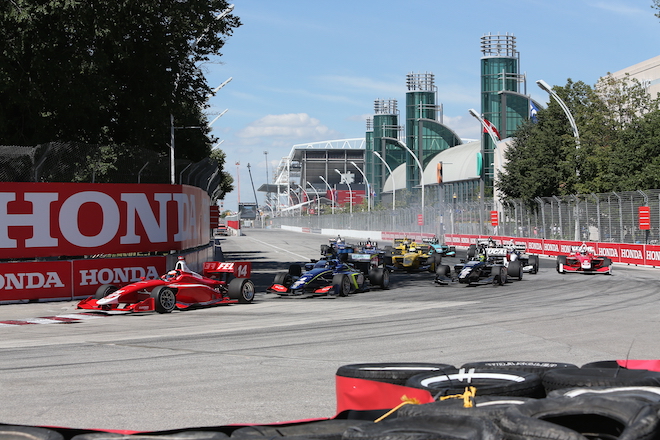
Also, I have been enthralled with the Indy Lights series (above) this year. The racing reminds me of the CART days with Bourdais, Tracy, and Tagliani duking it out, but in this series it's Jones, Stoneman and Urrutia, with Veach, Serralles, Kyle Kaiser and Rosenqvist. Prior to Toronto, the top three guys in points were all on probation.
Those are racy cars that Dan Andersen has in this series, and it is every bit as good as IndyCar. They do need more cars, though. Pit stops would also be good, but I get that the extra crew and equipment would make the series too expensive. You never talk about them in any of your articles, or in the Mailbag. Do you watch them at all, and if so, what is your opinion of the racing in this year's series?
Paul Sturmey, Ottawa, Canada
RM: You make a great argument. There should be a race day ticket reasonably priced (say $40 that includes paddock access). IndyCar and The Glen are trying to grow an audience, and it's done by giving people a bargain the first couple years to get them in. The Lights series is very entertaining with some damn good, young racers and I should do more with it – period.
Q: Update to The Glen camping prices. Mid-Ohio is charging $60 to stay the weekend in a tent and $125 to stay the weekend in a motorhome. Draw your own conclusions.
Paul Winter, Eden NY
RM: But you still need a general admission or grandstand ticket, and they range from $75-$85 for all three days to $55 on race day only. Still pretty reasonable though, and a three-day paddock pass for $30 is one of the best bargains going.
Q: While there will always be a danger to pit members regardless of cars pitting under yellow or green, there is an inherently greater risk when there are more cars on pit road at one time. That occurs during yellows. Most of the accidents on pit lane do not occur between cars pitting next to each other. They occur because the pit lane is too crowded.
Take the Coyne accident at the 2015 Indianapolis 500. Pippa Mann left her pit stall and drove in the left pit lane because there was a car on her right in the outside lane. She could not slide over. Then Davison left his pit box and drove into Pippa, causing him to spin into Vautier's crew. In 2016, Townsend Bell couldn't move all the way to the outside lane because Helio was there, so he makes contact with RHR. Fortunately no crew members were injured.
Contact is inevitable, but I think it would be a lot less likely if 33 cars (or 24 or so on non-500 races) are not all on pit lane at the same time. Obviously there is a reason pack racing is so dangerous, so why encourage a pack of cars all on pit lane at one time? By only allowing green flag stops, you increase the chances that fewer cars will pit together. Even if it is spread out over three laps, that makes for a very less crowded (and safer) pit lane. By continuing to close pit lane when the caution comes out, you still keep drivers from racing to pit lane right when the yellow comes out. If you must come in to receive fuel in order to not run out, you'll end up at the back of the line, so that would be a big reason for teams not to run fuel all the way down during the early portions of the race.
This would essentially work the same as the current rule, except teams would need to plan their pit stops with this rule in mind. In essence, teams would have to balance the risk of running all the way down compared to stopping a few laps early in case a caution comes out soon after. It would also eliminate the "wave around" rule. For example, if you pit under green and lose a lap, you are hurt when other drivers get to make their stop under yellow. But, if pits were closed, you would be able to un-lap yourself when the leaders make their pit stops under green.
TV could also have more time for commercials during yellow since they would not show the pit stops, so hopefully there would be less commercials during green flag racing. Obviously there is not a perfect solution, or it would be in place right now.
Sasha K.
RM: Tight pit boxes and cars wide open on pit speed limiters leaving the box are just as culpable. I favor the sportscar rule of not letting crew members over the wall until the car stops, but they're still in harm's way on pit exits. It's amazing, I worked for Lloyd Ruby when there was no pit speed limit and he came in at 170mph at Indy, Pocono and MIS, but nobody ever got hit. And we had to push the car out after the stop, so there was no frenetic fishtailing out of the boxes.
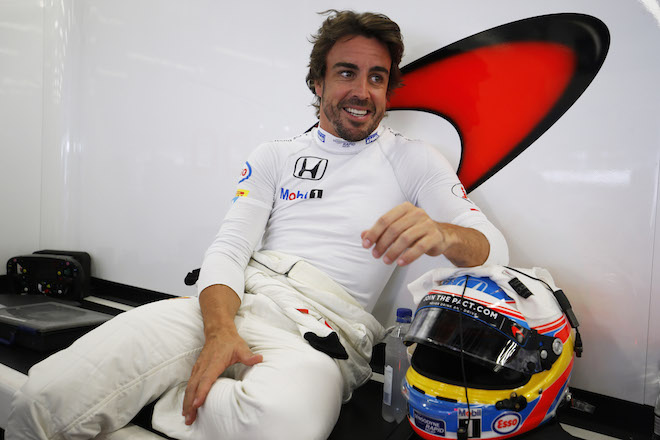
Q: With the news that Fernando Alonso is open to being "lured away" by Le Mans or the Indy 500, now surely has to be the time for IndyCar or one of the big teams to start throwing everything in Fernando's direction. Can Andretti or Rahal (or any Honda team) use the Honda link and get him to test an IndyCar next season? It might not lead to a '90s style boom period, but It would be a huge coup to get a global star like Alonso over to the series, even if it's just the Indy 500 at first. Surely worth breaking the bank over?
Andrew B., Nottingham, England
RM: Although his star is fading under the weight of McLaren's free-fall to the bottom, Alonso is still a big name and might sell some tickets next May so I imagine a team could find a sponsor. That said, he's not Nigel Mansell-big – coming off a world title – so I wouldn't break the bank, but it might be a nice tie-in for Honda and good PR for IndyCar that he's publicly declared he wants to win Indy.
Q: I always respected Fernando Alonso's talent but I really enjoyed his comment about how he said the Indy 500 and the 24 Hours of Le Mans are the two races with the most prestige and that he has interest in running the 500. After seeing the emotions of guys like Munoz, TK and RHR at this year's 500, and how much it means, it's still a victory that drivers all over the world want. I was glad to see a driver like Alonso make that comment because it seems like here in America, the media and many race fans seem to act like Daytona is the only race that matters. Of all the drivers you know from other series which has shown the most praise for the 500 and wants to win it more then anyone?
Ryan McKeever
RM: First off all, I imagine Alonso would relish the chance to actually have a fighting chance again in a racecar, so that's part of Indy's appeal. But I don't think Daytona is viewed larger on an international scale, and most drivers from other disciplines would likely favor Indy on their bucket list. Kyle Busch has made it clear he wants to run Indy (ditto for Kyle Larson and Rico Abreu), and said a few years ago he couldn't do it until he won a title for Joe Gibbs. Well now he has, and that guy is a racer that seems to embrace challenge.
Q: I'm not sure if this has been brought up yet, but after seeing Will Power finally win the luck of the draw on yellows at Toronto, I am in a confident enough mood to propose an idea. IndyCar needs restarts and yellow flag bunch-ups. It has added excitement throughout the entire history of the series, and it prevents a F1 Mercedes-esque runaway day that the fans will sleep through. That being said, I grow slightly tired of seeing a team's day getting ruined due to a gamble on yellows.
Here's my plan: what if a VSC came on for just the first caution lap? Slow the cars up when the yellow comes out, but let the teams pit. Then, after the first lap of yellow, the pace car comes out and allows for a green flag restart. Would this work? I think it may prevent a race-ruin for cars pitting that get caught by yellows, and also would keep drivers from racing to the pits on yellows. What do you think?
Grant Vague, Minnesota
RM: Brian Barnhart's response:
"I like the concepts, where the field is slowed safely by either a VSC or electronically, and then the pace car comes out to pack them up and leads to a restart. If we can work on the system to get them slowed down on the first lap, it has some merit for sure."
Q: Once again a brilliant performance is destroyed by the yellow flag lottery. I can't believe that the people in charge of IndyCar find this acceptable. I don't want to hear that the pits have to be closed because they don't want anyone driving unsafely to get to the pits. Recently they punished a driver during qualifying for not slowing down for a local yellow, so they know how to use the telemetry. Once there is a full-course caution they could use the Virtual Safety Car to get all the cars slowed down with the pits open. Then the pace car could pick up the first car out of the pits, or the first car that chooses not to pit after the start / finish line, and then let the field bunch up prior to the restart.
It seems to me that sometimes, instead of looking at new technology and seeing how it might work to make the racing better, IndyCar management would rather ignore it. If they are still worried about drivers speeding to the pits, then make the penalty severe enough that no one would try. I don't have a favorite driver or team, I just want to see good, fair racing. I do think that if a driver is having a day where he can pull a four- or five-second lead over the field, it shouldn't come down to the luck of the draw with a full course caution and end up eighth, while a driver who would probably not be in the top ten ends up on the podium.
Dave, Vineland, NJ
RM: As it was stated a couple Mailbags ago, the competitors complained about open pits to IndyCar a couple years ago so it was decided to close them. It can be unfair, and there is also a rule of thumb than when your pit window opens and you're leading, get in before a caution waves and catches you out. Waiting cost Castroneves a win at Detroit and Dixon a win at Toronto.
Q: Toronto once again illustrates how awful full course yellows can be. I really dislike full-course yellows being used on anything but ovals in the first place, but if they have to be used, why not form up the cars behind the safety car in the order they were in on the lap preceding the incident which caused the caution? Leave the pits open, and if someone chooses to stop and go to the back of the field, so be it. I road raced for 20 years and never experienced more than local yellows, and maybe a couple red flags for more serious situations.
Lyle Rundhaug
RM: I'm told that IndyCar is reviewing its procedures and looking at finding some kind of remedy to rectify the FCY curse, but it's a work in progress. How's that for not answering your question?
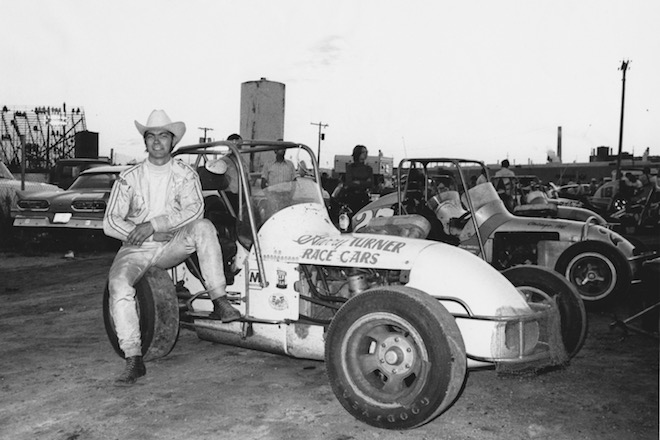
Q: I cannot believe its been 26 years since the passing of the great Rich Vogler! A couple of my memories were at Winchester when his dad Don was starting last in a heat race, and when they threw the green, Don was leading them across the line. This happened three times before they black-flagged him, and here came Rich charging toward the flag man standing on the pit wall and showing the flag man his middle finger. The fans loved it!
Another time in the infield at Salem, he was sitting with family and I went and asked him if me and some friends could get a picture with him, he said sure! Before we took the picture he wanted to know all of our names and where we were from, and that was cool since most drivers act like they're doing you a favor and don't give a crap who you are. Loved watching him run the hills of Salem and Winchester; nobody was better, he raced against the track, constantly pushing his own limits, because when he was in good equipment no one could run with him. I miss Rich and will always remember him.
EagleDale
RM: There was a lot of tough love in the Vogler family and I think it played a big role in Rich being such a bulldog on the track. He was relentless in a midget or sprint car, and nobody ever drove any harder. He was oblivious that other drivers might not like him, he didn't care, but beneath that Mad Dog exterior was a pretty nice guy. Even if he was kicking ass (like that night in Salem), he just couldn't slow down or back off, and sadly, that's what ended up killing him. But what a racer.
Q: With all the aerokit/OEM discussions for 2018, any talk of the return of standing starts for road/street courses?
John Plachta
RM: Haven't heard it mentioned, but they should be mandatory at Long Beach and Toronto.
Q: So, most guys will tune in Family Feud to see the swimsuit models but who knows, if the IndyCar guys put on a good show maybe they will get a few new fans. I have not seen that show since way before Richard Dawson left, but I think I might watch this one. I just hope like hell the guys win.
Tom in Waco
RM: You're referring to the Celebrity Family Feud with Will Power, Conor Daly, James Hinchcliffe, Helio Castroneves and Tony Kanaan competing against swimsuit models. It's going to be on this Sunday evening on ABC following the Mid-Ohio race on CNBC and re-air on NBCSN.
Q: A question that has not been discussed in full. Due to the rash amounts of concussions coming to the fore lately, have the helmet designers overlooked something? Were the drivers of old tougher, or did they just drive through the problem? Dario and Dale Jr. don't give up easily, so their problems must have been tough.
Don Betsworth, Torrance, CA
RM: Interesting question. I have lunch every week with Pancho Carter, Lee Kunzman, Bill Vukovich, Bubby Jones, Merle Bettenhausen and Gary Irvin, and we were trying add up all our concussions the other day. We surmised that nobody knew much about concussions, or paid much attention, back in the '60s and '70s, and they weren't given a second thought. Think about all the guys who got KO'd in an Indy car but were back behind the wheel in a back-up car after a night's sleep. Not sure it was bravado as much as it was the urgency not to miss a race.
Today's helmet makers and car manufacturers have made amazing advances, and a driver is safer than ever before. But a vicious hit like Dario took at Houston, compiled with his other high-speed licks, put out the stop sign and although he didn't want to quit he made a wise decision. And I guess in Earnhardt's case it doesn't have to be a big hit for him to be concussed. But times have certainly changed.
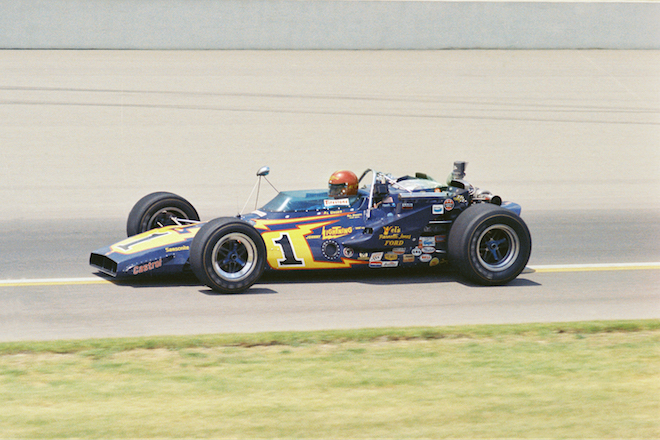
If the sport proceeds with something like an
aeroscreen
, that'll be the straw that breaks the camels back, bringing to an end my lifetime love affair with IndyCar. IndyCar's DNA is open-wheel, open-cockpit racing, But with the combination of snowplow front wings and enclosed rear-wheel pods, IndyCar has already taken a huge step away from being open wheel. Just look at pictures of a 2011 vs. 2016 IndyCar. That's a huge step away from proper open-wheel. And, as an aside, the last beautiful IndyCar (not including CART/ChampCar) was 1996.Don't get me wrong: I'm pro-safety. Advancements like the HANS and the SAFER barrier are game-changers. But they don't alter the fundamental DNA of open-wheel/open-cockpit racing. Things like the aeroscreen are antithetical to the ethos of open-cockpit racing; an ethos that all drivers are aware of as they choose to climb the open-cockpit ladder.
An aeroscreen puts a windshield on an open-cockpit racecar. Sacre bleu! And while the aeroscreen will add a degree of safety, it won't prevent Justin Wilson/Henry Surtees-like tragedies, where debris rained-down from above. So at some point, with the best of intentions, someone will inevitably say, "Hey, for safety, why stop at an aeroscreen – let's add a roof!".
When drivers choose to go open-wheel/open-cockpit racing, they know going in the cars have open wheels and open cockpits. It'll be a sad day if open-wheel/open-cockpit racing is ending, but I'll move on to sportscars like the WEC. They have better looking, higher performing race cars. And they do a better job with that style of racing. No question for you, Robin. Just a deeply disappointed rant.
Mike in San Francisco
RM: You feel the same way I do, because open wheel and open cockpit carries a certain edge that separates it from anything else. I was talking to Dan Gurney about it the other day and he shares our concern that IndyCar can't lose all its identity and become a glorified sportscar. And ex-world champ and Indy winner Jacques Villenueve summed up my feelings when he responded to F1 drivers calling for halo protection:
"If they are afraid, they should go and race touring cars," said Villeneuve. "Yes, we must strive for safety, but there are limits we should not exceed. Risk-taking is inherent in F1. It's part of the beauty of the sport. For me, the halo is too much. I see it that these drivers earn millions and yet they do not want to take any chances. Too bad. Do the MotoGP riders ask to ride inside a bubble? This is why they are increasingly respected and admired compared to F1 drivers."
Q: Now that we have fulfilled all of the historical requirements considering tradition and history at the Indy 500 for the 100th time, can we now offer for consideration a Garage 34 position where a published set of rules are in place but car builders are free to use certain types of power and fuel as long as it has four wheels and a safety cell? You want qualifying to be interesting? How about three or four innovative cars, just like every year at Indy in the 1960's? There's a lot of potential in this. As far as tradition, we have already broken them all with NASCAR, Formula 1 and now a road race on the infield of Indy during the month of May!
Kent Taylor, Destin, FL
RM: I think it's going to take this kind of thinking to get more companies involved, more manufacturers competing and more people paying attention. But it's also going to take a major enticement ($10 million to win) to create that kind of interest, and we can't have cars going 60mph slower on the track during the Indy 500, so it needs some serious thought.
Q: As a longtime IndyCar fan, I believe that its time for the series owners and officials to think outside the box more than ever. The series needs to do something to set itself apart and be interesting and new. First, as many of the young open-wheel drivers follow their dreams and the money trail to NASCAR, IndyCar needs to align itself with the sportscar world and IMSA. What better place to develop young talent and allow them to learn to race than to come up through many divisions they offer. It's a ready-made feeder and development system that is probably also cheaper to purchase a car to race and be competitive within the rules. Cheaper than purchasing and operating Pro Mazda and Indy Lights cars and teams, for sure. It could also allow them to develop young drivers regionally much like NASCARS K&N series.
With this comes a fundamental change to what we think of as an IndyCar. I fully understand the need to keep cost down, but to continue to offer a spec product with single suppliers with little to no noticeable innovation is a bad idea. Taking into account the similar look to an F1 car, with the same style feeder system, the comparisons are going to be there and be unfavorable to IndyCar, especially considering they are often both televised and promoted on NBCSN.
To me, an IndyCar is the car used by the series that runs the Indy 500. A new, innovative style of car that sets itself apart, as well as going to tracks both new and legendary that the fans want to see is the way to bring this once-premier series back and to make it stand out. When I envision a new IndyCar, I see a mini, center single-seat version of an open-cockpit prototype car, powered by production spec V6 or V8 engines. Get rid of the engine supplier rules, and allow a manufacturer to supply engines to as few or as many as teams as they want. This may even lead to a couple of factory teams. Chassis could come from Riley, ORECA and even Dallara. Pairing with IMSA, re-imagining the IndyCar and changing the engine specs and the supplier rules could make the manufacturers sit up and take notice.
The stagnation of IndyCar has left me wanting for a while now, and I get my racing fix from F1, IMSA, WEC, and others. I still watch IndyCar, but it has to find a way to set itself apart. The return to the legendary road courses has got me buzzing a little bit, but the lack of any real innovation over the last few years has gotten old. And I don't count the new aero kits. It's time for a new IndyCar from top to bottom. It doesn't have to be Grandpa's IndyCar any more. Sorry for venting; the series used to be a spectacle, but with all the great racing available now, it's becoming an also-ran. I don't want it to disappear altogether.
Rory King
RM: Not sure sportscar racing is any cheaper than the Mazda Road to Indy, and I don't see how it's better preparation to be an IndyCar driver. I think Dan Andersen's path is fine, and he can help Spencer Pigot get into an IndyCar – but staying there requires big money that's tough for anyone to obtain. You are spot-on about aero kits. IndyCar is going to have some kind of new look by 2018, and hopefully that also includes a third engine company. But to get innovation like you suggest is going to take much larger purses and more of an open shop to attract any new interest, and I don't see it happening.
Presented by:

Latest News
Comments
Comments are disabled until you accept Social Networking Cookies. Update cookie preferences
If the dialog doesn't appear, ad-blockers are often the cause; try disabling yours or see our Social Features Support.