INDYCAR: Young F1 graduates impress in Iowa
What is it about short ovals that fit young Formula 1 graduates like Alexander Rossi and Max Chilton?
Sunday's Iowa Corn 300 Verizon IndyCar Series race featured strong performances from both of the rookies who grew up on a strict diet of road racing, and it got started with Chilton, who won the 2015 Indy Lights race on the 0.894-mile track, in qualifying.
Related Stories
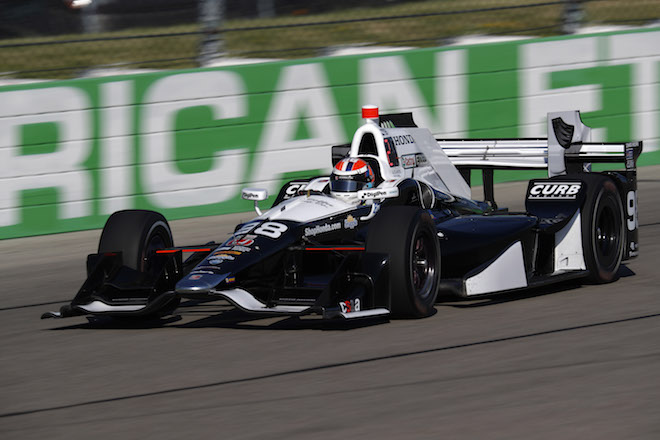
The former Marussia F1 driver displaced Chip Ganassi Racing teammates (and IndyCar champions) Scott Dixon and Tony Kanaan, plus CGR's Charlie Kimball, by starting fourth. The Briton briefly led his first laps in the IndyCar Series before a late spin dropped him from eighth to 19th at the finish, but his comfort on the bullring was clearly evident.
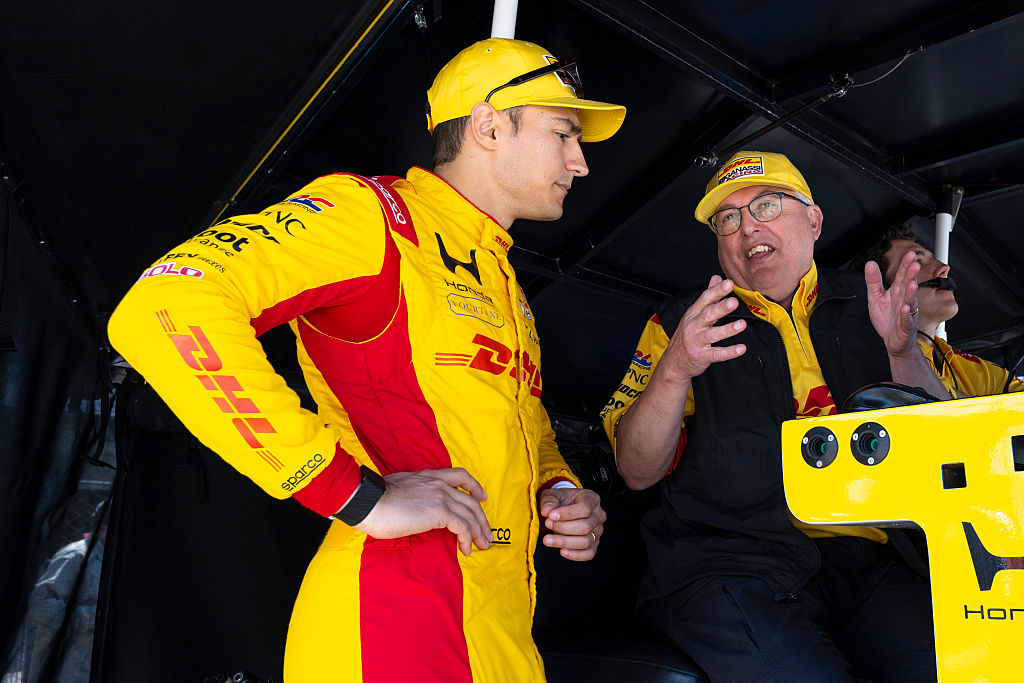
The other ex-Marussia F1 driver in the field, Indy 500 winner Alexander Rossi, went in the opposite direction for Andretti-Herta Autosport by starting 17th, and even went down a lap on lap 40 of the 300-lap event before marching back and finishing sixth.
Chilton was on pace for a top-eight result, which would have been close to his best of the season (seventh on the 1.0-mile Phoenix oval). For Rossi, who unlike Chilton had zero oval experience prior to 2016, his two strongest finishes have come at the Indy 500 and at Iowa. So what gives?
"I don't know if you can quantify it on where we come from, but we're both with incredibly good teams that have very good oval setups, so that makes a difference," Rossi told RACER. "Setups dictate a lot of your performance on an oval; you can be the best driver in the world, but if it isn't working on an oval, there's nothing you can do. So our teams are making us look good, for sure."
Rossi also credits his newfound oval prowess to the advice he received on how to improve the No. 98 Honda.
"Beyond that, what I've gotten more comfortable with since Phoenix is people have been telling me that if something feels wrong, it probably is, so pit," he added. "That has lended itself very well to practice and testing, so we're stopping and making things better more than ever, but that goes out the window in the race, obviously.
"If the car's off in the race, it's a big, scary as s**t, primal thing you have to deal. That's another big area I've learned after going through the month of May: learning how to deal with a car in the race when it isn't perfect. That's really carried over to Texas and now Iowa."
Chilton's engineer, Brandon Fry, who has worked with a lot of rookie drivers, believes the process-driven nature of F1 has helped his driver to make an instant connection with the art of short oval driving.
"Max just has a very methodical approach and goes about things," Fry said of the No. 8 Chevy driver. "He works his way up to things, we tell him how we're going to get him up to speed on an oval like Iowa, the process we're going to take, and he goes along with it. And he has Mr. Methodical, Dario Franchitti, in his ear helping him to stick to the plan. He really bought into the process, he's very much respected ovals, and let us tell him the direction to take and he hasn't stepped outside the boundaries."
Fry also has an interesting viewpoint on why European-trained rookies like Chilton and Rossi have an easier time shining at a short oval than many of the tracks that would be considered a better fit for their road course upbringing.
"They come in with so much experience on smooth tracks and know how to turn left and right, but they really get caught out on bumpy tracks," he said. "Yes, these guys have ton of talent and that's their background in F1 or coming out of Europe, but we send them to these super bumpy street courses and that conflicts with what they're used to.
"So it doesn't surprise me when I see the rookies at the back of the field on a street course, and the inverse on ovals if they have in good cars. Conversely, I felt bad for Conor Daly last weekend who looked like a fish out of water because they missed the setup, but they could have easily been fast if everything was working."
Rossi's 10th-place finishes at the GP of Indy and the opening Belle Isle race are the highest either has finished on a road or street course, which supports Fry's theory; Chilton's best finish is 14th (both at Long Beach and the GP of Indy). Until the F1 graduates gain more experience driving IndyCars on rough circuits, the upcoming oval races at Pocono and Texas could provide their next-best chances to produce solid finishes.
"It takes a lot longer to learn how to race on a bumpy track, and if you have the experience, you can make a difference there," Fry added. "On an oval, a rookie can look a lot more experienced just by having the right setup."

Latest News
Comments
Comments are disabled until you accept Social Networking Cookies. Update cookie preferences
If the dialog doesn't appear, ad-blockers are often the cause; try disabling yours or see our Social Features Support.