LM24: LMP1 fuel saving 101
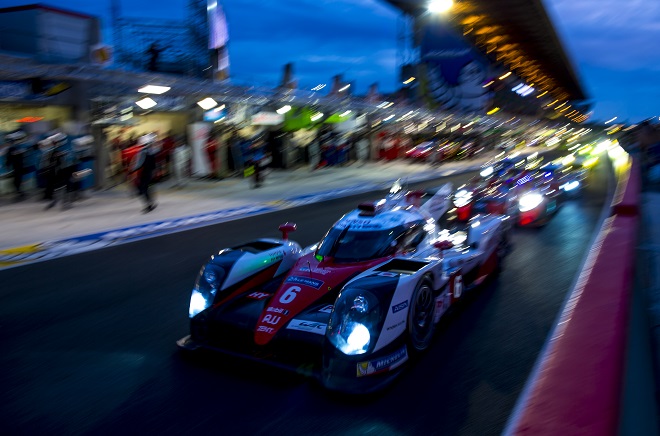
Fuel conservation has become a mandatory part of racing LMP1 Hybrids at Le Mans. Although saving fuel might sound like a recipe for slow and boring racing, the art of navigating the 8.5-mile road course while averaging 150mph or more each lap has become a fine art.
It’s the ultimate contradiction: Go as quickly as possible while using the least amount of fuel. And for LMP1 Hybrids in 2016, the organizers of the 24 Hours of Le Mans have taken more fuel away – a cut of almost 10 percent per lap – from what they had available last year.
Related Stories
Dealing with the ever-decreasing amount of fuel that can be used to feed the gas- and diesel-powered P1 engines has become the domain of the drivers and engineers within the Audi, Porsche, and Toyota programs. On the team side, the electronics departments have worked feverishly to automate as much of the fuel saving as possible. From limiting power and fuel at the top of the rev range to running as lean as possible, computers have become vital parts of the conservation puzzle. But they don’t handle everything.
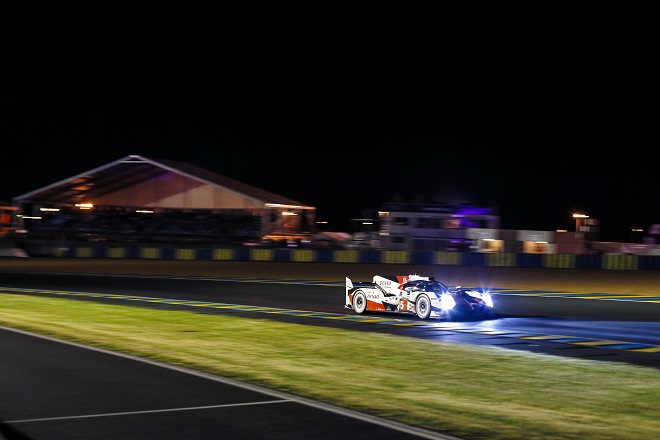
Drivers are also responsible for making speed without an over-reliance on fuel, and sometimes, simply lifting off the throttle at strategic locations on the Le Mans circuit can make the difference between meeting the per-lap fuel allowance and going over the limit. The secret from inside the cockpit, according Toyota TS050 Hybrid driver Anthony Davidson, is treating the long Le Mans straights like drag strips, then easing off the throttle once top speed has been achieved.
“It’s essentially the fuel flow regulation that we’re basically catapulting ourselves to top speed as fast as we possibly can to make sure that we hit our fuel target for the lap,” the Briton told RACER. “On the racetrack it’s the most efficient way to save fuel by doing exactly that.
“In a road car, you’ve got the luxury of not having to race people. You can just cruise up to your designated speed, as long as you want to take, and that’s how you save fuel. On the racetrack, it’s all about the lap time. So to achieve the lap time and the fuel target for that given lap, you have to catapult yourself up to top speed as quickly as you can. That’s why the more power you have, the better you can to get to that top speed before you have to do your lift and coast at the end of the straight.”
And that’s where the sheer pace of today’s LMP1 Hybrids has become so impressive. Rather than burn the maximum amount of fuel the entire length of the straights, drivers – and the electronics – have been tuned to use the latter stages of those straights, after maximum velocity has been attained, as prime fuel saving locations.
“It’s a bit like an airplane taking off the runway and then what it does at its cruising speed, cruising altitude,” Davidson continued. “The pilot gives it everything it’s got on the runway, then once it’s taken off and reached altitude, he throttles back once it gets to top speed. That’s what we’re doing, essentially.
Even with that process in place, Davidson says there are still points on the track where coasting into the braking zones is required. If he’s fine with throttling back and saving the unnecessary waste of fuel at top speed, he admits taking his foot entirely off the throttle simply to conserve fuel will never feel natural.
“I think the cars that we drive today are impressive, but you do have the fuel cuts at the end of the straights, which I still don’t feel comfortable with as a driver,” he said. “It’s a whole different coast philosophy. It’s a bit hazy for a racing driver, and having not done this since I got started driving as an eight-year-old boy, I still find that odd to not push the car right up to the furthest braking point. We still brake as late as we can, but we’re doing it off the throttle for quite some time before we do brake. It’s become necessary, but it feels weird.”

Latest News

Comments
Comments are disabled until you accept Social Networking Cookies. Update cookie preferences
If the dialog doesn't appear, ad-blockers are often the cause; try disabling yours or see our Social Features Support.