INSIGHT: The 1000hp monsters of Le Mans
We can talk about the high-tech electronics and cutting-edge aerodynamics found throughout the LMP1-Hybrid cars produced by Audi, Porsche, and Toyota, and we can marvel at the rest of the mechanical wizardry contained within today's Le Mans racers, but don't lets the gizmos and gadgets overshadow one simple fact: All three make hellacious horsepower.
Each manufacturer has taken a different path on their choice of engine and energy recovery system (ERS). Audi is the lone diesel in the group, mating a 4.0-liter single-turbo V6 engine to a 6 megajoule (MJ) lithium-ion battery-based ERS unit that harvests from a motor generator unit (MGU) attached to the front axles.
The German marque claimed a conservative 818 combined horsepower with its 4MJ system in 2015, and with the new 6MJ unit, Audi finally admits to cranking out more than 1000hp. Before that power hits, you have the stupendous torque offered by the turbodiesel engine which, in its angriest form, will rattle the Richter scale.
Porsche's wacky 2.0-liter single-turbo V4 is boosted by two ERS units that total 8MJ of assistance. Audi's sister brand will only admit to 400hp from a battery-based ERS system that uses a front-axle MGU and a secondary exhaust-driven system. With the 400 electric hp and the 500hp it suggests the V4 delivers, Porsche says the 919 Hybrid only puts 900hp to the ground. Believe that at your own peril.
Finally, and to Toyota's credit, it has never been afraid to embrace the frightening power its engine and ERS systems offer. The Japanese brand were the first to put the 1000hp figure in print among the current LMP1 cars, and with a move from 6 MJ to 8 MJ this year, and a switch from a naturally-aspirated V8 to a 2.4-liter twin-turbo V6, achieving the 1000hp mark (or more) remains a point of pride.
Even with the ACO taking away almost 10 percent of the fuel allowed for consumption per lap, which has robbed power from every P1 Hybrid, Le Mans 2016 will continue the primal celebration of raw power. At 1000-plus hp in qualifying trim, fans will have six of these all-wheel-drive dragsters – two apiece from Audi, Porsche and Toyota – to behold. That's what we can look forward to this year, but what about some of the 1000hp cars that came before the LMP1 hybrid formula?
If there's one thing drivers love to talk about, it's speed, and at Le Mans, ultimate speed comes from ultimate power. Listening to the likes of Mark Blundell, Anthony Davidson, Allan McNish, Stefan Johansson, and Mark Webber share tales about wielding old and new prototypes with terrifying acceleration at Le Mans was a privilege. Here are their individual accounts of lapping La Sarthe at warp speed...
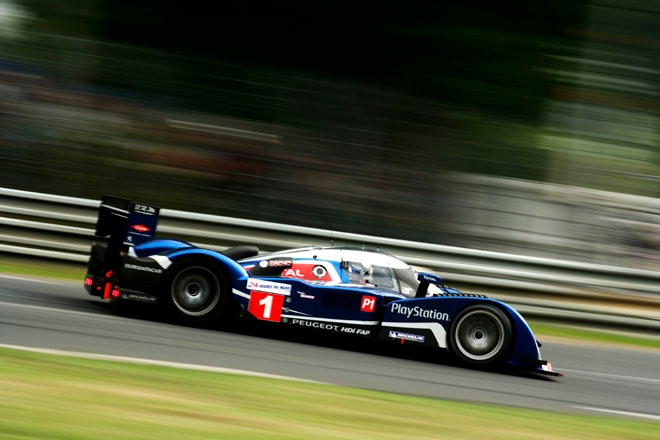
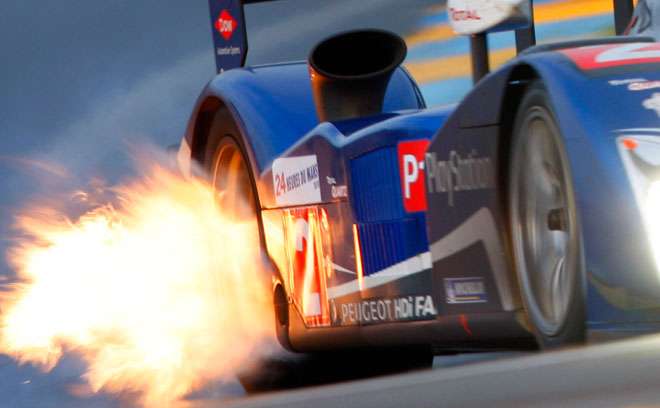
Before he had 1000 combined horsepower on tap in the Toyota TS040, Davidson had the almighty Peugeot 908 at his disposal. Its power figure came in slightly below the 1000 hp mark in the pre-ERS days, but with its monumental torque figures, the French rocket was an absolute handful to contain.
"Thanks to the regulations, I think, my fondest memories so far of LMP1 are from the V12 turbodiesel days, the Peugeot, because you had well over 800 horsepower all the time, and we had monstrous torque. It was, in many ways, more of a beast to drive than the new cars because it was quite a laggy engine, and it had all this torque, which spooled up through the twin turbos.
"When it kicked in and started chugging along, you could easily spin the car; the traction control didn't work as effectively as the gasoline engine does, so it was this beastly laggy thing to drive. It really felt like a proper, hardcore car to drive.
"So on top of being a laggy, massively torquey engine, you just had rear-wheel drive, and the aero wasn't as sophisticated as it is today. I can imagine, from that Peugeot, what the Group C cars must've been like to drive. Today's cars are too different from what the Group C cars were. They're narrower and they're more slippery. They've got more downforce; the whole philosophy changed. It's more fingertip driving now instead of getting your elbows out and hustling the car around – more of a point-and-squirt job.
"And the V12 engine was so huge. It made you feel really cool. You could feel the inertia of the thing. You took the body off the back and it was just like a boat engine; it just went on and on and on. It was a real feat of engineering. It made you feel like a hero that you're driving such a massive engine around the track. In a way, I was quite scared of the thing."
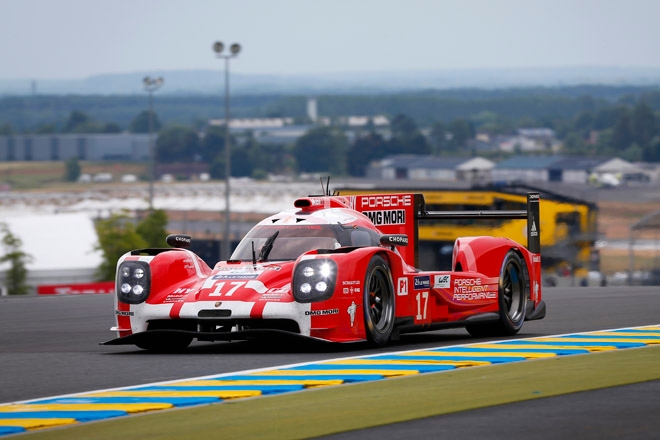
The Aussie Formula 1 veteran raced at Le Mans in the late 1990s with Mercedes, but those prototypes were tame compared to the wicked 919 Hybrid he drives today. The 2015 version of the Porsche (above) was estimated to have somewhere near 1200-1300hp in its most insane form, which makes Webber's comparisons between an F1 car and today's P1s rather fascinating.
"I wasn't a big fan of KERS when it came to Formula 1, the electric component. I mean, to be honest, now, particularly what was done with Porsche they have been very, very aggressive and very optimistic to put a huge amount of focus on the electric and the hybrid side with the 8 MJ class.
"We're trimming the fuel even further back instead of putting a lot of pressure on ourselves to make sure that we can generate a lot of power from the electrical side. The combustion engine and the hybrid engine together now produce a massive amount of horsepower, and it is so quick now.
"The sensation of speed is very, very high. I've experienced 350km/h (218mph) at Monza with the V10 Formula 1 engines, and it's up there with that, if not slightly ahead, because the electric power, and the torque, is so instant that it's something the driver feels. When we had 900 horsepower in a Formula 1 with the V10s, the car was 600kg (1320lb), and it was obviously very light. Now we've got more power than that, but we have a bit more weight, so naturally the Formula 1 cars hold a lap time advantage.
"We have a huge G-force component when exiting all those low-speed corners, and still have torque on the straights, that's the impressive thing. Normally, when you're pushing that amount of aerodynamics on the straight in a P1 car, it will start running out of power and torque on the engine side. But when you have the electrical side and the hybrid, it says, 'I'm just going to keep giving you this brutal horsepower and you have to take it.'
"The Germans are famous for big power. The Germans do know what they're doing under the bonnet, that's for sure."
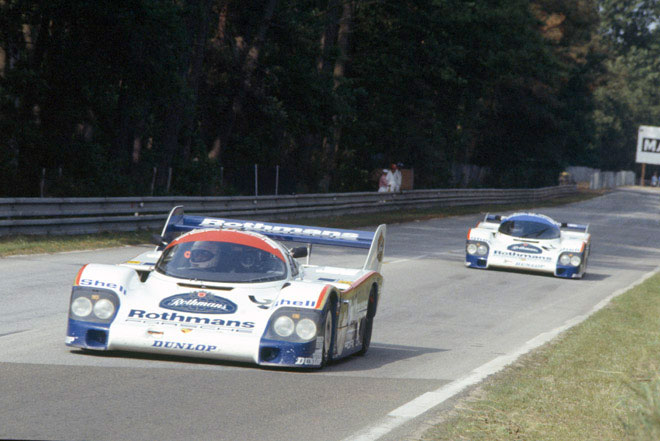
The Swede is one of very few racecar drivers to experience more than 1000 hp in Formula 1, IndyCar, and at Le Mans. His first taste of ridiculous power came during his LM24 debut with Joest Racing.
"The year was 1983 with the 956, and there were no chicanes. I know I had the record for quite a while for 408km/h (253.5mph) top speed in qualifying. I think we had just a little bit over 1,000hp back then with the boost cranked up just for one lap. It was awesome. It was serious.
"Obviously, no power steering or anything like that. It was very directional, wandering all over the straights. With no chicanes at that speed, literally every lap for 24 hours you sat there sort of anticipating something happening. It was definitely motoring. When you got to the kink and you were doing close to 400km/h (248mph), you do feel the speed.
"Bear in mind, those 956s just had an aluminum tub as well; there wasn't even a carbon fiber tub in those days, and they folded pretty good if you crashed them. It wasn't very safe at those speeds, I can tell you.
"That's just how it was back then. Racing was awesome. In every aspect it was just great. And, frankly, if you look back in history, there weren't really that many accidents overall compared to what it is now, even. But considering how unsafe the tracks were back then compared to now, I would say that the safety really was not as bad as people may perceive it to have been.
"Personally, I think it's one of the problems with racing in general. They've dumbed every car down. Just reducing horsepower instead of looking at other things to slow them down. They go slower on the straight, but the speed in the corner is much higher. Last time I checked, most of the accidents happen in the corner, so I don't understand the logic of that.
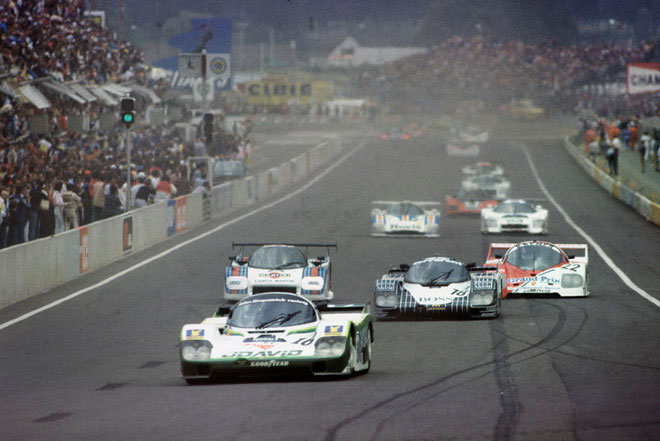
"When you do a balls-out qualifying lap with 1000 horsepower, it's just that. It's balls out. You just have to go for it. It's commitment and control. Qualifying in those days was one lap, so you're not entirely sure where your limit is. You've got to hang there around the limit. And you sometimes are over it and sometimes under it. But you're right there all the time. You only have that one lap to do it.
"A qualifying lap at Le Mans at that time was just a blur, really. You were just hanging in there and just did what you had to do. The engineer after the run was asking you, 'How's the car?' And you're like, 'What? I'm just trying to survive, man!" From a driver's point of view, I think it was the best period ever. The cars were just awesome."
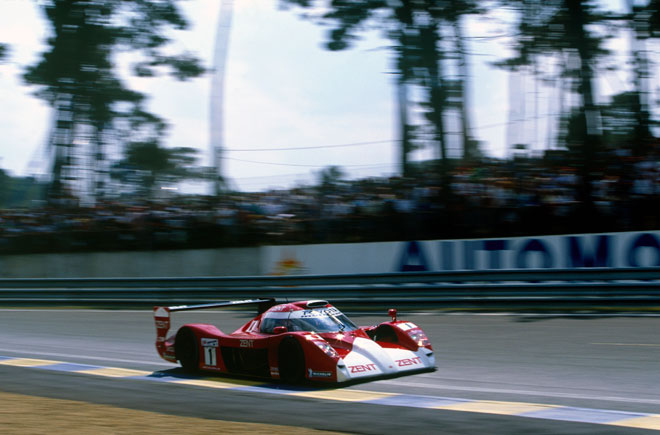
The Scot strapped himself into a series of brutal Le Mans prototypes from his debut in 1997 to his swansong in 2013. The traditional gas-fed turbos in the Toyota GT-One put up huge horsepower numbers in qualifying, but couldn't boast the instant acceleration of Audi's titanic turbodiesel. In terms of pure power – the forces generated by engines to move cars forward at Le Mans – the giant French and German V12 turbodiesels have a place all to themselves in the history books.
"I think the fact is, through the course of my time at Le Mans, the cars have gotten quicker every year and then they've been pegged back by regulations – and then they've developed generally with a different type of performance. The latest generation's exactly that.
"If I go back to the '98, '99, 2000 time, power was a standard thing. A petrol engine turbo is was what you had; you were not necessarily that quick in the corners, but you were doing some stonking straight-line speeds.
"Then the diesel arrived on the scene in 2006 and we had a lot more power and torque. That really accelerated us down the straights pretty quickly, and don't forget we have two chicanes to slow the cars. That generation of diesels was probably the most powerful engines that I've ever driven, personally. That's including Formula 1 and everything else I've been in, because they were just hugely powerful and torquey.
"Just to drive, my favorite car is the R10 (2006 model, below), just because it was raw. It was just instant torque and power at your foot all the time, as you say. In terms of fun and everything else, it was just a car you had to manhandle. You had to pick it up and throw it around. You couldn't be gentle with it. You had the take control of it or it took control of you.
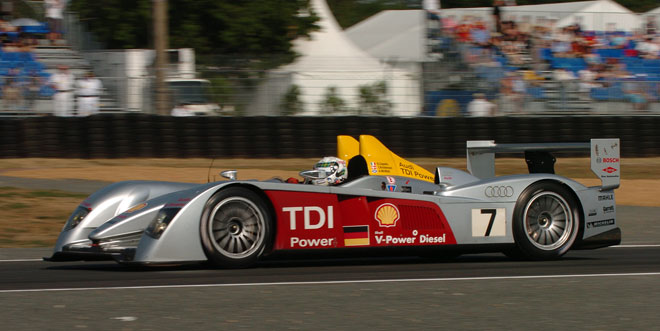
"It's that kick in the back that you get. When you're sitting in a roller coaster and it suddenly takes off, and you're sort of sitting there as a passenger, it initially feels a little bit like when you come out of the corner and you hit the pedal and you're traveling faster than your brain and everything else is expecting. It takes a little while to catch up. Then when you do catch up, you smile. Especially at Le Mans, because the straights are long enough for you to smile.
"After that it becomes normal and natural. But the first time you do hit the throttle, not so much out of Tertre Rouge now because it's a bit faster, but for me it was always out of the Mulsanne and then out of Arnage, then you would get feeling of big accelerations. That always made me smile."
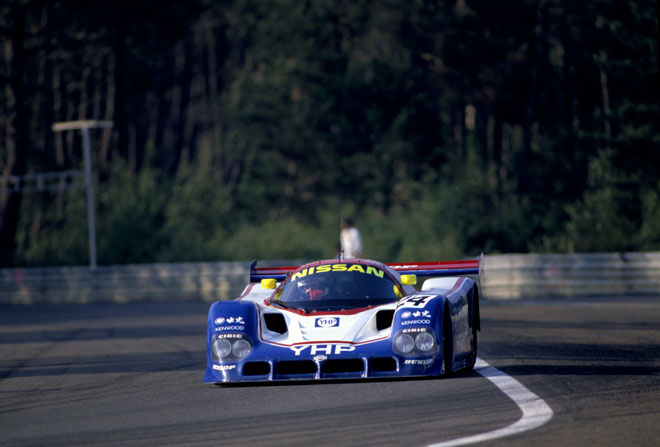
In Formula 1, it was Monza 1986, Gerhard Berger's Benetton-BMW, and a stuck turbo wastegate that pushed his qualifying horsepower to north of 1400. Four years later at Le Mans, it was Mark Blundell's now legendary pole-winning, stuck-wastegate run in 1990 with his Nissan turbo and a temporary power figure somewhere over 1000. The world clearly needs more stuck wastegates.
"The Nissan situation was an interesting one. We were never supposed to do that lap. The build-up during that week was one of tension and frustration. It started even at the beginning of the week, when I and the other lead driver there, Julian Bailey, had to make a decision on who was going to qualify the car and who was going to start the race. So we tossed a coin on that one, and I won the toss and I chose to do the qualifying, with the knowledge that we had this hand grenade of an engine sitting in back of one of the cars that could be used for that special lap, not knowing, unfortunately, that it was going to be incredibly temperamental and wasn't running properly every time we went out.
"At the end of the qualifying practice runs we had this one little twilight zone that existed – the sweet spot of Le Mans qualifying when you come to dusk, when you get that moisture in the air and you still have track temperature and a degree of daylight – and we went out there for the last run that was achievable. And, basically, we had to make a call on going out on the race tires, because we had no knowledge and no experience on qualifying tires.
"To this day, I still believe that the car was capable of doing a quicker lap than what we achieved if we had had a proper level of grip. We never got the car even tuned in. It was just a gut reaction, an instinctive lap, and every corner that came at us was one of no background and reference because it was all fresh. It was a totally reactive series of corners put together.
"The warm-up lap, we started to get a little bit of a feel for what was going on, but halfway around the lap the guys from pit lane requested that I abort the lap and pull the car into the pits because the engine was over-boosting, which had been one of the major problems we had during that week.
"Being a little bit young and naïve at the time – I think I was only about 22 or 23 years old, still quite young for a factory driver, and having a hell of a week of frustration because I knew that if I could get myself into that car there was a big possibility of doing something special – I did the old-school thing, really. I disconnected the radio and thought, 'To hell with it, they can't hear me and I can't hear them. Just go and see with this baby's got.' That is really what happened.
"I started the lap coming off of the last chicane to get onto the start-finish line, and when I hit the throttle in anger, that was the first time we'd ever gotten full throttle. To this day, I still remember the car spinning its wheels in fourth gear before I got to the Dunlop Chicane, and going through the Dunlop Chicane ... if you watched the YouTube video from in-car, there's a tremendous amount of opposite lock on.
"It was one of those laps which was, purely from a driving perspective, one of the most exhilarating laps because it was going into the unknown. The car was not the best-handling car in the world, but at the same time, we had a rocket propelling us. I think we were somewhere in the region of 1080hp at that point. We ran with the carbon brakes because that was also new era stuff back then in Group C. We topped out at 238mph – with the chicanes in – on the Mulsanne.
"And I do believe that there was some lap time left in it on even those tires. We still caught a little bit of traffic at the Porsche Curves. But with some knowledge and a little bit softer tire, I'm pretty sure that there was a good two or three seconds left in that thing. To still turn the lap and be six seconds clear of everybody else was very special. It was one of those laps that will stick with me for a long time, that's for sure.
"I still got my backside kicked when I got back to pit lane. As much as there were happy faces and smiling ones, there were very serious and big frowns on some Japanese bosses there as well. I think if there was a Le Mans folklore legend there, it probably exists with that lap. And also because it set the lap record at the same time around the place. That Nissan was brute force and ignorance."

Latest News
Comments
Comments are disabled until you accept Social Networking Cookies. Update cookie preferences
If the dialog doesn't appear, ad-blockers are often the cause; try disabling yours or see our Social Features Support.