SVRA: Historic Gold Medallion Weekend at Sonoma
This past weekend's SVRA Sonoma Historic Motorsports Festival was clearly the best venue of the 16-event series to talk about the burgeoning Gold Medallion program. The point of this SVRA certification is to recognize owners who have painstakingly preserved significant racecars to original condition and specifications. Such appreciation for history and authenticity is simply the culture and character of the Northern California car community.
Related Stories
The reverence for the history of the cars these people possess is palpable. Many describe themselves as caretakers, not owners. For most of them the seriousness of the matter is understandable when you consider the market value of more than a few of the cars at Sonoma is not just millions of dollars, but tens of millions. You won't find an owner willing to talk specifics unless you are serious about negotiating in a private room.
Throughout the paddock are machines once driven by champions and massive talents such as Denny Hulme, Parnelli Jones, Dan Gurney, Fred Lorenzen and, well, the list goes on and on. Mentioning those names underscores the history, but the Gold Medallion program is more about the authentic preparation and maintenance of the machines. Once certified, the car's owner, or "caretaker," if they prefer, is issued a logbook. Here they record the history of ownership and details of construction. This includes such details as the serial number and events participated in as well as any tech inspector comments.
Modifications allowed to the cars are those done during their original lives as state-of-the-art racers. For example, a car built in the early 1930's might have been developed in the period with upgrades to hydraulic brakes from a previous generation set-up relying on cables. The owner is required to state to what point in time the car is restored. Performance modifications beyond that point are not allowed. To retain certification the owner must maintain the car to the specifications it had when certified - swapping set-ups for different events is not permitted.
Click on the thumbnails below for larger images.
{igallery id=9181|cid=519|pid=5|type=category|children=0|addlinks=0|tags=|limit=0}
SVRA Gold Medallion classes are wholly different than the standard SVRA groups of vintage machines. This is one of the distinctions between cars that are of a certain vintage versus truly historic machines with records of accomplishment and faithful restoration. The SVRA has extensive regulations and application forms for the certification on their website and, for starters, requires membership as the first and most basic step for consideration.
While rules are stringent, there is some measure of latitude with respect to engines. They must at least closely resemble the original specs and performance of their racing days. Production car horsepower must be approximately within 20 percent of what was available when the car was produced. Modern upgrades such as titanium valves and rods are strictly prohibited. While the cockpit and interior of the car must remain period correct, gauges, switches and instruments can be added or exchanged. Wheels, too, are allowed a modicum of latitude but are still expected to be of the same type and size as used in the original era. A maximum increase of one half inch in rim width is permitted. Hard tire compounds are specified in the regulations.
The exterior of the car must be period correct. That means it's a no go on tribute cars as well as modern sponsorship decals. There is latitude on the removal of some features such as windshields and bumpers. Interest in the program was clearly evident among owners with significant cars in the Sonoma paddock. SVRA President and CEO Tony Parella reported that by Saturday afternoon he had received 150 new applications.
One such owner is Jimmy Franzone, who drives the 1965 Holman & Moody Ford Fred Lorenzen piloted to victory in that year's Daytona 500. His car is so revered NASCAR called on him to provide it to Lorenzen's Hall of Fame induction in 2015 and it stayed in their museum throughout last year. Franzone drove the car this weekend at Sonoma and plans to apply for a Gold Medallion.
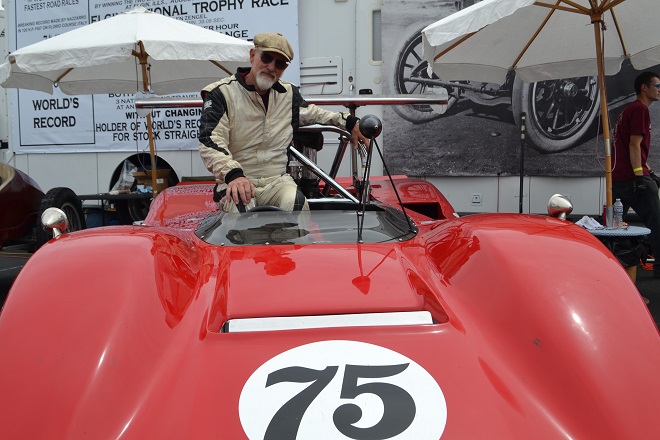
"Honestly, I don't have any interest in racing anything but Gold Medallion," Blain says.
John Hildebrand, father of Indianapolis 500 driver J.R. Hildebrand, is a long time vintage racer who is interested in learning more about the Gold Medallion certification. His car is a 1978 Camaro driven by Craig Carter in the 24 Hours of Daytona. Hildebrand, who has only raced vintage cars, began in the sport in 1991. He has raced regularly since then, especially at west coast venues such as Sonoma and Coronado Island in San Diego. His son J.R.'s interest in racing can be traced to his days as a young boy going to tracks with John in matching father-son tee shirts. For Hildebrand, he expresses the view of many historic racers distinguishing their cars from those in museums.
"Maintenance is necessary," Hildebrand says. "I enjoy the vintage racing ethic of respecting each other's cars with no contact. At the same time, a lot of us want to race the cars hard, so things wear out. When you maintain the car, though, I absolutely want to conform to the specifications that keep my car authentic to its history."
Click on the thumbnails below for larger images.
{igallery id=53|cid=519|pid=5|type=category|children=0|addlinks=0|tags=|limit=0}
Case in point, Erickson Shirley, driver of the awesome ex-Tazio Nuvolari 1934 Alfa Romeo Tippo B, twisted an axle in his Saturday qualifying session. Damage like that sends historic racers home for repairs. His weekend ended early.
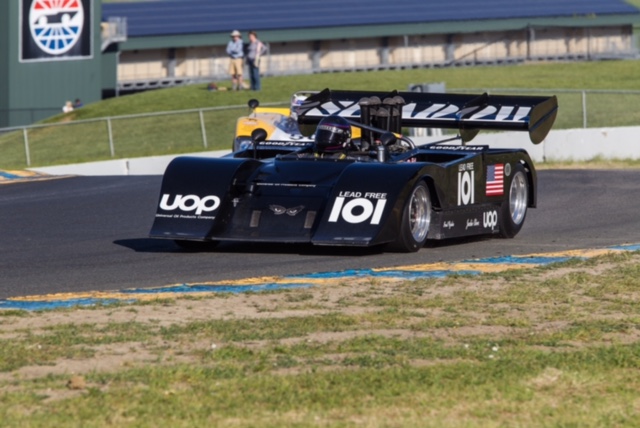
Among the most historic and eye-catching racecars at Sonoma were the two UOP Shadows of Fred Cziska. One is a 1972 Mk II driven by Jackie Oliver and the other is a 1974 DN4 model driven by both Oliver and George Follmer. When Follmer drove the cars they sported the number "1" and with Oliver they used "101." Oliver won the Can-Am championship in 1974.
Another gem at Sonoma was Mike McNamee's ex-Elliott Forbes-Robinson 1985 Buick Somerset – the only Buick to win a Trans Am race. Forbes-Robinson won at both Sonoma and Detroit in 1985. McNamee is also interested in the Gold Medallion certification and plans to apply.
Among the most highly valued entries at Sonoma this weekend is the 1962 Ferrari 250 GTO of owner Tom Price, who also owns a 1932 Alfa Romeo 8c 2300. Both cars are among the most revered not only at Sonoma but also everywhere they travel. And Price has traveled. In 1997 he took his Alfa to the Mille Miglia revival and overall has logged some 35,000 miles in the car at rallies and historic race meets.
Such is the passion for those gathered at the Sonoma Historic Motorsports Festival – fertile ground for programs that honor history and the commitment of purist racers.

Latest News
Comments
Comments are disabled until you accept Social Networking Cookies. Update cookie preferences
If the dialog doesn't appear, ad-blockers are often the cause; try disabling yours or see our Social Features Support.