INDY DIARIES: 'We didn't have 15 engines sitting in the transporter'
Over 99 runnings, the Indianapolis 500 has become the most famous event in motorsport. That iconic status is built on a bedrock of hundreds of small stories, and to celebrate the centennial race, RACER.com has asked some of the people who are part of Indy's fabric to share a few of those stories with us. Check back every day between now and race day for a new 'Indy Diary' entry.
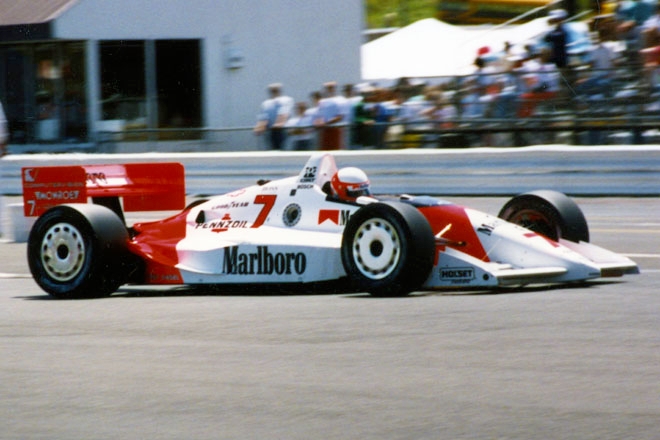
Danny Sullivan drove for Penske from 1985 to 1990, and added to Team Penske's Indy 500 win tally in '85.
"Roger Penske ... there’s a lot of polish and sophistication there and all that sort of stuff, but he doesn’t waste money. Roger just doesn’t say, 'Oh, that sounds a good idea, let’s get 10 of those.' He is smart about how he spends his money; you have what you need. But if you want Roger to spend money on something, it better make sense.
"Remember, Roger put that Ilmor thing together, but it wasn’t all of Roger’s money. Roger had been saying for years over the pushrod engine at Indianapolis, if anybody ever does this right – remember the Buicks sat on the pole and they were fast – he said if anybody ever does that right, they’re going to kick everybody’s ass. He had been saying that for years, before he put that Mercedes deal together. He was talking about the year that [Pancho] Carter sat on the pole [1985]. That was 1994 when Penske did it? That was nine years later.
"But Roger just didn’t rush out and throw tens of millions of dollars in it – he had to have the right partner. He couldn’t have done that by himself without the technical know-how from Mercedes and Ilmor to put all that stuff together. You know that was a big project. But look what he did with it. That’s what I’m talking about being smart and finding a way.
"It wasn’t like even when the Ilmor was around and Roger was the founder of that company, with those guys, orchestrated it and was a partner in it, I think he is still a partner in it, I could be wrong. But my point is, it wasn’t 100 percent Penske money in that deal. He went into that with Chevrolet. He went out and he became the salesperson for that program and made it work.
"We didn’t have 15 engines sitting in the transporter. We had the bare minimum of what was required and what we needed. It was like, OK, we’re going to push the envelope enough to make the thing to work and be reliable. Utimately, you can go out and be fantastic and not win the race, [but] that didn’t cut it with Roger. He wants to be fantastic and perfect, but he wants to win the race. So you have to deliver. Then there is that philosophy – OK, let’s not push it to the nth degree, let’s back it off a little bit to make sure we’ve got enough reliability.
"So there was times to push and times to be conservative, but it was a very dynamic time for me there, and just learning, and learning how to run an organization and see how they do it. And the quality in which they do it, the quality of people they get. When you go in and out of the pits, along the back of the board on the paddock side, it was 'Effort equals results.' And that is Roger’s motto. He lives and dies by. The harder he works, the luckier he gets, sort of thing."
Presented by:

Latest News
Comments
Comments are disabled until you accept Social Networking Cookies. Update cookie preferences
If the dialog doesn't appear, ad-blockers are often the cause; try disabling yours or see our Social Features Support.