INDY DIARIES: The Brickyard's original Dario
Over 99 runnings, the Indianapolis 500 has become the most famous event in motorsport. That iconic status is built on a bedrock of hundreds of small stories, and to celebrate the centennial race, RACER.com has asked some of the people who are part of Indy's fabric to share a few of those stories with us. Check back every day between now and race day for a new 'Indy Diary' entry.
In 1916 Indianapolis Motor Speedway President Carl Fisher and his fellow co-founders of the great track experimented with their still-nascent formula of a 500-mile race on Memorial Day. In the only time in the soon-to-be 100 runnings of the classic, the contest was planned for 300 miles. The race has been shortened due to rain on several occasions, but the 1916 edition was the only time the Indianapolis 'Sweepstakes' was scheduled for something less than 500 miles.
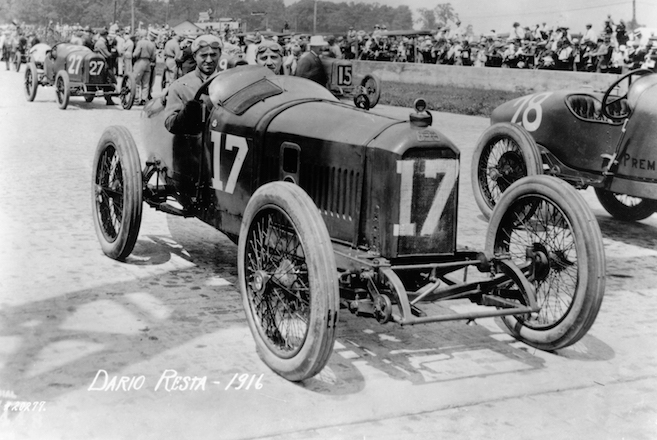
Dario Resta had burst on the American racing scene the previous year armed with the Peugeot EX3 of the French manufacturer's New York importer Alphonse Kaufman. It was arguably the finest and most advanced racing car on the planet. He put it to good use in dominating the American Grand Prize and Vanderbilt Cup road races, as well as a 500-miler on Chicago's board speedway. He battled eventual winner Ralph De Palma through most of the 1915 Indianapolis 500, finally finishing as runner-up after an unbalanced rear wheel forced him to slow.
He came back in 1916 to dominate the 300-mile race at Indianapolis, leading 103 of the 120 laps. Despite its abbreviated distance, the race is treated by the official record of the Speedway as the sixth running of the classic. Dario again dominated the season by winning his second Vanderbilt Cup as well as events at Chicago, Minneapolis and Omaha. The season was the first Indy car national championship awarded on points as determined by the American Automobile Association (AAA) sanctioning body. Resta emerged the champion after a season-long battle with Johnny Aitken, another Peugeot driver with Speedway co-founder Jim Allison's team.
While Resta raced in Europe prior to his arrival in America with some success - especially in record trials at England's high-banked, concrete-paved Brooklands closed circuit - his first two years in the United States were clearly the pinnacle of his career. The Italian-born driver was raised in England and married American Mary Wishart, the sister of promising young driver Spencer Wishart and the daughter of the wealthy Wall Street investor George. Spencer had lost his life racing in 1914 and Mary fretted over the specter of the same fate befalling her husband.
The tug of war between Dario's love of racing and his wife's fears must have put him in a tough emotional dilemma. He retired from racing in 1917, but returned a few years later and even earned a front row starting position for his third and final Indianapolis 500 in 1923. Despite that success he never really returned to his championship form of 1916, and unfortunately Mary's worst fears were realized when he lost his life chasing records at Brooklands in 1924.
With thanks to www.firstsuperspeedway.com

Latest News
Comments
Comments are disabled until you accept Social Networking Cookies. Update cookie preferences
If the dialog doesn't appear, ad-blockers are often the cause; try disabling yours or see our Social Features Support.