.jpg?environment=live)
WEC: Audi says R18 hybrid packaging a challenge
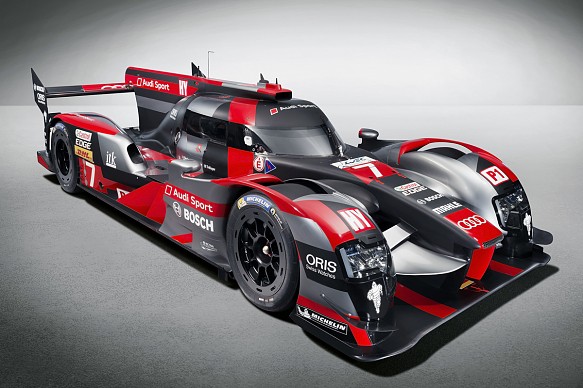
The biggest challenge faced by designers of the all-new Audi R18 e-tron quattro was packaging a bigger hybrid system within a moncoque reduced in size to increase aerodynamic efficiency.
Audi needed to accommodate a larger energy storage system in the form of a new lithium-ion battery and more powerful front-axle motor-generator unit as part of its strategy of moving up from the four to six megajoule hybrid LMP1 subclass. This had to be done within the confines of the smaller monocoque required by the new R18's radical front-end aerodynamic treatment with a raised and ultra-slim nose.
Audi's new colors and tech details for 2016
"We went from a mechnical [flywheel] system to an electro-chemical system, and a battery requires much more volume," Audi Sport technical director Jorg Zander said. "As well, we have a much larger motor-generator unit, which requires a larger volume.
"On the other hand, to make the car perform aerodynamically better and more efficiently, we had to reduce the overall size of the monocoque within the regulations. It was a very big task to make sure that we got to a good, functional packaging of the car."
The revised aero concept, which directs more air through the car, calls for a smaller monocoque to to create what a statement from Audi described as "larger clearances for low-loss airflow."
"Thanks to the new proportions, the new Audi R18 directs airflow even more effectively to optimally approach the underfloor," it read.
Audi stressed that it had hit the minimum weight for hybrid P1 cars of 870kg despite the larger hybrid system. Audi has also adopted gullwing-style doors in the interests of safety and weight-saving.

Latest News


Comments
Comments are disabled until you accept Social Networking Cookies. Update cookie preferences
If the dialog doesn't appear, ad-blockers are often the cause; try disabling yours or see our Social Features Support.