From Rolls Royce to royal treatment at the Spanish GP
Advertising feature
Taking the top three places in the inaugural Spanish Grand Prix, the team led by Marquis of Salamanca the Rolls Royce importer from Madrid, won the race at 54mph. The race was 192 miles in length, using public roads from Guadarrama, on the road to Valladolid, and crossing the steep Navacerrada Mountain.
Three 62 mile laps on a rough and grueling road resulted in many repairs to be carried out. So they dug pits on the side of the roads to allow mechanics to work underneath the cars.
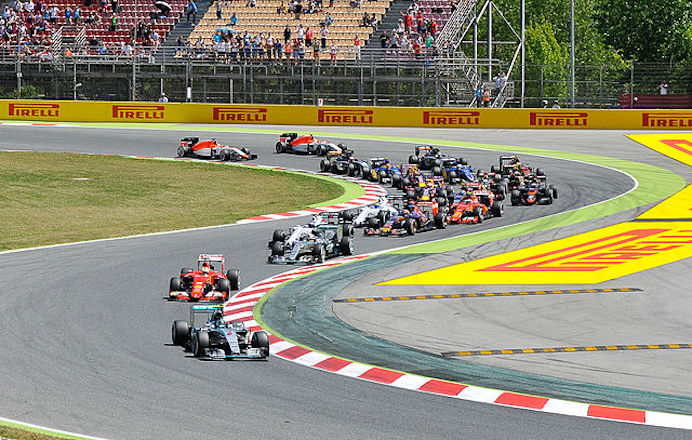
This was the first Spanish Grand Prix in 1913, and it was very different than today. Circuit de Barcelona-Cataluña hosts the Spanish Grand Prix today, but you will not find pits dug in the pristine garages (although the name 'pits' still lives on).
During the first half of the century, grands prix were a hit and miss affair. There was WWI, the Wall St Crash, a recession, promoters in financial difficulties, the Spanish Civil War and WWII, all of which forced racing to take a back seat. Spain only returned to the Grand Prix calendar a couple of times prior 1951, when the new world championship brought F1 to the Pedralbes circuit. Then came the 1955 Le Mans tragedy, which led to the scheduled Spanish Grand Prix to be cancelled, and the pedestrian-lined street track at Pedralbes was then never used again for motor racing.
The government stepped in and built the Jarama circuit near Madrid, which alternated with Montjuic, a street circuit in Barcelona. Safety was an issue at Montjuic to the point where the drivers refused to race, prompting the organizer to threaten to lock the cars inside the local stadium. The drivers relented and the race took place. After 26 laps four spectators were killed by an errant car and the race was stopped, never to return to the venue.
Jerez took over the race for a few years but didn't attract large enough crowds. So a new location in Barcelona was developed to coincide with the Olympics Games. Circuit de Cataluña's first race was in 1991 and now the Spanish Grand Prix has a permanent home, near the incredible city of Barcelona.
Barcelona is different to anywhere. It has its own personality, emphasized by art and architecture, and the genius of Dali, Gaudi, Miro, and Picasso. It has a vibrant street life that runs maze-like around the Gothic area. Its many restaurants, some owned by the same family through many generations, they serve wonderful local dishes. Quirky art in the famous galleries and imaginative food in the tapas bars leaving lasting memories and tastes.
Especially remarkable is the work of architect Antoni Gaudi, which can be seen throughout the city from Park Guell to the Casa Mila. His best-known work is the immense and still unfinished church of the Sagrada Família, (ABOVE RIGHT) which has been under construction since 1882, and is still financed by private donations. Completion is planned for 2026.
Grand Prix Tours has offered Formula 1 weekend experiences to race fans for over 30 years. Their inside connections allow them to get the best rooms and the best viewing locations available, along with their knowledge of the each event location you will be sure to have an experience of a life time and a hassle-free weekend. Call Grand Prix Tours today at 1 800 400 1998 for more information on the Spanish Grand Prix and their many VIP viewing options or visit their website Grand Prix Tours to see all the weekend experiences they offer.
RACER's Formula 1 coverage is presented by Grand Prix Tours. Feel the power and the glory of Grand Prix racing now via Grand Prix Tours' Pick 8 competition.

Latest News
Comments
Comments are disabled until you accept Social Networking Cookies. Update cookie preferences
If the dialog doesn't appear, ad-blockers are often the cause; try disabling yours or see our Social Features Support.