INDYCAR: Time to farewell aero kits?
Have IndyCar's aero kits outlived their purpose after a single season? The question arose during pre-season testing at Sonoma Raceway, continued into Spring Training in Phoenix, and stands as one of the better questions to ponder entering the 2016 championship.
To understand where aero kits have taken the series, it's worth taking a quick look back to their origin. Two key reasons were cited by IndyCar when the aero kit concept was unveiled in 2010 during the ICONIC Committee's 2012 Strategy announcement.
"What we really feel great about from a committee standpoint is that we are opening this up to anyone who wants to build aero kits, yet at the same time we've accomplished reducing the cost of participation," veteran IndyCar official Brian Barnhart said.
"We think it's the best of both worlds, bringing costs down, creating great value in the series, yet at the same time allowing for competition and what the fans want to see, different-looking cars on the racetrack."
By creating an opportunity that allowed anyone to build their own aero kits to dress the Dallara DW12 chassis, engine manufacturers, aerospace companies, and any company with a penchant for creating bespoke wings and bodywork could join the series. So far, only two manufacturers have opted in: Chevy and Honda.
The primary reason to implement aero kits, according to multiple comments by those manufacturers and the series, is to create branding opportunities; visual differentiation that makes it easy to tell a Chevy IndyCar from a Honda IndyCar.
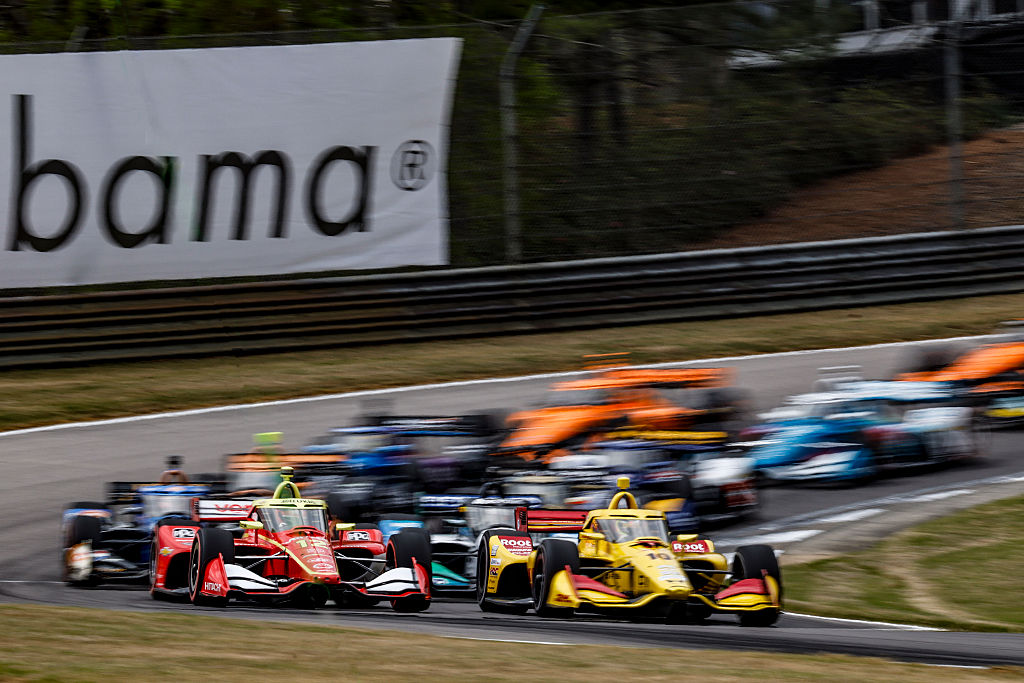
And yet, with all of the heavy copying that's gone on between the manufacturers entering 2016, have they become almost indistinguishable? Can the average person tell a Chevy from a Honda, and if not, is there a reason for aero kits to continue beyond the end of the season?
Have aero kits improved competition? Has the Chevy vs. Honda engine war been mostly forgotten since aero kits arrived? Did aero kits play a role in last year's growth in attendance or TV viewership? Have aero kits widened the performance gap between Chevy and Honda, and cost both manufacturers and teams more than anyone envisioned?
In the most basic terms, have aero kits made IndyCar better or worse? Or have they done nothing at all?
Knowing how close both road course/short oval kits now look, and how those RC/SO kits will be used at 80 percent of the races this year, we posed a somewhat simple question to IndyCar's key stakeholders: If the series announced it was parking the aero kit experiment at the end of 2016 and returning to a single body kit, would you support it, or would you fight to keep your Chevy or Honda bodywork?
MANUFACTURERS
On the manufacturer front, leaders from Chevy and Honda would not be expected to speak out against IndyCar on any subject. Their answers, however politically correct, might suggest a direction on whether keeping or pitching aero kits would be preferred.
Mark Kent, Director, GM Racing: "I think if you look at the benefits of aero kits in general, at least from Chevrolet's perspective, last year we went into aero kits with two objectives. First of all, product differentiation: the ability for our car to look different from that of our competitor. Secondly, the ability to outwork our competitors and have a competitive advantage on track. If you look at 2015, we were successful in both of those areas.
"As you look forward to 2016 and 2017 and 2018, however far you want to look into the future, I think IndyCar and the manufacturers need to look at, is that value still there going forward? Does it make sense to continue to invest as much as we collectively do on aero kits if those benefits are not there? Your question of whether aero kits could go away next year or not, it is solely a decision that needs to be made by IndyCar. And then as a partner to the sport, we will support whatever decision they make."
Steve Eriksen, Vice President, Honda Performance Development: "The reality is we spent quite a few years with the stock body kit and the racing was very close. From the standpoint of the show, I don't see a negative for using that [kit]; I can only see a positive. It takes that variable out of the mix. You end up with the only real variable being driver quality, team quality, and the engine competition. Ultimately, it is 'Honda Motor Company', and as we are the largest producer of internal combustion engines in the world, that has certainly been, and continues to be, our number one focus."
TEAM OWNERS
Only one team owner went down the path of political correctness. The rest spoke with great passion, or honesty, and in many cases, both were evident.
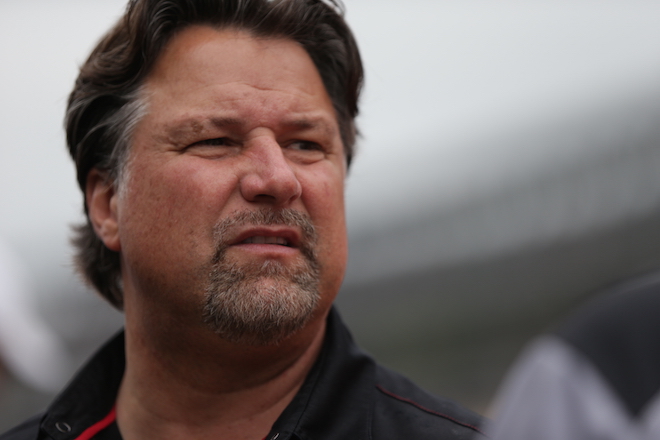
Michael Andretti: "I hated these things from day one. I've been the biggest opponent against them. I think it was a complete waste of money. I think it has hurt our racing. I want to get rid of them, but what do we do to get rid of them? It could cost us just as much money to get another kit made. What I'm pushing for is going back to the DW12 kit because everybody has all that bodywork. Just do it without the rear bumpers, because we want to get rid of those things anyway. That's what I'm really pushing really hard for.
"And I don't think it's a question of if we should get rid of [the rear bumpers]; it's a question of now we have to get rid of them. They look terrible and don't do anything. Our series cannot afford [aero kits] at this moment. I would say it added at least a minimum of $1.5 million to my budget when [aero kits] came in. It's ridiculous."
Dale Coyne: "I would 100 percent support the end. I was the one that was preaching against it in the beginning. I mean, back in a tent in Detroit four years ago or whenever it was when they were introducing this, I said each manufacturer is going to spend $10 million developing a kit, teams are collectively going to spend $10 million buying the things, and we should take all that money and put it toward our television package and get every race on network television, instead of spending it on something that doesn't do much for us. We should fix the commercial side before we fix the technical side.
"I think we're spending a lot of money on these kits and not getting any return on it. And always have been. And believe me, the manufacturers spent a lot more than $10 million a piece on the things.
"The rules are set to the way the cars look, and now they're almost identical. If you take all the pictures that came out of the new Formula 1 cars, and gave them all a generic color, you couldn't tell the difference. Even Formula 1 cars from Ferrari to Red Bull to McLaren all look the same. There's tiny little differences. And now we're in the same situation here and paying so people cannot tell the difference"
Chip Ganassi: "I'm in favor of them because it gives us a little differentiation between the manufacturers. I agree that they look the same almost, but not quite. I think you have to have some differentiation."
Bryan Herta: "I'd be 100 percent for stopping at the end of the year. I think stopping would make all the sense in the world. I think we all, on some level, feel the same way. I think it was worth trying, but I also think the racing was great two years ago before we had them. The differentiation that we hoped for is going away so there's less and less differentiation.
"Just in my short time in the sport as an owner, I can tell you budgets have increased well more than $1 million per car with aero kits, which is a lot of money. If we could reduce budgets, that would be one good chunk to get rid of, and I think that would be great.
"In my mind, the other benefit to stopping is, aero kits are a huge barrier for entry right now. As we start to engage and talk to new manufacturers about coming in, not having aero kits would be helpful. Right now, you don't just have to build an engine; you have to design and build and fund an aero program. I think in some ways from a manufacturer standpoint, it helps even make the series more appealing without aero kits because it puts fewer requirements on them. You're coming in more on a level playing field.
"I would be in favor of the end [for aero kits]. You can't look backwards and say we should have or shouldn't have done them. You have to look forward facing, and it's a good conversation to be having."
Kevin Kalkhoven: "I have always opposed them. My opinion is, it was an interesting experiment. It has been an extremely expensive investment for the teams and for the manufacturers. And I think people who are honest would say it's an interesting experiment, but one that probably failed."
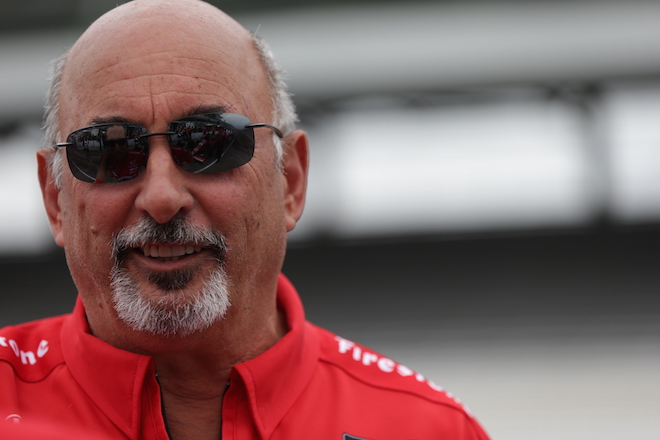
"No harm in admitting it was a valiant effort. I don't think there's any shame in what has been done. Didn't have the desired effect, we gave it a shot, let's move onward, upward. Let's turn the page."
Sam Schmidt: "All I asked for in 2013 and 2014 was to give me a list of reasons why we are doing this, so that a year, a year and half into it, we could see if we met those goals and decide if we wanted to keep doing it. I never got an answer as to what was the goal, what was the objective. Was it manufacturers demanding it? Was it meant to drive TV ratings? What are we spending $1 million a year for? Never got an answer so I don't know the goal we set out to accomplish, but I don't think we have done whatever it was supposed to do.
"It's a lot of money, and right now, the commercial side of the business is not there to support it. We're not making more money because of [aero kits]. That's what I'm choking on right now. We're not improving performance, we're not doing more races, we're not paying people more money. Why blow our money on aero kits if they're making no difference?"
Roger Penske: "Let's have one kit, let's go racing. Because what it does, it disadvantages one group of guys. I don't mind racing on a level playing field because on the other hand, I wouldn't want to be the guy that doesn't have the same chance [to win] because of an aero kit."
NEXT STEPS
If IndyCar were to move on from aero kits, teams would need something to replace the outgoing bodywork. Reinstalling the stock 2012-2014 Dallara DW12 panels and wings would be the easiest and cheapest solution. But if a change is going to be made, would it be worth commissioning Dallara (or another firm) to create a new and more visually attractive kit for every team to use? And on the financial side, are there ways to repurpose the money set aside for aero kits on other areas that would help grow the series?
Kevin Kalkhoven: "Here is what we could have spent the aero kit money on: Marketing, promotion, television. Between the manufacturers and the teams, tens of million dollars have been spent on a failed experiment. But the money has been spent. Is there another source of an equivalent amount of money? Frankly, at this stage, I doubt it. If there's a willingness to continue to spend these sums of money, it needs to be in the three areas I've listed."
Bobby Rahal: "To be honest, let's take the best of both worlds with the aero kits for 2017, as far as deciding what is the ultimate aero design for this car. Because clearly I think a lot of areas are total waste of money. Like the rear bumpers, which don't do anything except add more cost and weight, and add more shrapnel in an incident. It probably promotes very overly-aggressive driving because people figure they can hit each other and not suffer much of a consequence. There's other ways to make the racing exciting without the aero kits.
"What would a real IndyCar look like if you got rid of a lot of this stuff that we have seen over the last few years, and really produce a great-looking car? Then everybody would have something they like looking at. Let's do a body kit that really is something special, that everybody will have as the new spec bodywork, and improves the appeal."
Michael Andretti: "I disagree with that. That [new bodywork] should come with the new car when we eventually do a new car, and then you do it right, you do it the way it should be. You want it to look futuristic, you want it to look like that Red Bull X-1 design. You want something along that line, in my opinion. The only way that will happen is when you go to a new IndyCar, which right now we can't go to a new car because nobody can afford a new car. I think we should start planning now for 2018, 2019, whenever a new a car comes out, then they start designing something better-looking for that car."
Robin Miller:
It all sounded so 1960s, so great and we were so ready for something different and innovative. I truly think Randy Bernard envisioned four or five different-looking IndyCars, especially after encouraging visits with McLaren, Ferrari and Raytheon, but the reality was that General Motors and Honda turned out to be the only players.
And while the aero kits satisfied the two manufacturers and appealed to 10-year-old boys, they didn't do anything for the hardcore fan base or create much of a buzz with the automotive or motorsports media.
They were expensive, but the real cost was to the competition because Chevrolet clearly had the upper hand, winning every pole, 10 out of 16 races and leading 1,674 out of 2,323 laps.
So it's time to file them away under 'nice try', and get back to the standard Dallara DW12-spec that produced entertaining, unpredictable racing. It's great to talk about a new car for 2018 or 2019 but it's a pipe dream since most of the owners are struggling to survive with a five-year-old car.
Marshall Pruett:
It's time for IndyCar to abandon the aero kit experiment. Start the countdown clock and send them peacefully into the night once the checkered flag waves over the field at Sonoma in September. Make them a brief, two-year footnote in IndyCar's 105-year existence.
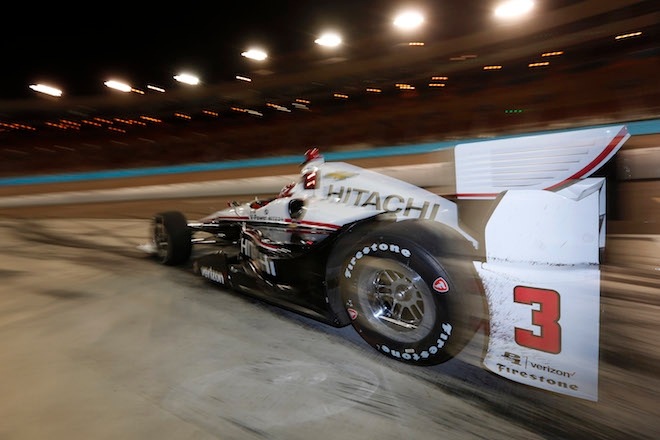
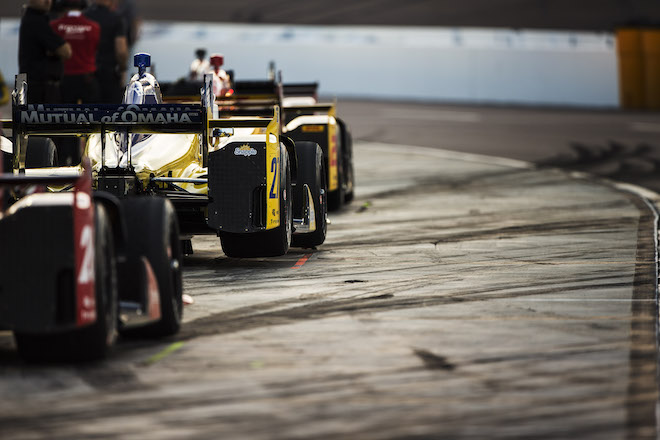
Due to the heavy conceptual crossover for 2016, IndyCar has arrived at the place it feared: Both aero kit manufacturers have spent millions and millions to look like twins. Chevy had vented rear wing end plates in 2015. (Now Honda has them). Honda used multiple winglets atop its rear bumper pods in 2015. (Now Chevy has them). Chevy used trumpet-like front wing endplates in 2015. (Now Honda has them). Honda used multiple curved front wing elements in 2015. (Now Chevy has them). Chevy's 2015 sidepods and rear tires ramps... (Yep, now Honda has them).
Granted, that's the way motor racing usually works; good ideas are poached and incorporated as soon as possible. But in a tightly-controlled series like IndyCar, where aero kits are homologated and not open to ongoing development once the season begins, they've become just another hideously expensive spec component.
Buy them, bolt them on, and don't touch them. If teams or manufacturers were allowed to make some changes during the season, I could get behind aero kits continuing. Right now, they excite me about as much as a spec Dallara brake pedal.
Teams used spec Dallara bodywork and wings from 2012-2014, and other than the colors on each car, the Chevy and Honda logos were the only indicators of which engine powered a DW12. I'd never accuse that bodywork of pleasing the eye, and I'd say the same of the RC/SO kits in service today.
I love racing technology, which makes my growing disinterest in aero kits rather odd. But after seeing Chevy and Honda copy each other's 2015 RC/SO ideas to produce nearly identical kits for 2016, and knowing how much IndyCar teams are struggling to meet their annual budget requirements, it's time to relegate aero kits to the history books.
Mark Glendenning:
I didn’t mind the idea of aero kits in principle when the idea was first floated, but all of the concerns that everyone expressed when they were announced – that they’d be too expensive, that they’d screw up the racing, that they’d evolve to look more or less the same – are exactly what have come to pass. Nothing about the situation we’re in now is a surprise.
The final nail for me was the 9.3 ruling. That regulation was originally pitched as an insurance policy against one manufacturer having a Lotus-esque deficit to the other. And while there was clearly a performance gap between Chevy and Honda at most races last year, Honda was still competitive enough for Graham Rahal to stay in the title fight right until the end. If Andretti Autosport had done as good a job as RLL in figuring the Honda package out, then Ryan Hunter-Reay could have been up there as well.
What we saw last year was one manufacturer winning because it did a better job. That’s the entire point of competition. As soon as you undermine that by offering breaks to the loser, the entire thing becomes pointless. If you’re going to adopt a change like the aero kits, you have to go all-in. Otherwise, you end up with what we have now: a white elephant that eats hundred dollar bills and poops out a few quarters in return.
So there’s no competitive benefit, because whoever gets beaten is given concessions to help them catch up. There’s no differentiation benefit, because the kits have evolved into silhouettes of each other. There’s no cost benefit – precisely the opposite, if you ask the teams. Other than pride, is there any reason not to ditch them?
Presented by:

Latest News
Comments
Comments are disabled until you accept Social Networking Cookies. Update cookie preferences
If the dialog doesn't appear, ad-blockers are often the cause; try disabling yours or see our Social Features Support.