WEAVER: One step forward, two steps back
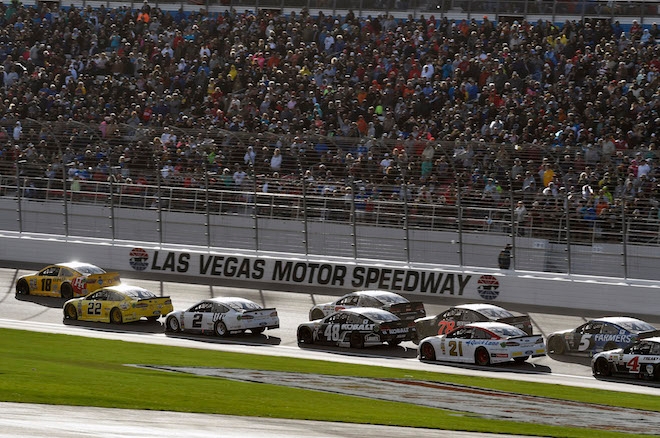
In one respect, Sunday's Sprint Cup race at Las Vegas felt like one step forward and two steps back for NASCAR and its continuing efforts to improve the racing at the highest level of the sport.
One week removed from an excellent lower-downforce debut at Atlanta, the Kobalt Tools 400 felt like a return to the status quo for intermediate speedway racing. In fact, it could be argued that the unique layout and aged racing surface of Atlanta made last week more of an exception rather than the norm.
Truth be told, Vegas actually wasn't that bad. However, much of the excitement from Sunday should be credited to Mother Nature and her constantly changing temperament rather than the competition package. The start of the event was briefly delayed due to rain, temporarily halted by a desert sandstorm, and consistently contested under extremely gusty conditions.
A tremendous amount of credit should be given to the drivers and crew chiefs for adapting to the ever-changing landscape that was Las Vegas Motor Speedway. With that said, passing was once again at a premium and cars seemed considerably more stable in traffic compared to last weekend. That opinion was also shared by Carl Edwards, the loudest proponent of low-downforce competition packages in NASCAR.
"It sure didn't seem like a different rules package here," Edwards said after the race. "We were screaming fast. You're really locked down. I'd catch a guy and he'd be eight or 10 lengths back and that was about it...
"NASCAR is working on it and it's better than it was because of the changes they've made. Hopefully they keep working on it."
The sanctioning body probably didn't help matters either, giving teams over eight hours of track time before the race to dial-in the new aerodynamic configuration at Las Vegas.
Eight freakin' hours.
In addition to the three-plus hours of official practice given to the teams on Friday and Saturday, they were also provided an additional five hours of testing on Thursday. During those two sessions, teams were even allowed to use computers and data acquisition devices not typically permitted during a standard practice session. While that's beneficial for Goodyear, NASCAR and its participants, it's probably not good for the on-track product, because it allows more than enough time for teams to find the downforce, speed and grip needed to perfect their cars prior to the drop of the green flag.
If encouraging mistakes on the track is the most important key to passing, this much practice time probably doesn't help. Even though race-winner Brad Keselowski believed Sunday was an improvement over previous races at Vegas, he also suggested that it was only a matter of time before teams recovered all of the lost downforce from last season.
"The challenge for NASCAR is we've got all these race teams spending millions of dollars to develop the aerodynamics on the cars because there's such a competitive advantage to finding more downforce," Keselowski said. "It will only take us about half a year to a year to where we remove all the benefits that this package has given the racing to showcase a day like we saw [on Sunday] with a lot of passing."
So let this once again serve as a reminder that NASCAR shouldn't rest on the popularity of Atlanta and call it quits for the rest of the season. The sanctioning body must continue taking off the downforce and consider limiting the amount of track time teams get to rediscover it.
Las Vegas was a fine race, but the sport can still do better.

Latest News
Comments
Comments are disabled until you accept Social Networking Cookies. Update cookie preferences
If the dialog doesn't appear, ad-blockers are often the cause; try disabling yours or see our Social Features Support.