INDYCAR: Miles promises judicial overhaul
IndyCar boss Mark Miles says that a desire for continuity, more consistency and improved transparency were the main forces driving the new steward panel that was announced earlier this week.
Former Ford Racing executive Dan Davis has been named chief steward of a three-person panel that will be completed by ex-racers Arie Luyendyk and Max Papis, with Brian Barnhart continuing on as race director.
"I'd say candidly we're not satisfied with our performance last year," said Miles.
In part, Miles believes that the continuity problem will be solved by creating more clearly-defined responsibilities within the race control tower, with Barnhart focusing on his duties as race director and leaving all officiating in the hands of the steward panel.
So with that in mind, it was really important to us that we found three very experienced, enthusiastic stewards who will be the stewards for every race.
"Another value is transparency. We think the competitors and the teams ought to know what the rules are and what they can expect in advance in the way of penalties if they are breaking rules."
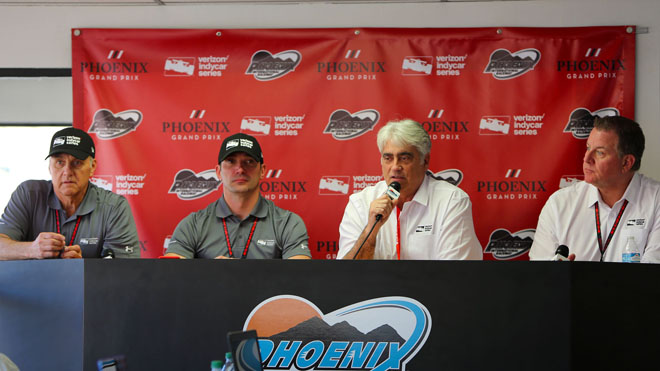
"Last year we had about 45 different regulations on a laminated piece of paper," Miles said. "These were the rules that people in Race Control had to think about.
Most of them started with a warning.
"These [stewards] have worked first of all with the drivers to give them the opportunity to give some input into those regulations and those penalties. Team owners will have a shot at that. We'll take all that input and finalize this set of regulations and penalties.
"The first thing that's going to happen is more than half of them will not start with a warning. The drivers came to us and said, "What's a warning?" It's an opportunity for inconsistency. So let's just get rid of it where we can, and where it makes sense. More than half of the rules will no longer start with that.
"In the past, the drivers didn't receive this table. It was top secret up in race control. How would they know if we were being consistent? Of course, this year the stewards will have it and they'll be expert in it with the drivers and the team personnel, and the public and media can have this table. The people can hold us accountable as to whether we're all following how we view how it all ought to work."
The other potential development from the shake-up will be a reduction in the practice of announcing penalties several days after the race, with Miles insisting that the new system will put a far greater emphasis upon judging infractions on the spot.
Our expectation is that the stewards will make the calls during the race, the penalty will be determined, we won't be having that conversation on Wednesday.
"The incidental exception will be when we learn something after the race, like a tech inspection. I think you can expect that from us, finishing a race and knowing what happened to the greatest possible extent."
The final major change will be the introduction of new software, which will assist race control in establishing the correct order for restarts.
"You can think of times last year, when if you were Brian Barnhart, your head was exploding trying to know what that order was," said Miles.
We spent a lot of money on capital investments on race control over last year. So I think we already have a leg up. There may be more capital investments this year, but our objective is to give them all the tools possible to do the job."

Latest News
Comments
Comments are disabled until you accept Social Networking Cookies. Update cookie preferences
If the dialog doesn't appear, ad-blockers are often the cause; try disabling yours or see our Social Features Support.