.jpg?environment=live)
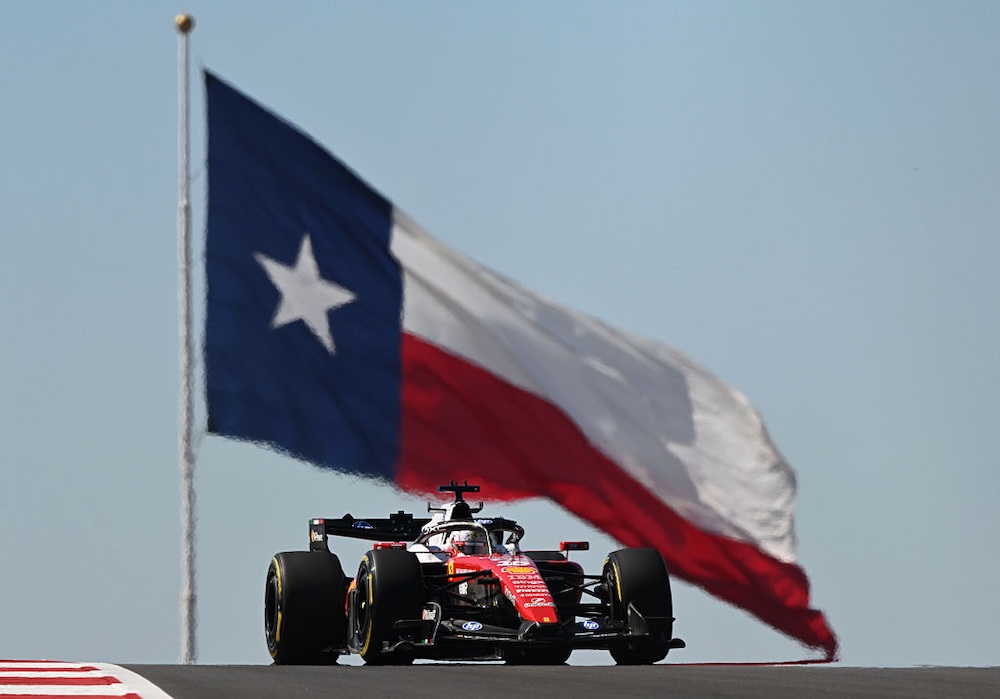
F1: Pirelli still waiting for 2017-'19 contract
Pirelli is still awaiting a contract to sign from the FIA for its Formula 1 tire supply deal covering the 2017-'19 seasons.
Following a tire tender battle between Pirelli and Michelin last year, with both passing the FIA's technical requirements, F1 chief executive Bernie Ecclestone opted for the former following commercial discussions. Ecclestone confirmed Pirelli as supplier ahead of the Russian Grand Prix in early October, since when there has been no official announcement from the FIA, with December's World Motor Sport Council meeting passing without word.
At the Autosport International motorsports show on Thursday, Pirelli motorsport director Paul Hembery said: "We've concluded the agreement with FOM, that was announced in Russia. The lawyers had to do their bit, which has all been confirmed. But we're still awaiting a contract proposal from the FIA, which has not been forthcoming yet."
Asked whether he anticipated it would be arriving soon, Hembery added: "We'd expect so – we'd have expected it some time ago, actually. We will see what happens over the next few months."
Despite the apparent limbo, Hembery and Pirelli are still pressing on with plans for 2017 when tire sizes are due to increase as part of a still-to-be finalised aerodynamics rules revolution.
"We're obviously moving ahead with plans to be in the sport in '17. We've not had any indication as to why we wouldn't be moving on," added Hembery. "Having said that, there's obviously that formal aspect where either party could walk away."
Hembery, meanwhile, has further debunked speculation Pirelli would be unable to cope with the likely loads due to be generated by the increase in downforce. That, in turn, led to suggestions the increase in lap times initially suggested at four-to-five seconds would drop to three seconds.
"We discussed in October, November, and a little bit through December, with the Technical Working Group for '17, the regulations where the tire sizes have been determined," Hembery said. "We were asked to present some technical data which described the loads the new tires can take under, let's say, the current operating conditions.
"There was some misinformation that recently went out saying we could not deal with a 50 or 60 percent increase in load, but of course we can. You just have to change the operating conditions, and that includes as well the air capsule the tire has.
"With larger diameter tires the inner part of the tire has a bigger volume of air, but then you work with inflation pressures. I know some people think with higher inflation pressures you lose performance, but the reality is if you increase by 60 percent the load, you are actually pushing the tire further into the ground and your footprint stays the same. So there is a little bit of confusion from some commentators on that front.
"The real issue is overall performance levels. People are still talking about four seconds improvement over 2015. There is going to be the natural development of the powertrain unit, the aero package, and together with the tires, four to five seconds is still very feasible."
Presented by:


Latest News
Comments
Comments are disabled until you accept Social Networking Cookies. Update cookie preferences
If the dialog doesn't appear, ad-blockers are often the cause; try disabling yours or see our Social Features Support.