PRUETT: Big changes ahead for IMSA TV
The TV reporting team that signed off from Petit Le Mans in October will look decidedly different once IMSA's new season swings into action in a few weeks at Daytona. The production staff, production style, and control of the broadcasts will also undergo significant changes as the series' leadership looks to shake up its television package in 2016.
According to multiple sources, FOX and its experienced team of ALMS, Grand-Am, and IMSA hosts and pit reporters will be downsized in 2016. Bob Varsha, who has covered IMSA since the 1980s, is out as the lead host. Justin Bell, who formed part of the three-man booth rotation with Varsha and Calvin Fish, is also gone. Veteran sports car broadcaster Greg Creamer will replace Varsha, and team with Fish as the new hosting twosome.
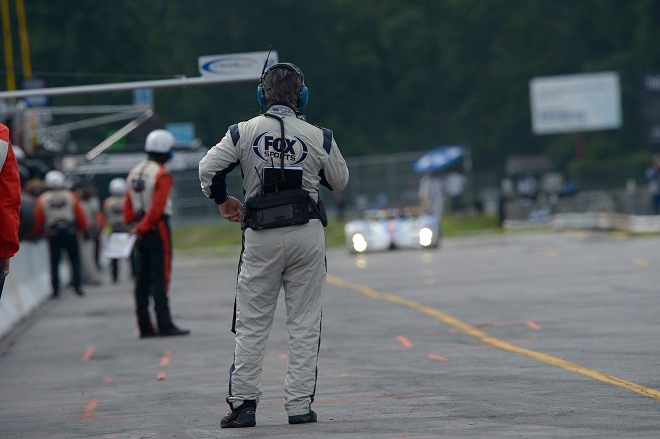
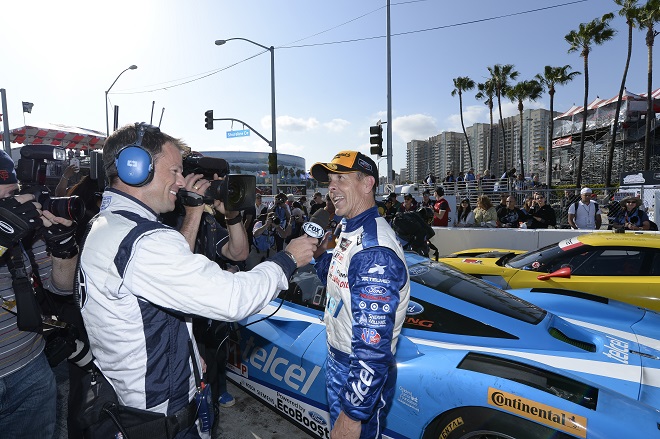
Changes are also expected on pit lane as the standard use of multiple pit reporters to cover 30 or more cars will, under the present plan, see one person – Brian Till (LEFT) – burn plenty of calories as he sprints from pit-in to pit-out on behalf of the network.
Other than the Rolex 24, which will have a greater complement of booth and pit lane talent, the remainder of the WeatherTech SportsCar Championship season will be covered by the series' smaller, hand-picked staff. FOX's longtime sportscar programming director was also removed from IMSA's revised roster.
In other significant cost-saving effort, the bulk of IMSA's event production will switch from its traditional on-site presence at every round to NASCAR's facility in Charlotte, N.C., which means most of the TV trucks, and the production staff normally housed within those trucks, will not be trackside.
After Daytona, the TV hosting team of Creamer and Fish could end up calling the races remotely from Charlotte, akin to how NBCSN produces its Formula 1 races with the hosts in the studio and one person on pit lane.
IMSA will also, for the first time, assume primary control of the content aired during each broadcast, effectively replacing FOX as the director of its races. The sweeping talent and production changes have come at the request of IMSA, and it's believed a few more changes could happen before the Daytona race begins on Jan. 30.
"I was in Charlotte just before Christmas and was told I would not be doing IMSA this year, which was a complete shock to me," Varsha told RACER. "I was given an outline on a lot of different things they'll be doing; my change was an IMSA decision, and with it being a joint programming effort between the network and IMSA, and with [IMSA] bringing money to the table, they have the right to make requests. Long story short, it looks like the requests are being honored."
I asked a senior member of IMSA's marketing department to explain the reasoning behind the personnel and production changes, and how they would improve ratings, but answers to those questions were declined in favor of the following quote:
"We are working with our partners at FOX Sports on many important details heading into the upcoming season," an IMSA spokesperson said. "IMSA and FOX Sports are committed to delivering compelling content for our viewers and fans, and substantial value for our partners and stakeholders. Our 2016 plans will be announced at a later date."
Based on the stripped-down plans for 2016, IMSA's TV changes speak to where it believes improvements must be made – at FOX.
It's an interesting viewpoint to hold, and there's no denying IMSA has looked small among offerings from Major League Baseball, the UFC, NASCAR, and other big sports on FOX's cable channels. Pinning the full blame on FOX, however, would be silly. IMSA is also responsible for its poor ratings.
Through its marketing agreements with the numerous auto manufacturers and other large companies that serve as stakeholders in its series, IMSA subsidizes its TV package through its paddock. Collectively, that money is used for a variety of initiatives, with TV being at the top of the list. And in that annual financial transaction, manufacturers and stakeholders expect some form of positive return on their investment.
Audi, Chevy, Honda, Mazda, Porsche, and other large brands put TV money in IMSA's hands with the belief their funds will be used to negotiate quality time and space on FOX's channels. As has been the case for decades, manufacturers and sponsors spend money for TV time and need solid ratings to justify their continued participation in the series. What they've received in this arrangement is a far cry from what their money should have secured.
IMSA's most important endurance races have been subject to a hide-and-seek approach which makes consistent viewing all but impossible for those who watch TV through traditional methods. Last year's season-opening Rolex 24 at Daytona race started with two hours on FOX, shifted to four hours on FS2, went to FS1 for two hours, moved to IMSA.com for nine hours, and then closed on FS1. That's five programming hosts requiring access to three FOX channels and a live stream for a single event.
The 12 Hours of Sebring broadcast was spread across four platforms, with the majority of the race – from 12:30-11 p.m. – shared between the minimally available FS2 and IMSA.com. The entire season finale at Petit Le Mans was split between FS2 and IMSA.com (LEFT), which all but guaranteed the abysmal ratings that followed.
You don't get what you pay for; you get what you negotiate to receive, and with IMSA's telecasts racing up and down FOX's channels, and its own website, one must ask how the series got itself into this position in the first place.
It also begs the question of whether IMSA would be better off moving to pure streaming for all of its events on IMSA.com, provided the ratings would be recognized and accepted by its stakeholders.
Compounding the problem, manufacturers and stakeholders aren't being asked to spend less because IMSA is bringing back low ratings. They are making the same significant spends for 2016, yet the only fixes I'm aware of involve changing faces and trimming its TV costs wherever possible.
A stronger presence on FOX and FS1 is the universal need that has been expressed by manufacturers, sponsors, team owners, and drivers, yet the Hail Mary for 2016 has been to alter the look inside the broadcast booth and on pit lane.
Creamer, Fish, and Till will do a fine job, but I'm not sure how shuffling the broadcast team will unlock the kind of ratings IMSA's financial contributors expect. As long as IMSA walks away from the negotiating table with heaps of TV time on FS2 and IMSA.com, it won't matter who they have speaking into the microphones.
Manufacturers need IMSA to succeed on TV, and the sportscar industry as a whole needs an uptick in ratings to ensure long-term health for the WeatherTech Championship. The efforts to trim costs for 2016 is clear. What's less clear is how the new direction to go smaller will help the series grow its TV audience.
IMSA's choice to remodel the faces and voices representing its series, while ignoring the core problems causing its ratings downturn, is a curious one. Hopefully its methods to address the ratings issues bear fruit.

Latest News
Comments
Comments are disabled until you accept Social Networking Cookies. Update cookie preferences
If the dialog doesn't appear, ad-blockers are often the cause; try disabling yours or see our Social Features Support.