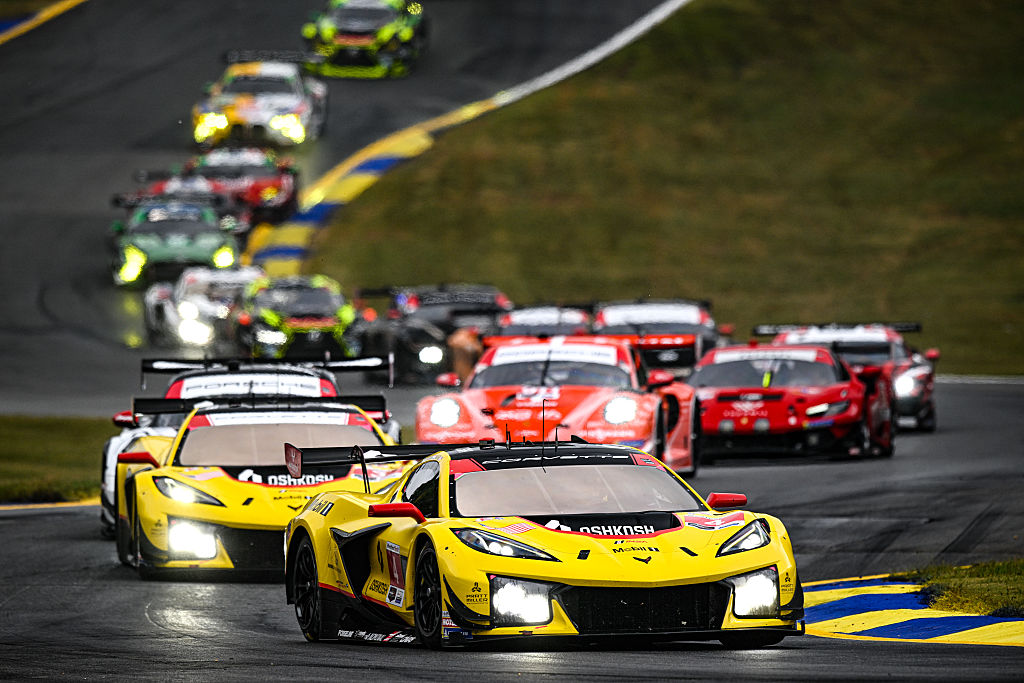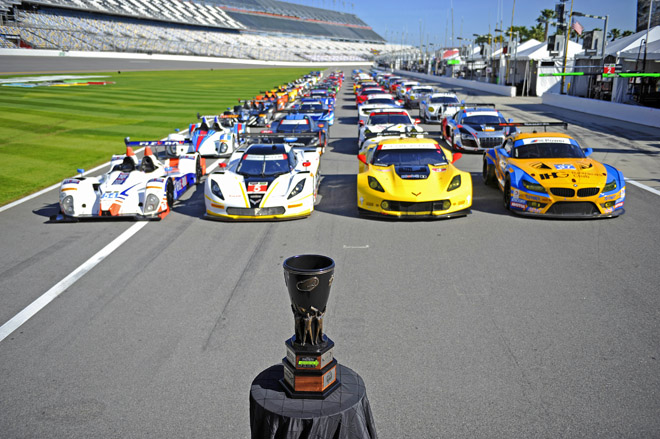
PRUETT: The Linda Ludemann Rule, Part 2
began here in Part 1
:After two seasons of ratings-based ineptitude, I'm thankful we have so many people continuing to ask whether IMSA would be better off without the system. I actually have a completely new driver rating system I believe should be required, and I'll save that for the end of the piece.
With my thoughts clear on the subject of driver ratings, I wanted to take a cross-section of opinions from others in the industry to expand the debate. Here's what Scott Pruett, Butch Leitzinger, Stefan Johansson, Ryan Eversley, Alex Job, Marty Kaufman, and Mike Hedlund had to say on various aspects related to driver ratings.
THE CHIEF STEWARD
Marty Kaufman presided over two of America's most incredible sports car series. As chief steward during IMSA's GTP days, and later as IMSA's chief steward for the ALMS though 2009, Kaufman was fortunate with witness a pair of golden eras, and suggests modern IMSA would benefit from looking in the rearview mirror to find the best possible driver licensing system.
"This whole deal with the driver ratings, in my mind, it is superfluous," Kaufman said. "There's a little thing that we used to use called 'lap times and observation.' Even now with the ability for using sector times, you can, if you put your mind to it, really separate out who belongs and who doesn't by using lap times and observation."
In Kaufman's GTP era (LEFT), there actually were different levels of licensing (which might sound a lot like today's rating system), and while there were similarities, the old system only focused on speed and aptitude. Faster drivers were given higher licensing to race faster cars, and slower drivers were limited to using less challenging machines.
It was a merit-based system that didn't care if you were paying or if you were a pro. The only safeguard in play was keeping average drivers out of lethally fast cars or, depending on their lap times, out of the series altogether.
"There were a lot of European guys who wrote the big checks – somehow their home motorsport club gave them a higher grade license, they came over to race, and we determined they had no more business being out there than a guy driving a garbage truck," Kaufman said. "You can't risk the safety of the other drivers and spectators and everybody because some guy is a real klutz but he's written a big check. We've seen enough of that in motorsports to begin with. Like I said, if you can't cut it, maybe you need to go do something else."
What an interesting concept. Either you belong or you don't. And if you belong, you're free to compete at whatever level your talent deserves. Prior to driver ratings, it was also the only factor that mattered, and it's all that should matter today.
Where the modern disconnect takes place is in the newfound attempt to quantify talent using methods other than lap time and observation, to apply ratings to that talent in a four-tiered classification system, and then to make sure the lesser talents aren't embarrassed by the higher talents by ensuring every GTD and PC car has a blend of pros and non-pros behind the wheel.
If that sounds like the "Everybody gets a trophy" mindset to you, we're seeing eye to eye on driver ratings.
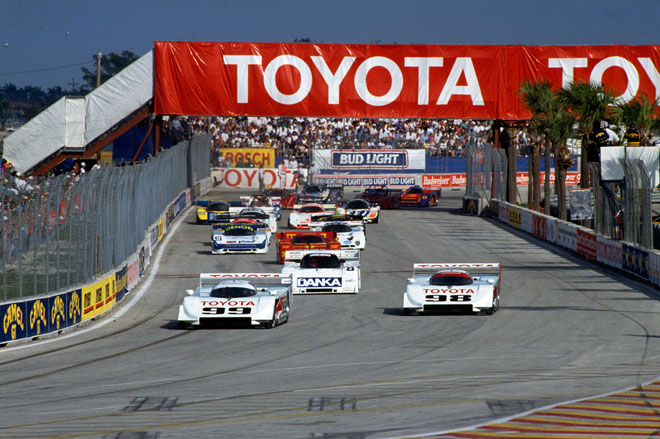
Unlike today, no efforts were made to structure old IMSA's four classes to pit non-pro against non-pro. Those decisions were made by teams, not the sanctioning body. You raced because you wanted to race, and if you weren't as fast as the best, you tried to improve as much as possible. And if you still weren't among the elite after those efforts, you accepted where you belonged in the pecking order.
A series-based talent intervention was not an option, nor was it expected. Unfortunately, for some in modern IMSA, that expectation has changed.
THE GTD TEAM OWNER
Alex Job (FAR RIGHT), who earns a living by fielding paying non-pro drivers, and has long served as sports car racing's patron saint of common sense, says if the current system is going to stay, it needs to be relaxed. And if IMSA's willing to listen, he'd welcome its dismissal.
"If the series was to keep the driver rating system, I would vote for only one [non-pro] driver per car rather than two," he said. "I think one is enough and one would address the needs of the customer/owner. It could be an owner/driver, or it could be a driver that is funding the program. But in any direction, it should be an amateur that doesn't make his living from driving a racecar.
"Personally, I think the driver ratings should be gone and we go back to the way it used to be. But if you really want to keep the [pro/non-pro] category defined, then I think one [non-pro] satisfies the requirement."
THE OLD SILVER
Quite a few people lost their mind last week over road racing legend Scott Pruett being downgraded to a Silver (non-pro). Pruett, who turned 55 this year, had his rating lowered because the system has a trigger for an automatic downgrade once a driver reaches his age. There's no need to argue whether the trigger is completely stupid; that part's obvious. But of all the things that are hard to understand when it comes to rating changes, this one was easy – a default maneuver that's blind to talent.
24 Hours of Le Mans and IndyCar race winner Stefan Johansson experienced the same thing last year, but few seemed to notice when the former Ferrari and McLaren Formula 1 driver was hit with the age-related downgrade. The hilariously frank Swede (LEFT), who serves as the sporting director for Scuderia Corsa, laughed at the rating reduction when it happened, and questions why the system exists.
"When I first heard about [the downgrade], I was like what the f***? Are you serious, and do you seriously think I give a damn about some rating they give me?" he said. "I never asked for it, and I certainly don't need it. I think the rating thing...they should just scrap it, because what it was intended to be has turned into something completely different.
"Every time you make a new rule, if it is not well thought out – which I don't think this one is, necessarily – are doing now, for young hotshots that aren't rated accurately, and hire them.
"Really, I think it's not fair – first of all, because it has killed the careers of a lot of really good drivers who are accurately rated. But they just can't find work anymore. What do you need driver ratings for? We've never had driver ratings before. I think it's time to throw that one in the bin as another bad experiment that didn't work out."
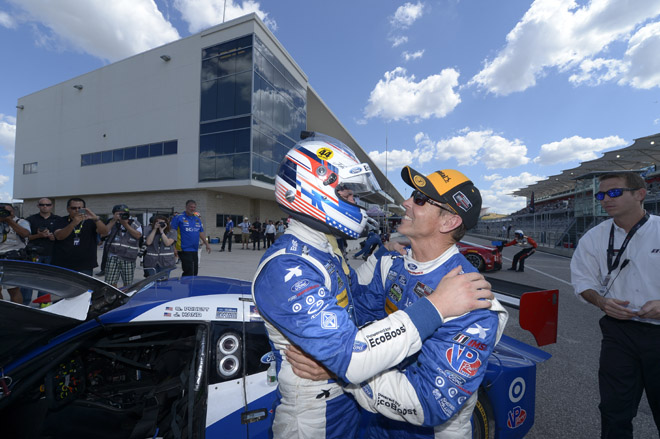
I asked Scott Pruett, who won IMSA's Prototype class at Circuit of The Americas in September with Joey Hand (ABOVE), whether he, as a brand-new non-pro (in the eyes of IMSA) somehow felt different – maybe slower or less able due to his new rating. He offered a direct response to an absurd question.
"When I wanted to go test in Formula 1 [in 1987], I had to have a superlicense," he said. "I had to meet a ton of criteria to get that superlicense based on performance and wins and all that. Because obviously other Formula 1 drivers don't want guys out there that don't have the ability.
"There's a lot of IMSA drivers that wish the rating system was a lot more stringent than it is. Because when you get to Daytona, depending on the year, there could be a lot of drivers that truly don't have the knowledge, ability, wherewithal, whatever you want to call it, to even be out there driving, and yet they are. So when I look at it, the rules are the rules. I didn't make them and I'm not enforcing them. Certainly, as a driver, you have to meet certain criteria."
I also asked whether he now considers himself the equal of the fellow non-pros he'll race against in GTD next year when he leads the new Lexus RC F program.
"It's a non-issue," he continued. "It is the rule. It doesn't make any difference. We can talk about all these things we think that are fair or unfair, whether it is an engine spec or BoP. I don't think P2 cars should race against Daytona prototypes because it's not fair. But it's the rule..."
As great as it would have been to hear Pruett say being downgraded was a joke, I didn't expect him to belittle the series or its rule makers. But I would suggest that, off the record, over a glass of wine, he might admit the scenario of being downgraded by age, rather than a drop off of lap time, is a bit silly.
THE SPORTS CAR VETERAN
Butch Leitzinger (near right, with Team Cadillac's Johnny O'Connell and Bentley teammate Chris Dyson on the Pirelli World Challenge podium at CTMP this year) is a two-time winner at Le Mans, a sports car champion, the son of IMSA GTU champion Bob Leitzinger, and is recognized as one of the finest professional drivers of his generation. Growing up in IMSA during the 1980s gave Butch a unique view of how experience and talent helped his father to win his first GTU title at the age of 50.
There were no ratings, or handicaps to protect a white-haired driver like Bob from his 20-year-old son or other upstarts like Jeremy Dale, Bart Kendall, Lance Stewart, and Johnny Unser. To win the GTU Drivers' championship, Bob Leitzinger had to rely on himself, not the series, to keep the young lions at bay.
"My dad was 50 when he won, and I think people forget Elliott Forbes-Robinson was the first ALMS prototype champion [in 1999] when he was 55 or 56," he said. "I was EFR's teammate, he drove fantastic, and he wasn't there because of any clauses; he wasn't a Silver; he was there because he was fast and smart.
"I see the controversy now with Scott Pruett being downgraded. I see Jan Lammers and Eric van de Poele are also Silvers now. I'd hire them because they're brilliant drivers, not because they've been downgraded. I fail to see the logic in ratings based on age or any other factor. We're all racers."
I won't waste a lot of time pointing out the emerging theme here, but I'd say there's a notion of "just let us race" instead of "please rate what kind of racers we are" beginning to build.
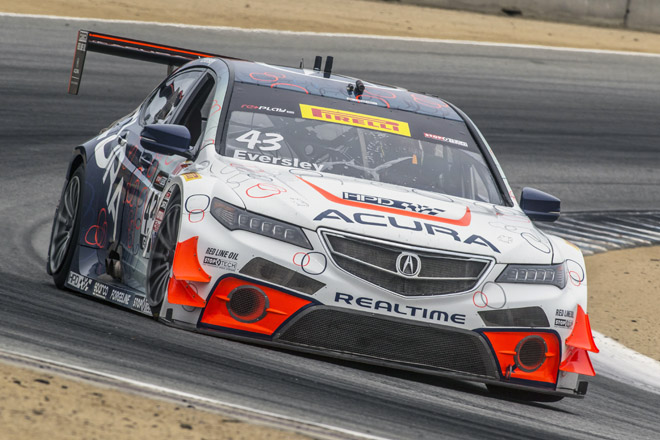
The most scalding area of the driver rating conundrum is with mis-rated pros, the "fake Silvers." IMSA went into the 2016 ratings process with the intent to correct the problem, and as the preliminary ratings revealed in November showed, all of the known pros who had non-pro Silvers were shifted up to pro Golds.
By the time the final ratings were released last week, IMSA's Silver-to-Gold initiative was torpedoed, and those pros in IMSA's crosshairs during November had their fake non-pro ratings re-instated.
IMSA driver Ryan Eversley (BELOW LEFT), who now makes his living as a pro with the factory Acura Pirelli World Challenge team (ABOVE), where ratings aren't used, believes IMSA's willingness to intentionally mis-rate its drivers is among the leading reasons to ditch the system. And with his personal experience from growing up inside IMSA GTP and GTP-Lights teams, not to mention his role in coaching a number of non-pros today, Eversley can tie a number of viewpoints together on the subject.
"My two trains of thought are I don't want a rating system because I didn't see one throughout my childhood of watching IMSA," he said. "I grew up around (non-pro) Bob Akin and his Porsche 962 team that my dad ran for and Bob, and Bob was never saying, 'This isn't fair, I shouldn't have to race against a pro like Derek Bell.' You look at guys like Paul Newman, he didn't care, he just wanted to race. Today's version is John Pew. Ben Keating. Cooper MacNeil. John Potter.
"They just want to go race. Would they stop racing if IMSA got rid of driver ratings? No. They've been here racing before the ratings came in, so anyone who says dropping the ratings would make guys want to leave maybe haven't looked at the timeline.
"So you have what we have now, where IMSA lets teams, let's say GTD teams, use fake Silvers to create completely pro lineups, and they're racing against a guy who sells [Dodge] Vipers Monday through Friday, a guy who owns a hotel chain... And they enable the entire situation. On paper, the system is supposed to prevent that from happening, but they allow it. If it's that messed up, and believe me it is, it needs to go.
"I'm absolutely fine being a [pro] if every true pro is rated that way. But when guys with multiple championships in the series I race in are rated lower than me, it's hard to find the rationale where I'm higher rated than they are. If they're [non-pros], I should be too."
Eversley also pointed out something that has been a major bone of contention for me since the rating concept was introduced.
"When I started out racing, I was gung ho on being the best racecar driver I could be, and I was under the impression you needed everybody to know that so you get opportunity because you are a known entity," he said. "Now that I'm a known entity, I am actually not good to drive in the long races in IMSA because I am too highly ranked and there are virtually no jobs left for guys with my ranking.
"I can get more jobs if I was rated as a [non-pro], which is completely insane. The system asks the pros to try and get [non-pro] status because that's where the job are. It goes against everything you learn as a driver. Seriously, I thought this was supposed to be about becoming the best."
THE PAYING NON-PRO
We've heard from younger championship-winning pros, champion drivers in their 50s, a chief steward, a team owner who fields cars for pros and paying non-pros, and now it's time to hear from the customer – someone who brings money to a team in exchange for driving.
Mike Hedlund is a throwback – everything IMSA needs and supposedly wants to protect with driver ratings. He's incredibly successful, highly intelligent, loves racing, and can afford to pick and choose when and where he drives. His views differ from a few who've weighed in so far, and that's exactly why his opinions provide a valuable counterbalance in some areas.
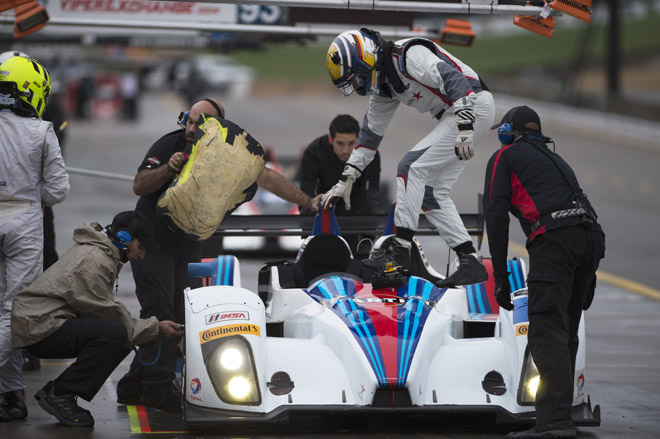
shared with Renger van der Zande at Petit Le Mans.
"From a series and business point of view, I'm a firm believer in driver rankings – at least in the current economic climate for motorsports," said Hedlund (BELOW RIGHT). "There simply isn't enough funding for a solid grid without gentlemen drivers and we won't lose all of them, but many, without the [pro/non-pro] rankings. From a personal point of view, I have two primary concerns, which happen to be at odds with each other.
"First, the budgets for the racing I personally want to compete in have risen to the point that they're out of reach to fund wholly as an individual for myself and many other funded drivers. So, driver rankings are critical to get into a position to compete with another partially funded driver.
"Having said that, the current driver rankings are an insult to anyone with an IQ greater than their pant size. As far as I can tell, I'm being asked to spend millions of dollars to compete for a season in order to be a grid filler for a handful of pros who can't find full-time rides – so I can provide them with 'work.' This isn't [a charity], and as much as I want to see all the pros have full-time rides every year, the fact of the matter is, I don't race to give them employment. You know the easiest way to further reduce the number of seats for pros? Have fewer gentlemen drivers compete – this isn't rocket science."
Hedlund, who has a non-pro Bronze rating, also has critical views of the ratings system, and adds to the aforementioned theme that's developing.
"Perhaps it's a character flaw of mine, but it really strikes a nerve when people piss on me and say it's raining – which is exactly what the FIA and indirectly, IMSA, is doing to gentlemen driver," he said. "I'd love to know how much influence IMSA had with the current situation so I could direct the appropriate amount of ire their way. Overall, since their rough start in 2014, I've been a big IMSA fanboy and want them to succeed. For all I know, IMSA has no hand or voice in the rankings and is not permitted to go their own way. From my point of view, they have culpability by association.
"At the end of the day, in my opinion, if they are unable or unwilling to adjust the rules while simultaneously executing said rules and regulations in a more productive way, they should be completely removed. I just want to race!"
A BASIC SYSTEM
We're left with a system IMSA refuses to police for truth and accuracy, that asks pro drivers to lie and plead to be rated as non-pros, and attempts to manipulate competition to protect non-pros from being overwhelmed by all-pro lineups.
Maybe it's an old school way of thinking, but if a driver – any driver – is afraid or uninterested in pitting themselves against the best, they aren't racers. That's what frustrated me with the return of the "Linda Ludemann Rule" at Petit Le Mans. If any driver isn't there with the full intention to race, and race hard, they belong on the timing stand with the other non-drivers.
That's why I'm in favor of a brutally simple rating system going forward. Here it is: Two options, one is "Driver," the other is "Owner."
If you want to pay for a car to be on the grid, and pay professional drivers to pilot the car, please do. That makes you an Owner. If you want to do those things, and drive, and limit your time in the car to improve the odds of winning, you're an Owner, and don't belong in a car. It's a thoroughly uncomplicated system.
IMSA is the pinnacle for sports car racing in America, and as Kaufman noted, there's no place in the series for those who lack the talent, or the inclination to race at the highest level. For those who want to race but aren't willing to test themselves on a professional stage, there are great amateur endurance racing events held by the SCCA and NASA that are geared for non-pros.
Level 5 Motorsports team owner/driver Scott Tucker is reviled by some, but one thing I've always loved about the guy is no one ever questioned his unquenchable passion for driving racecars. If anything, Tucker's the model IMSA should use to make sure Ludemann situations never happen again.
LEFT: Scott Tucker (middle) celebrates P2 class victory at Petit Le Mans in 2013 with co-drivers Marino Franchitti and Ryan Briscoe.
Tucker insisted on driving...and driving...and driving until he was exhausted. He'd jump out of one P2 car and climb into the other just so he could maximize – not minimize – his time behind the wheel. The ALMS actually put a rule in place to keep Tucker from over-driving. He'd also take part in the support races, and do ungodly amounts of testing to make sure he was reaching his full potential.
"It was never a hobby for him; he took his racing very seriously," said IndyCar champion Ryan Hunter-Reay, who drove with Tucker a dozen times in Grand-Am and the ALMS. "He was fit, he was fast for a [non-pro], and he always wanted to be in the car as much as possible. It's a competitive sport, so of course, we'd put the pros—your best guys—in to finish the race, but he wasn't about to let himself be used to do less so we could win. When he was in the car, he was there to contribute for as long as he could go and I really admire that about him."
Tucker wasn't as fast or as good as the pros, but he also refused to take a back seat to the pros in order to get more trophies. He wanted to win, badly, and also wanted to contribute to those wins in a meaningful way. It's that kind of spirit – the will and desire to compete against the best – from pros and non-pros that sustains the sport.
"Every single time I've strapped on my helmet, I've only compared myself to whoever was fastest," Hedlund added. "I don't care about racing against other gentleman drivers or getting cool trophies to bring home after beating some dentists and lawyers."
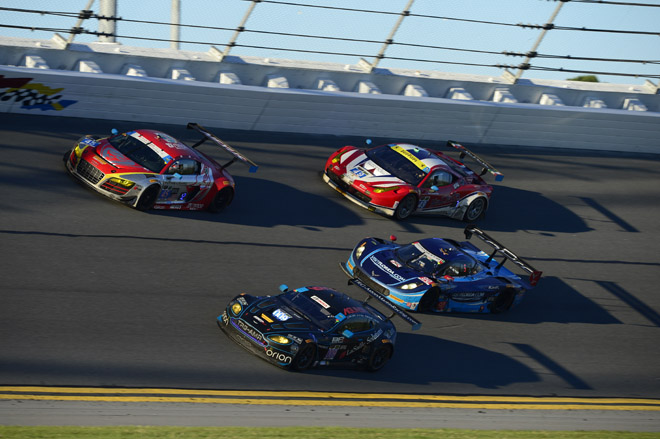
"I think the difference now is that the gentlemen drivers coming in don't form their own teams," Leitzinger said. "In the '80s there weren't all of these ready-made teams – the professional race teams just waiting to be hired to run a program. Back then, in most cases, if you wanted to race, you built a car, formed a team, got your friends – people that had some interest in racing – and went to the track and raced. Now, you can call any of these very professional teams and say, 'How much does it cost to drive your car?'
"I think there's a belief today that success is a commodity that a [paying] driver can buy because the rules are written to equalize everyone. If every [GTD or PC] car has the same amount of [non-pros], you won't stand out if you aren't any slower than the other [non-pros]. As long as those rules are there, it dumbs everything down. I think being coddled by a system like this is tragic."
Although my new driver rating system of "Driver" and "Owner" is, at its core, a sarcastic suggestion, it's also no different than what Marty Kaufman and the old IMSA team used to decide whether a driver would be allowed on track, or kept out of the car, and its utter lack of complication deserves a hasty return.
Provided a driver can earn a license to race in IMSA, and the series is willing to assess whether that driver has the skill to handle the type of car he or she wants to race, their income level, age, past success, and whether they are paying or being paid to drive should be completely irrelevant. And if non-pros are licensed, no efforts should be made to soften the reality that they aren't as fast or as good as the pros. It's worth reiterating: Everyone does not get a trophy in professional sports.
A RETURN TO REALITY
The last item to cover was broached by Eversley and Hedlund. IMSA, the ALMS, Grand-Am, PWC, and every international racing series since sports car racing began have relied upon paying non-pros. As I've written many times before, they are the lifeblood of the sport, and while big-dollar factory programs always come and go, it's the gentleman drivers who keep most series in business.
Old IMSA, new IMSA, and every other racing series I can think of has a wonderful free market system that works if it's left alone. Drivers with money will find teams to take that money and provide services in return. And teams in need of money will keep finding paying drivers to pilot their cars. It's been going on for longer than I've been alive, and will continue to thrive without IMSA's attempts to intervene and regulate the process.
And the beauty of that free market system is in the agreement between driver and team – the buyer and seller. They will work out the details of how much time they're buying, and I'd hope it involves as much as the driver can possibly afford. For those entering a professional series like IMSA, the negotiations should involve acquiring maximum seat time, rather than bare minimums, and that is one area where IMSA can help shape driver/team owner discussions.
IMSA can help the process by strengthening its minimum drive time rules for every driver who competes; no more Ludemanns who take a dive to earn a prize, and with the bar set high enough for licensing and time spent in the car, it should be possible to filter some of the jokers out of the field. If you're there to drive, do like Scott Tucker and wear yourself out. And if you aren't comfortable being in the car for prolonged periods, grab a headset and clipboard and enjoy the view from pit lane.
Forget the ratings, as Johansson pleads, and ditch the series-imposed pro/non-pro strictures.
"Every time you try to put rules on that stuff...the free market will dictate that naturally," Johansson said. "By nature the thing will work itself out of its own. You don't need to have some guy in an office somewhere trying to decide a blanket rule that may suit some and may not suit others. It's a bit like the [European Union]. You can't have the same rules for farmers in Portugal as you do for the ones in Norway. Which they do, by the way, and it doesn't work, of course. Just leave it alone."
Alex Job is also a fan of the free market system, and isn't keen on IMSA's efforts to manipulate and regulate the process through its ratings matrix.
"In the end, I think it's maybe more like a Democrat-versus-Republican situation," he said. "I am more on the Republican side because I'm more for free enterprise. I think the case for free enterprise has to excel here. We are too much to the socialist side of thinking, where we are going to govern everything. I think we need to get rid of that."
We've covered a lot of ground in Part 1 and 2. There's no need to recap everything because there are many differing viewpoints to consider, but I do find Butch Leitzinger's parting thoughts offer a perfect summary of my own on the continued use of driver ratings. Maybe he speaks for you as well.
"I'm struggling trying to figure out how what began as an idea that probably was well-intentioned has gone on too far, and yet, no one has actually turned around and asked, 'Do we really need this?'" he said. "They just keep on putting new layers on it and figure, well, if we mess around with the ratings a little bit more and put the angriest ones back to [non-pro] ratings, everyone will quiet down.
"But the worst part, the part no one is asking, is if driver ratings are accomplishing a goal that is worthy of being accomplished."

Latest News

Comments
Comments are disabled until you accept Social Networking Cookies. Update cookie preferences
If the dialog doesn't appear, ad-blockers are often the cause; try disabling yours or see our Social Features Support.