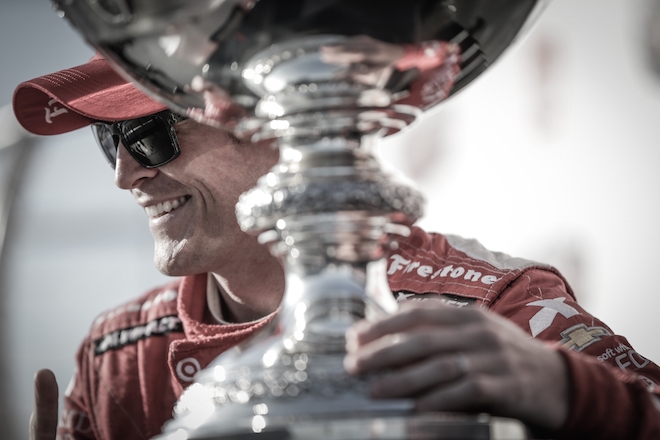
IndyCar season review: Scott Dixon
What will you remember the 2015 IndyCar season for? Juan Pablo Montoya's teflon coating wearing off right at the time he needed it most? The introduction of the aero kits, several years after they were first mooted? Rocky Moran Jr.'s inspiring hour of track time at Long Beach?
To try to make sense of it all, RACER's Marshall Pruett, Robin Miller and Mark Glendenning asked each other some searching questions about all of 2015's regulars, which for the purpose of this review, includes anyone who started a minimum of half the races. This is the final installment of the series - to revisit previous installments, please scroll to the bottom.
SCOTT DIXON
2015 starts: 16
2015 best finish: 1st (Long Beach, Texas, Sonoma)
2015 championship position: Champion; 556pts (beat Montoya on a tie-break)
How much of Dixon's success could be traced to how well he managed his bad weekends?
MARK GLENDENNING: It would be a huge oversimplification to say that it was the sole factor that determined whether it was Dixon or Juan Pablo Montoya who got interviewed for RACER's 'Champions' issue, but it certainly came into the equation. When you look back over Dixon's season, the importance of a few moments become amplified by hindsight.
The best example is Iowa: Dixon had been up among the top three or four for most of the evening when he was forced into the garage with a damaged axle. He was stuck there for 38 laps while the Ganassi crew scrambled to repair his car, and they got the job done with enough time to get him back out for the final 30 laps. When Takuma Sato crashed out, Dixon was able to move from 19th to 18th.
At the time, I thought that the big winner of the evening was Juan Pablo Montoya, who had disappeared with a suspension problem after just nine laps, only for most of his main title rivals to encounter problems of their own that prevented them from capitalizing. It's only in retospect that the importance of Ganassi's efforts in the garage really becomes apparent. Dixon was classified three laps ahead of Sato. With a lap at Iowa being around 19s, you figure that if the repair had taken just over one minute longer, Dixon would have finished a lap short of covering enough ground to leapfrog Sato in the results. That extra place was worth one point - without which, he wouldn't have been level on points with Montoya when the checkered flag waved at Sonoma; a situation that granted the Kiwi the title by virtue of his three wins to Montoya's two.
After dominating the Indy 500 with pole and leading the most laps, how badly did the plastic bag that led to overheating in the final laps hurt Dixon's title run/boost JPM's championship cruise after scoring double points at the 500?
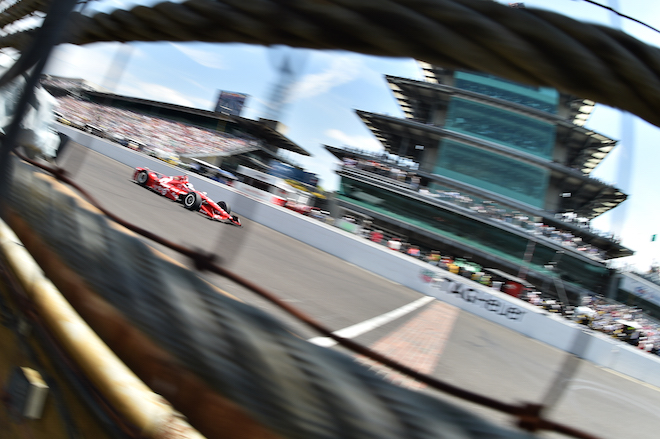
ROBIN MILLER: Without Dixie over-heating and fading from first to fourth at Indy, we likely wouldn’t have had much drama, if any, heading to Fontana. The Kiwi was checking out with 15 laps to go last May before slowing and it provided a great battle to the checkered flag between Penske teammates as well as putting Scott is his usual come-from-behind mode. Would he have traded the championship for having his face on the Borg-Warner Trophy a second time? In most years I’d say yes but considering his unlikely and remarkable rally to take his fourth title, maybe not.
How did the change in engineers from longtime man Eric Bretzman to Chris Simmons influence his season?
MARSHALL PRUETT: Based on the outcome, it was impossible to tell a change had taken place. To my surprise, Dixie and Simmons didn’t need a few races to figure each other out, there was no time lost during the early rounds as they learned to speak the same engineering language, and by the time the season was over, the two Ganassi veterans looked like they’d been paired for a decade.
Even more remarkable, Dixie and Bretzman DID spend more than a decade as IndyCar driver and engineer, and from their amazing bond, three championships and an Indy 500 win was produced. Credit Ganassi and CGR managing director Mike Hull for how they structure the team to achieve the uninterrupted continuation of the form with a big engineering change prior to the season. Dixie and Simmons hitting the ground running in 2015 happened because there’s so much crossover taking place with CGR’s drivers and engineers in IndyCar and sports cars; the two had worked together numerous times prior to Bretzman’s switch to Chip’s NASCAR program, and as a result, shifting to a full-time driver/engineer relationship was exceptionally easy.
Simmons also brings something unique to the partnership—he was a standout in the junior open-wheel categories, and also raced in Indy Lights before transitioning to a career on the timing stand.
“They make a large room really small because they work so well together,” said Hull. “I think Chris is a nice mix of someone who’s driven racecars successfully, and has an overall feel for what the driver truly needs. Scott loves to understand the ‘why’ on the engineering part, and that makes a great fit with Chris who knows that side from his career as a driver, and obviously now as an engineer.”
As a tandem, Dixie and Simmons won more races than any other IndyCar combo on their first try, took two poles, and the Kiwi added a fourth IndyCar championship to his tally after acing the season finale at Sonoma. It also marked Simmons’ fourth IndyCar title after claiming three consecutive crowns with Dario Franchitti from 2009-2011.
With a year of learning under their belt, and given their respective talent levels, it’s scary to think what Dixie and Simmons can achieve in 2016, and in the seasons ahead.
Missed one of the earlier reviews? You can find them here:

Latest News
Comments
Comments are disabled until you accept Social Networking Cookies. Update cookie preferences
If the dialog doesn't appear, ad-blockers are often the cause; try disabling yours or see our Social Features Support.