PRUETT: Time for a rethink on driver ratings
Should a racing series put itself in a position to give or take away jobs from its drivers each season? That's the question I've been pondering since Monday when the FIA released its preliminary 2016 international sports car driver ratings, and it isn't the first time the issue has been raised.
The sudden need to officially rate sports car drivers came about at the start of the decade, and it's unique to multi-class series like the FIA World Endurance Championship and IMSA's WeatherTech SportsCar Championship, where dedicated classes exist for professional and non-professional drivers to co-mingle.
You won't find it in IndyCar, or NASCAR, or any other racing series where single car/single driver competition is the norm. And because we're talking about sports cars, where mountains of minutia are found in every rule and decision, FIA driver ratings have become an entangled mess in America.
Adding to the confusion, IMSA abandoned its own driver rating system at the end of 2014 to follow the FIA's lead, and with some of its drivers now out of work due to Monday's news, IMSA no longer has the autonomy to affect repairs.
For those who haven't followed the driver rating dramas, here's a quick look at what the system is intended to provide before we move into where it fails to deliver.
The FIA's annual classification process evaluates and rates semi-pro sports car drivers as Bronze or Silver (depending on a variety of overwrought criteria), and assigns a Gold or Platinum status to pros based on a few different triggers, including their level of success during the previous season.
In the WEC, the LMP1 and GTE-Pro classes are intended for professionals like Mark Webber and Gimmi Bruni, and in IMSA, pros like Joey Hand and Oliver Gavin ply their trade in Prototype and GT Le Mans. Looking specifically at IMSA's Prototype and GTLM, semi-pros are allowed to race among the pros, but it's a competitive liability in most situations.
The WEC and IMSA also reserve two classes in each series for semi-pro drivers, and that's where the need for a rating system originated. WEC's LMP2 and GTE-Am, and IMSA's PC and GT Daytona, have specific rules requiring a blend of Bronze/Silver drivers and Gold/Platinum drivers, with the rating system acting as a safeguard to protect the semi-pros from being displaced by pros.

It's a simple premise: We know a PC team with three paid pros will drive circles around a mixed PC squad of paid pros and paying semi-pros, so IMSA mandates a minimum number of semi-pros must be included in each PC (and GTD) lineup.
Another thing IMSA is attempting to protect with its ratings-based rules is a steady flow of income for its teams and manufacturers in semi-pro classes. From a business standpoint, requiring semi-pro drivers in PC and GTD means wealthy businessmen and businesswomen who love to race, semi-pros who come from wealth or bring their own sponsorship, and others with the means to write large checks have a place of their own in the series. The presence of cash-wielding semi-pros has been vital to the health of sportscar racing for as long as I can remember, and if we're honest, WEC and IMSA grids would be tiny without them.
Those teams stay in business because of semi-pros, which makes carving out classes like PC and GTD for their participation a smart move. So let's turn our attention back to a rating system that continues to produce collateral damage for those who aren't full-bore pros in Prototype or GTLM, and aren't the semi-pros who bring the money to make PC and GTD possible.
The FIA's annual release of its new or revised ratings has become a cause for celebration among those who've been downgraded from pro to semi-pro, and a source of dread for the ones upgrades from semi-pro to full-pro status. If that sounds backwards, don't worry, because it is.
In most PC and GTD driver lineup scenarios, teams, or more specifically, funded semi-pros hire pros that fit into a middle category. They're what I consider pro-coaches, and tend to be almost – or just as – fast as the pros in Prototype and GTLM.
Some pro-coaches are former factory aces who've lost their big-time rides, while many of the rest came into sports car racing in that mid-tier pro-coach role. They earn their livings as the bullets in PC and GTD, and serve as the coach, mentor, and guide for the semi-pros who aspire to be better and faster. It's the Andy Lallys, Spencer Pumpellys, and Ian James types.
And if we refer back to the fact that stacking a PC or GTD lineup with pro-caliber talent will lead to greater success, it makes gaming the rating system a smart piece of strategy. What if a pro with a Gold rating – someone teetering close to semi-pro – can lobby the FIA for a downgrade to Silver? All of a sudden, PC and GTD teams have what's become known as "fake Silvers" – the pros masked as semi-pros – at their disposal. And for those paying semi-pros who can afford it, hiring a fake semi-pro to drive in place of an actual semi-pro is not only possible, it's a competitive advantage. So much for safeguarding semi-pros!
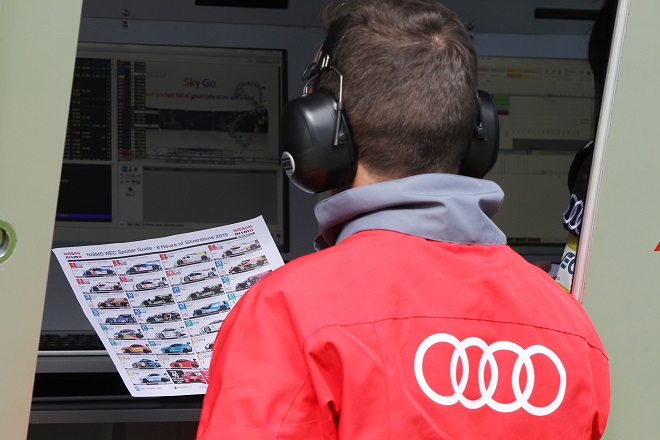
Then there's the anxiety Silver-rated pro-coaches face around this time of year when the new FIA list emerges. With a change from Silver to Gold, a pro-coach can be out of work in an instant thanks to IMSA's semi-pro class rules. Being upgraded to a Gold pro sounds great from a prestige standpoint, but what if a PC or GTD team already has its maximum number of pros? Time to file for unemployment benefits.
And due to the mid-November release of the FIA's driver ratings, the timing has been more than unfortunate for those pro-coaches who were unexpectedly upgraded to full-pro status. Some had contracts that were signed to drive in 2016 based on their Silver rating, and with the FIA's decision to move some to Gold, those contracts have been voided.
Again, this rating system has nothing to do with whether a driver is an actual money-earning pro or someone whose talent is truly deserving of a just-below-pro classification; it's all about which convoluted rating the FIA hands out.
The driver whose name has been most heavily identified with the shortcomings in the new ratings is Andrew Davis (at left, with teammate Robin Liddell), who races for Stevenson Motorsports. Davis is the personification of a pro-coach, won the 2011 Grand-Am Rolex GT championship (prior to the use of driver ratings), just scored the 2015 Continental Tire Series GS title for Stevenson and, for those who know Davis, there's nothing to suggest he's anything less than a pro driver who happens to support his family by being the pro-coach in the semi-pro classes.
Davis went to bed Sunday night a Silver – a fake Silver, if we're honest – and woke up Monday a Gold. As a supposed semi-pro, he was a steal for Stevenson, who paired Davis with GM factory driver (and Gold pro) Robin Liddell. But with the strict rules limiting the number of non-pros in PC and GTD, Davis became the latest casualty in the driver rating chaos the moment his rating changed.
As the Silver to Liddell's Gold, Davis had a job with Stevenson, but as a brand-new Gold, Davis is now searching for new opportunities. With the start to IMSA's season right around the corner, most of the openings for Golds in PC and GTD have been filled, and if you were Davis, or any others in his situation, you might struggle to find the logic in a system that can marginalize those who work in the space between factory pros and paying semi-pros.
The pickings are also slim for those pro-coaches who've had pro Gold ratings all along.
"I can't get a job driving with anyone because I'm a Gold," said one unemployed pro-coach who asked to have his name withheld. "Someone with lesser skill and a lower rating will take the job because teams want pro-grade drivers rated as a Silver, and if you can't engineer that little lie through the ratings system, you're out of luck. That's what I'm presently facing."
And then you have the oddities like factory Prototype driver Katherine Legge, who had her Gold rating turn into a non-pro Silver on Monday. Legge, who is paid to drive by DeltaWing in Prototype, has an extensive background in IndyCar, and will be paid to race for Grace Autosport next year in the Verizon IndyCar Series, is now considered by the FIA – and IMSA – as a semi-pro Silver?
For the sake of comparison - and maybe even a laugh - Legge now shares the same Silver rating as Malaysia's Afiq Yazid, Australia's Marc Cini, and Holland's Mathijs Harkema. (It's OK if you don't know who they are...I had to look them up, too.)
And how about GT ace Jeff Segal who, like Davis, is a Rolex GT champion, makes a living as a pro-coach, and seems to have his pro/non-pro, Silver/Gold rating change on an annual basis? In 2014, when IMSA did its own ratings, Segal's rating changed multiple times in one month! As a Ferrari-affiliated driver, Segal, who carried a Silver rating in 2015, was used by the Scuderia Corsa Ferrari GTD team in a brilliant within-the-letter-of-the-law manner at Petit Le Mans.
Teamed with uber pro Townsend Bell and genuine semi-pro Bill Sweedler, Segal – the definition of a fake Silver – was used as the semi-pro who then kept the slower Sweedler out of the car for all but one lap. Forget the minimum drive time rules that would have required Sweedler to spend hours in the car; because Segal was given a Silver, he satisfied IMSA's drive-time requirement for a non-pro. That allowed Segal and Bell - an amazing, real world all-pro tandem - to game the system and leave the actual pro/non-pro GTD lineups in the dust.
Bell and Sweedler went on to clinch the GTD championship at Petit Le Mans with Segal's invaluable contribution, and like Davis, Segal has since been moved up to where he belongs with a new Gold rating for 2016. That Gold rating, though, is like career poison if you aren't a Gold locked into an existing team.
To start, the driver rating lunacy, at least in its current guise as it relates to IMSA, needs to change. There's no reason for IMSA to use a rating system established and overseen by a sanctioning body in France when PC and GTD are governed from IMSA's base in Daytona Beach.
IMSA drivers wanting to compete at Le Mans, or in any other FIA-sanctioned series, can apply for and receive their FIA-required rating. But there's no reason for IMSA to use another sanctioning body's system for its drivers when it's perfectly capable of administering its own, just as it did through 2014.
IMSA needs to cede from the FIA on this topic and design a simple, honest system that ditches the nonsense that sees Golds lobbying to become fake Silvers and makes pro-coaches fight over limited employment opportunities. Sports car racing is the only place in the world where Silver is more precious than Gold or Platinum.
How complex would a new system need to be? It all comes down to making straightforward judgments. We know a pro when we see one – that's the driver being paid in Prototype or GTLM. We know a pro-coach when we see one – they are also being paid, but work the PC and GTD ranks. And we know a semi-pro when we see one – they're the ones bringing the money and wouldn't be confused for a pro-coach or factory-level pro.
Forget the silly Silver/Gold debate and call them as they actually are. Level the playing field for pro-coaches by writing the PC and GTD rules to require X number of semi-pros and X number of pro-coaches. If a pro can only find work in the semi-pro classes, change their rating to a pro-coach. If a pro-coach gets called up to a Prototype or GTLM team, adjust the rating to reflect their new status. And if, by chance, a paying semi-pro turns out to be the next Tom Kristensen, raise their rating to whatever pro level fits.
Transparency is key here. A Davis or Segal should not be placed in a situation where they need to acquire a fake rating to find or keep a job in IMSA. And those who can't game a fake rating shouldn't be forced onto the sidelines and left wondering how they'll pay their bills.
Here's something else to consider: a number of pro-coaches bring their paying semi-pro clients into IMSA. Whether it's from a private coaching arrangement or as a driving instructor at a school like Skip Barber, pro-coaches have been the conduit for countless wealthy racers to spend in a series like IMSA. IMSA's goal to protect semi-pros is admirable, but when it's allowed to wreak havoc on the drivers who partner with and often introduce the semi-pros to the series, a major rethink is required.
The countdown has started and IMSA has 51 weeks to decide whether it will take control of its driver rating destiny, or leave some of its drivers to beg and plead with the FIA for mercy. If a rating system more complicated than pro, pro-coach, and semi-pro is devised, something's wrong.

Latest News


Comments
Comments are disabled until you accept Social Networking Cookies. Update cookie preferences
If the dialog doesn't appear, ad-blockers are often the cause; try disabling yours or see our Social Features Support.