F1 poised for ground effect return
Formula 1 appears poised to switch to running a form of modern ground-effect car from 2017 following a meeting of technical chiefs on Tuesday.
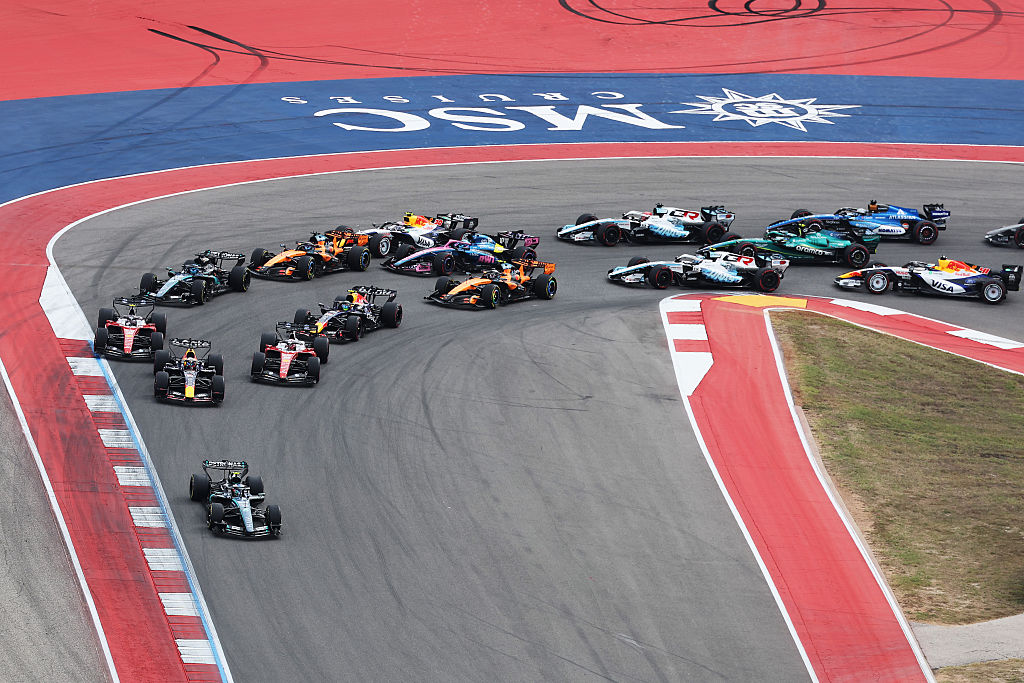
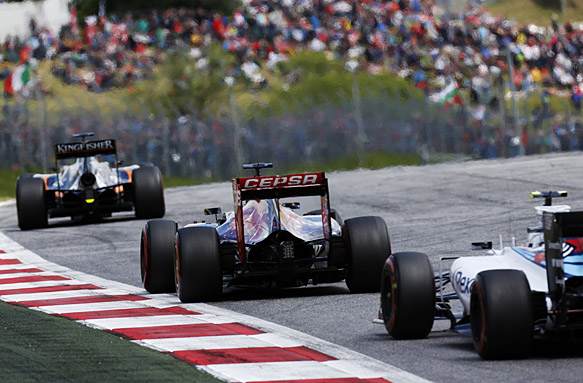
F1's technical directors were recently mandated by the Strategy Group to come up with ideas to improve overtaking in alliance with the new regulations due to come into force for 2017. An area of concern, however, has been the reliance on highly complex front wings in recent years, which in turn impacts significantly on a car behind, making overtaking difficult.
F1's ground effect proposal explained
Recent proposals, primarily from Red Bull, have included altering the proportion of downforce produced by the wings and underbody, but retaining the front wing style that has been one of the team's aerodynamic strengths. However rival teams are concerned such a design would still have too much of an impact on the aerodynamic performance of the car behind.
An idea with some support is to produce a modern ground-effect car, generating downforce from the floor, but also operating a very minimal front wing.
Explaining the concept to AUTOSPORT, Force India deputy team principal Bob Fernley said: "At the moment the front wing sets everything up for the flow under the car. You can see how complex they are to design and build, they give you the total performance of a car, but the minute you get behind a car that just washes away.

Button backs 2017 ground effect ideas
"What we would like to see in the '17 rules, in order to get the performance that is required, is to go to what I would call a modern ground effect. It is not going to look like the old cars, but you are using the same principle.
"It is not really affected by following people or anything like that, and therefore it should aid overtaking. Your front wing then becomes more of a trim wing than it does a generator of downforce."
McLaren racing director Eric Boullier also feels the floor of a car holds the key: "By having a more powerful floor effect you can regain the downforce loss, which is easier to manage," he said. "The front wings now are so complicated that if you change just two millimeters of a flap you lose the downforce at the back.
"By changing the philosophy of the car, having a less front wing-dictated car, this would be better. This is why for '17 there will be some change with regard to the bodywork, with a wider, lower rear wing which would help to rebalance the car, and without the focus on the front wing."
STANDARD PARTS DISCUSSED
Fernley has also suggested a standardisation of parts, namely the floor, beam wing and crash structures, which he claims would lead to a form of cost control via the technical regulations.
"You then leave the upper surfaces pretty much free for people to do with what they want," he added, "but you would have a less-dominant program in terms of front-wing design.
"The other thing is it would set everybody off, all teams including people like Marussia, at a reasonable performance level right from day one. But the chances are they won't do it. It's too logical."
Boullier concedes "standardization is not saving" as "resources would go elsewhere," but he feels progress so far has been "positive," with further talks planned next month.
Presented by:


Latest News
Comments
Comments are disabled until you accept Social Networking Cookies. Update cookie preferences
If the dialog doesn't appear, ad-blockers are often the cause; try disabling yours or see our Social Features Support.