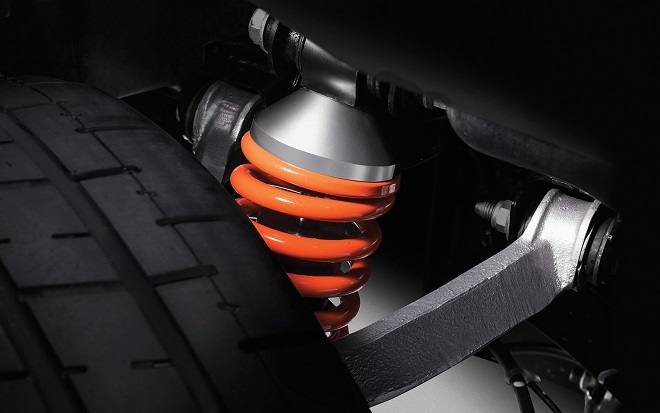
Suspension of Disbelief
The right suspension components are step one in a good setup. Taking to time to dial it in is the more important step two...
Just about every car in SCCA today is allowed some degree of suspension modification. From the most basic non-adjustable damper upgrades to complete coil-over systems outfitted with complex four-way adjustable, remote reservoir units, often only your bank account will be the decider on how deep you wade into the suspension pool. But regardless of your budget, everyone's always looking for the suspension setup that defies all reality and puts you on top every time.
The good news is, you need not go broke building a winning setup; many championships have been won with budget friendly suspension bits. It's certainly true that you get what you pay for when it comes to suspension, but that doesn't mean you need to overspend. The first step is buying what you need – no more, no less. It's not a bad idea to give yourself room to grow, just in case you change classes later to one with a more liberal rule set, but it is possible to go too far.
All too often people get themselves into trouble by having adjustments they don't know how to utilize; in those cases, a less complicated setup could offer better results. This is most prevalent in the case of dampers – keeping your setup simple and putting focus on driving is the best route for all but the most experienced tuners.
Consistency, many agree, is key. A car that is durable, offers repeatable laps and consistent performance is going to keep you out front. To get there, you need to use quality parts and a little elbow grease. Take the time to dial in your setup, making sure it's spot on – a poorly set up car with the best components won't be a match for a budget build if it's not done right.
"We don't race on perfectly flat surfaces," says Solo Champ and car setup ace Guy Ankeny of Ankeny Racing Enterprises. "The key here is consistency in setup as well as consistency in the car. These all tie together and make us drive more consistently, which makes us faster. You may end up with weird numbers or percentages, but do it the same every time. Consistency is repeating your best lap setup time, after time, after time."
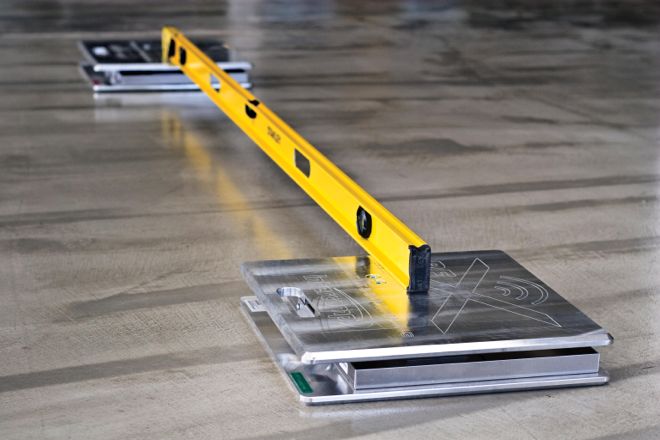
"Scales must be level," Ankeny says. "A six-foot contractor level and a 12-foot piece of two-inch by two-inch square tubing are minimums for tools. A more advanced way is to use a transit level and a four-foot 'T' scale. Scales must be checked [for level] in every possible direction."
Before you start making adjustments to the car's alignment, make sure everything is working properly. Bushings that are bound up can result in improper readings when on the scales or alignment platform, so inspect and lube them as needed. Any type of mechanical irregularities can also waste a lot of your time, cautions Ankeny, listing off items to check: "Loose wheel bearings, sway bars too tight in their frame mounts, rod ends binding, springs not seating properly, A-arm bushings binding." Ankeny also suggests if you have adjustable shocks to set them on the softest settings while you are trying to corner balance or align the car.
"Try to get the ride height as close as possible – left front to right front – then start adjusting cross weights," says Ankeny. "The front is critical because everything starts there. You want the roll centers as close as possible left to right or you could cause big problems down the road in tuning.
"Also, bounce the car between any adjustments to make sure your numbers are always solid."
Popular convention is to service a set of dampers every season, but that rule simply does not work in the world of amateur motorsports. "Some racers may run three or four times a season; some may run 30 or 40 times a season," says Grimes. "It's more an issue of things happening, whacking berms or curbs. If someone is Club Racing and wants to be thorough, every off-season or every other off-season go ahead and have the shocks checked on the dyno to quantify what you've got – this is for pretty serious racing shocks. You can do it for general piece of mind."
The same attention should also be extended to the dampers on your daily driver and tow rig. "Like road race shocks, this is also subjective relative to the environment," says Scott MacDonald of ThyssenKrupp Bilstein of America. "Average life can be 150,000 miles or more! Proper [damper] inspection should be a regular part of vehicle maintenance. Keeping an eye out for fluid leaks is key, however, a weeping shock should not be mistaken for a leaking shock. Over its life, a Bilstein can weep small amounts of fluid in order to keep the piston rod lubricated. In time, this can leave a small film of oil on the body. This is very different from a leaking shock, which will result in oil dripping from it."
While not often given much thought, good springs are very important to the success of your race program. Low quality pieces can vary from the rated spring rate, may not fit properly, and can have durability issues over time.
"We advise race teams to have an inventory – a range of springs on hand at each race to tune their cars for all conditions, "Kelly Falls of Hyperco says. "Generally, the chassis builder will be able to advise the team on the range of spring rates – and sometimes free lengths – needed to optimize the car in all conditions.
"Starting with a good baseline setup and taking notes as to what changes are made, and what impact they had, are critical to developing a reliable setup book for all tracks and conditions," says Falls. "There is no substitute for testing and ongoing development. Springs are a significant component in the equation."
It's also a good idea to inspect and inventory your springs regularly. "Teams should pull their springs from inventory and lay them out in pairs. Believe it or not, in the heat of making spring changes at the track some teams have been known to comingle rates and then put them back in the box thinking they are a pair."
Springs can also take damage. "When a car is involved in any crash, the springs can sometimes get bent or tweaked," Falls explains. "Rolling them across a flat surface is a quick way to ensure all is well."
If the springs are made correctly, the "rate" should never change. "Spring rates for a given design is a function of the wire diameter, total number of coil, modulus of material, and mean diameter of the spring," says Falls. "However, low quality springs that are not designed 'stressed to solid' can yield free length, significantly impacting the corner weights, ride heights, and overall balance and performance of the car," noting that each pair of springs should be inspected at the beginning of each season to ensure they are the same height."
If there's one takeaway, it's that you don't need the world's best shocks, springs, and sway bars to win, but quality products are key – and ultimately, spending wisely and taking the time to generate a working setup will always win over excessive spending with no pre-race prep. Those with limited budgets are very grateful.
This story originally appeared in SportsCar, the official member magazine of the Sports Car Club of America. To join the SCCA and receive SportsCar for free, head to www.scca.com.

Latest News


Comments
Comments are disabled until you accept Social Networking Cookies. Update cookie preferences
If the dialog doesn't appear, ad-blockers are often the cause; try disabling yours or see our Social Features Support.