Q&A: K-PAX Racing’s Jim Haughey on the business of racing
Shiny exotics tearing up a racetrack can seem like a glamorous thing, but the business of racing can send a team owner down windy roads more chaotic than the Corkscrew at Laguna Seca. Jim Haughey, owner of three-time Pirelli World Challenge Champion K-PAX Racing, discusses how he has learned the art and business of GT3 racing since starting the team in 2007.
Q: What led you to become a race team owner?
Jim Haughey: My passion for racing has always been with building cars and racing them. I owned a Volvo repair business for many years and came across some Volvo race cars that were for sale, and that's what brought me in.
Q: Did you know anything about the business side of owning a race team?
I had already been running a business for 20 years, so I didn't explore the racing business too far in advance of negotiating to buy the cars. I started by reading books on the technical aspects of racing – things like the center of gravity, tires and setup.
Q: Were there any similarities between running a repair shop and operating a race team?
Someone once told me business is simple: sales minus cost equals profit. With racing, some things are entirely different, like the customer. In my previous businesses, customers would come to me for a service. In racing, you seek out customers and convince them that there's a return on investment.
Q: Who is the customer if you're a race owner? Is it the fan, sponsor, racetrack promoter?
Everybody is a customer or a partner to a certain degree. Drivers are customers. Somebody that wants to see their name on the car is a customer. The fans are customers because if you find a partner that wants to emblazon the car with logos, they're marketing to the fans.
The ability to attract sponsors and partners is directly tied to our ability to service and satisfy our other customer bases – the drivers, crew and fans. If the drivers and crew work well together, we have a good likelihood of doing well in the races. If we do well in the races, we have the attention, satisfaction and support of our fans and are able to appeal to quality partners who want to be visibly associated with our ongoing success.
Q: Couldn't you be considered the customer in some respects?
There are a lot of parts manufacturers that come to you wanting you to use their products to verify the stoutness, durability and ability of their parts to stand up to racing. We have a unique relationship with the Pirelli World Challenge – I would say we're both a customer and a competitor because they want our participation in the series and we both seek sponsorships and endorsement agreements from the same people, at the same time.
Q: What's been the biggest challenge for you with the K-PAX Racing business?
The level of unpredictability is extreme when you try to factor in crashes, development requirements, failed parts and ongoing redesign demands. It's important to find partners who appreciate that uncertainty, share your passion and also see the potential return on their investment.
Q: Are you talking about silent partners or sponsors?
When we were racing Volvos (RIGHT), the company itself was a partner, and there were a lot of things we did together. We have a different kind of deal with McLaren, which sees the people that are buying and racing their GT cars as customers and a profit center.
With GT racing, it's more challenging to get a company to put their logo on the car than it would be if you were racing in NASCAR. You have challenges not only in finding a partner, but then you need a driver, brake manufacturer, clutch manufacturer, paint company and so on.
Q: Is it easier to market a McLaren than a Volvo?
We had a different experience racing Volvos – we had a manufacturer relationship. I met a lot of Volvo people, and they were pretty enthusiastic about the prospect of racing Volvos at the top level against other marque brands. They were enthusiastic in being able to say, 'Hey we beat all these other cars. We beat an Audi R8 in our Volvo. We beat a Camaro, a Corvette, or a Cadillac.' It's much easier to focus on racing and winning races when you have support from the manufacturer.
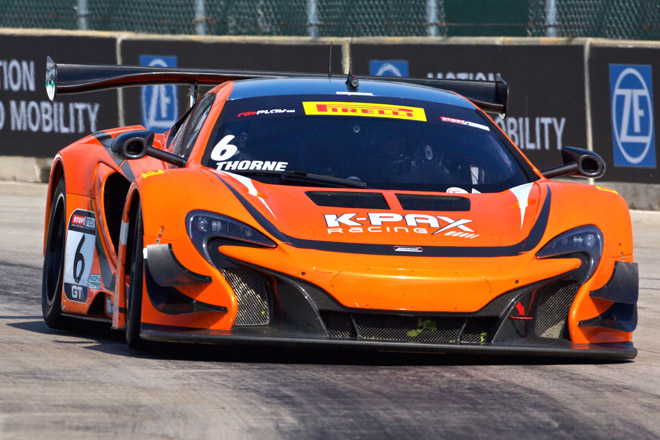
McLaren is a well-known racecar manufacturer and we're giving them their first exposure in the professional circuit in the U.S. in several decades. We work cooperatively to leverage that by sharing press releases and promotions across all our collective channels and through their dealerships. Ultimately, switching to McLaren was a strategic business decision, and one we didn't take lightly. But it's one that is showing very positive results.
Q: What are the top expenses you face as an owner?
It was expensive to race Volvos – we had to do the development, design and work with many sub-suppliers to manufacture parts, like the transmission. The McLaren is a purpose-built GT3 racecar, so the development costs are offset by the initial cost of buying the cars and the spare parts.
Cost varies depending on factors of getting to and being at the races, including hotel rooms, tires, fuel, meals for the crew, etc.
Racing McLarens also has its own complications: you have to be self-supported because there won't necessarily be a McLaren warehouse down the street. You have to anticipate what you're going to need and pre-purchase all the parts. You got to prep the parts, paint them and have them categorized.
The support trucks don't necessarily go home after the race to restock. You might go from Texas to Florida, and there's not enough time to go back to California in between.
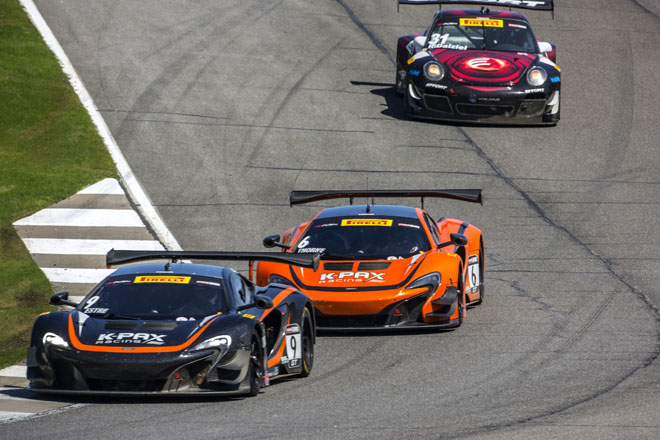
Racing is my passion. It isn't more profitable than the Volvo business I had for 25 years, and it can fluctuate wildly. Downsizing and going to a different class would affect the costs, but it could also affect the return. The opposite could also be true: it costs a lot more to race Formula 1 than in the Pirelli World Challenge. It's a good business to be in if you're willing to accept the risk of losing money in a bad year in exchange for the potential to make some money while supporting your passion.
Q: What is your goal as a team owner?
My goal is to work with a great group of guys – accomplishing more than we could as individuals, building a great team and having a great time doing it. Winning championships and making money is just an added bonus.
Q: Do you feel you're on the road to that goal?
I feel that we're on the right road. We have a great technical alliance with Flying Lizard, which is an engaged, experienced, well-managed organization that is responsive to my suggestions, direction and oversight. We have a great pair of drivers and cars that are designed from the gate for this kind of competition. We've demonstrated positive results from this combination so far in this season. We have increased visibility and support from our fans, the motorsports community and the McLaren dealership network. This all goes to strengthening the K-PAX brand and puts us in the perfect position to reach out to new partners and sponsors who can appreciate the value of associating their companies with a winning team.
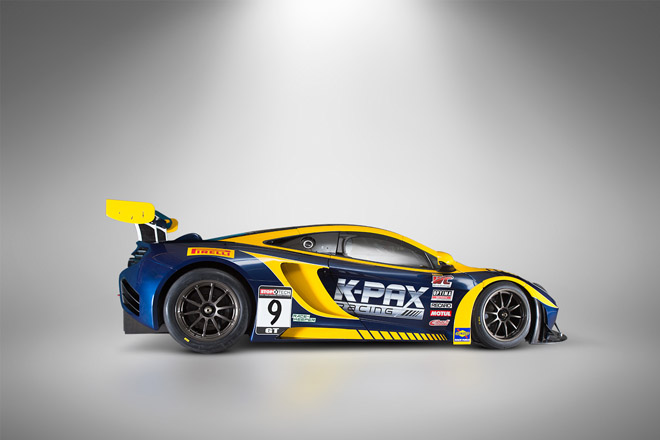
Clearly, it's valuable to be associated with a winning team and the media exposure that comes with a win. Having your company's logo on the side of the cars and as part of the official program listing and track commentary help generate exposure. Additionally, having your logo on the team jackets that show up in pre-race video interviews and social media helps potential customers see your brand.
Being part of a winning team and able to treat clients to a VIP day at the track allows sponsors the opportunity to share a unique experience with their constituencies.
Q: Is there a formula for securing racing sponsorships?
The formula I see involves looking at your costs and streams of income and trying to be flexible. You don't want to overcharge somebody, but you want to charge a fair price. There are some benefits that sponsors don't immediately realize, for example having your logo on the side of trucks that drive all over the country for the events.
Q: Having recently changed cars and support teams, which was more challenging as an owner?
I think changing teams is harder. A quick assessment of what it's like to go from being based in Denver to Sonoma, Calif.: it's like laying off 90 percent of your staff and then re-hiring. It's hard to switch teams because of all those relationships you've built up over the years.
Our former team, 3R, were great guys. It wasn't an easy move going from them to the Flying Lizard support staff. We took some of those 3R guys with us. It was much harder than going from Volvo racecars to McLaren.
Q: Did the name McLaren and its history have an impact on your decision to switch manufacturers? Has it attracted more sponsors or media attention?
McLaren has a lot of history – there's a lot of panache in the name. There are more people interested in a McLaren at the track than a Volvo, you get more attention with broadcast media, motorsports publications and social media outlets.
Q: Is pitching potential sponsors something you like to do?
It's something I'm learning to do because I have to. I'd rather be out there racing the cars.
Q: What are sponsors looking for?
They're looking for a justification to spend money. They want to see eyeballs on their product and return on investment.
Q: How are you helping them get more brand awareness?
We have clear data on all the places that we race and the different opportunities to promote them, such as the track, attendance, TV broadcast, webpages, Twitter, Instagram, motorsports publications, etc. We present all those avenues to them.
Q: How do you choose who to approach for sponsorships?
You try to develop a list which makes sense for the potential consumer or sponsor. We look at who's going to be interested in being associated with the McLaren brand, the K-PAX team and the areas where we're racing the cars.
Q: How much time do you spend chasing sponsors per week?
10 to 15 hours.
Q: What's the biggest challenge signing a sponsor?
The most difficult part is finding the right person to talk to and cold calling. You've got to do your research and try to figure it out. But then, good luck trying to find a phone number.
Q: Does McLaren and/or the race series offer help?
The series provides information, including the locations of the races, the number and demographics of attendees and your exposure. But, they don't go find sponsors for you or provide leads.
Q: What led you to the GT3 series?
We wanted to race in the GT category at the top level. In some of the other series, this car would be at the fourth level. We wanted our car to be in the front, to be the most competitive and the fastest in the mix. At the Pirelli World Challenge, that was the GT class. Most series will not take an all-wheel drive or turbocharged car. The Pirelli World Challenge allowed us to race Volvos and gave us a lot more freedom than other series.
Q: What does it cost to run in GT3?
It depends on what you're running, how many races you have, where the races are, crash damage and whether you stay at the Hyatt or Motel 6. With the 20 events, figuring on the low end, you're probably going to spend $60,000 per event weekend for each car...at a minimum.
Q: What about off-season costs?
Drivers are paid for the race weekend, so it's mostly crew expenditures. Some of the staff are on salary and others are just there for the race and get paid when they're working at the track or in the shop. A lot of them are sub-contractors so they don't get a weekly paycheck or work 40 hours a week.
Q: How do you go about buying a GT3 car?
All the different manufacturers have a GT3 contact person. Originally, we contacted all the GT3 manufacturers — McLaren, Audi, BMW, Ferrari, Lamborghini and others. We collected all the data, contacted them and told them we were interested. They do a certain amount of vetting to make sure that you're a race team and not wasting their time.
Most of them are based in Europe. A lot of them know who you are, but some of them don't. Then they start to give you information. They give you prices, car specs and ask more Qs. We looked at costs, performance and support from the manufacturers. Then we voted, and the McLaren won.
Q: What are the top things you've learned about being a racecar team owner?
I've learned a lot more about racing and by that I mean just understeer, oversteer, brakes and all the technical stuff of actually having a car with a driver at the track. I've learned more about working with manufacturers and big companies, and the turnover they have. It's amazing.
Q: Do you feel as a team owner you don't have as much control as you had when you were a shop owner?
You don't have as much control. You have zero control over other companies. You can try to justify the cost and everything, but even with the manufacturers, it's this voodoo-type thing. How much profitability does a race win bring the company? How many sales does it bring to a consumer company? Some of that is pretty hard to quantify, so there's some amount of unknown you learn to live with.
Source: K-PAX Racing

Latest News
Comments
Comments are disabled until you accept Social Networking Cookies. Update cookie preferences
If the dialog doesn't appear, ad-blockers are often the cause; try disabling yours or see our Social Features Support.