Scot Elkins on the Motorsport Safety Foundation Survey
accident at the Detroit Grand Prix in which a safety worker was injured
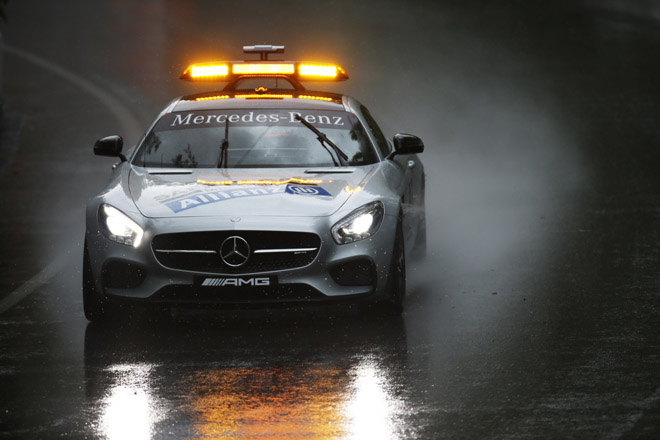
, the Motorsport Safety Foundation conducted a survey on the issue of safety car deployments. The questions, and the tabulated results are shown below. MSF COO Scot Elkins has reviewed the results, and tells RACER the three questions posed to fans, safety workers, and drivers have produced a number of insightful outcomes.Survey Question #1: Should safety vehicles, wreckers or heavy machinery be allowed to be dispatched under local yellow conditions under the best judgment of Race Control, or should they be dispatched exclusively under full course yellow conditions with all the cars under control?
"The part to me that was interesting was the way the safety workers, while it wasn't a total majority, a lot of them thought it made sense for them to do work under local yellows," noted Elkins. "That threw me off a little bit. It was interesting because the source that it comes from – and that's the thing, we do an anonymous survey so we don't really know where who all these people are. I don't know if they are club level safety workers or if they are the guys that do the IMSA races and IndyCar races and all of that, I'm just not sure who they are.
"I know that when IndyCar or IMSA goes to an event, they're very, very clear with all the corner workers. They tell them, look, you guys don't go out on track unless we tell you. Normally they don't tell them to because that's just not something they want going on because they've got either their own people to handle it or some other situation that exists. To have responses come back to say that that is something they should be doing was really surprising to me."
Elkins, who made it back the U.S. this morning after surviving the taxi protests in Paris, transitioned to his role at the MSF after serving as IMSA's technical director. He continues to consult with IMSA, is a race director for the Mazda Road To Indy open-wheel ladder series, and also has race director experience from his time with IMSA to draw from. Combined, his position with the MSF allows Elkins to use the knowledge gained as a staff member with various series to cull the data from this survey and offer input to the sanctioning bodies.
"Our position as an independent source, an independent body, is we're trying to make changes but we're trying to make changes by gathering information and then passing information on," he said. "We're not the type of group that demands anything. On the first survey questions, my personal experience is I've leaned on the side of I don't think it's appropriate for corner workers to put themselves in harm's way, especially when you've got a traveling safety group or however it is you decide to do it as a sanctioning body.
"The survey says otherwise. For me, I think it's a bit tricky to try to make it change when my personal opinion is I agree they shouldn't be out there. My opinion differs from what we got back in the survey. That makes it a little difficult."
Question #2: If an accident that normally warrants a safety car occurs during the last 5 laps of a race, should the race continue under local yellow until the checkered flag for the sake of the show, or should Race Control enter a full-course yellow, even though it will force the race to end under yellow?
"I thought that that one was very interesting as well from the standpoint that when you look back maybe a year or so ago there really seemed to be a very large outcry about the number of yellows and about races finishing under yellow and how it should be changed," Elkins noted. "Then to see the results come back that basically say, no, don't worry about the show. Retrieve the vehicle and do what you need to do in a safe manner, was surprising.
"For us to get these responses back that says no, safety takes priority, is really the answer you are hoping to get. People are saying that safety is more important than the show. It clearly should be. I wasn't expecting the results to come back as they did on the second question."
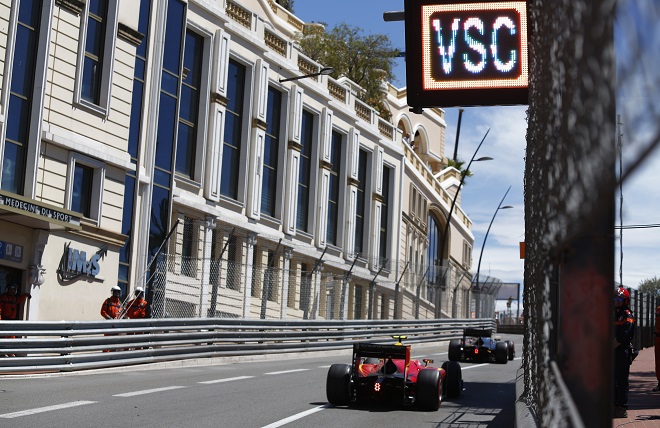
"I think it's a procedure that everybody has heard a lot about, but I'm not sure everybody fully understands the virtual safety car," Elkins said. "Obviously, it's not perfect. It doesn't always solve the problems. It's one of those deals I think that every incident on the racetrack is different. A lot of times people look at it and go, 'Oh, that's just like what happened two weeks ago.' Almost every incident is different. I think the ability to utilize something like the virtual safety car is very much incident dependent, as opposed to what you need to do on a regular basis.
"I think on something quick you can create something quickly, like IMSA's got their quick yellow that doesn't go through their full process of pitting the entire field, is a great alternative. IndyCar kind of does the same thing where they have the ability to dispatch a ready safety team, and they can do it very quickly. Keep the pits closed, don't do a lot of the procedures they normally do, and make something go away very quickly and make that happen.
"The trouble with the virtual safety car it's based on technology and the technology is only being used in F1 and the World Endurance Championship. The technology's extremely expensive and I don't know how normal sanctioning bodies can afford to spend the way those guys do.
"A lot of it is supported by the FIA. They get help in that. The USA is a little different; we're part of the FIA in a lot of ways, but in a lot of ways we're not, which makes it unique, which is why the USA is the USA. I think it's an interesting idea to look at more virtual safety car inclusion here, but I don't know that the technology is within reach of even an IndyCar or IMSA."
Elkins says the MSF Safety Car Survey is the first of many the organization will post online, and looks forward to shaping future discussions on motor racing safety with input from a wide base of participants.
"I think by doing this we found a really good way to complete one of our missions," he explained. "And one of our missions is to try and be a community among the motorsports industry that brings people together. So in this case, we were very specific about when you take the survey you had to click that you are either a fan, a safety worker or a driver. I think there's a number of topics that we can do more surveys on to try to generate information, provide it to sanctioning bodies, provide it to whomever is interested in having that information, and try to make use of it and try to be a conduit of information back to the decision makers.
"I think there's a number of places that we can do this type of work, and I think the survey, as part of a community, allows us to generate information in compelling ways. I see us doing this quite a bit more on a number of different topics. It doesn't necessarily have to be a hot topic. The way we generated this one was because there were a couple of incidents and, this is a good idea to try and find out what the world thinks. There are other areas that come up all the time about motorsport safety and I think this will be a good way for us to help generate information back to the decision makers in the industry."

Latest News
Comments
Comments are disabled until you accept Social Networking Cookies. Update cookie preferences
If the dialog doesn't appear, ad-blockers are often the cause; try disabling yours or see our Social Features Support.