MALSHER: Ted Horn's sad lesson for IndyCar
In the south-east corner of Paterson, Passaic County, N.J., just before the I-80 crosses Passaic River if you’re traveling east, is Cedar Lawn Cemetery. Check on Wikipedia for ‘noted interments’ and you’ll find that over the past 150 years, Cedar Lawn has been the final resting place of congressmen, mayors, governors, and even a vice president of the USA.
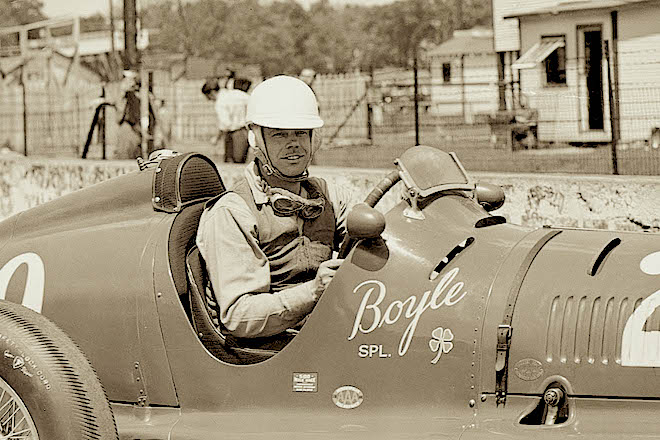
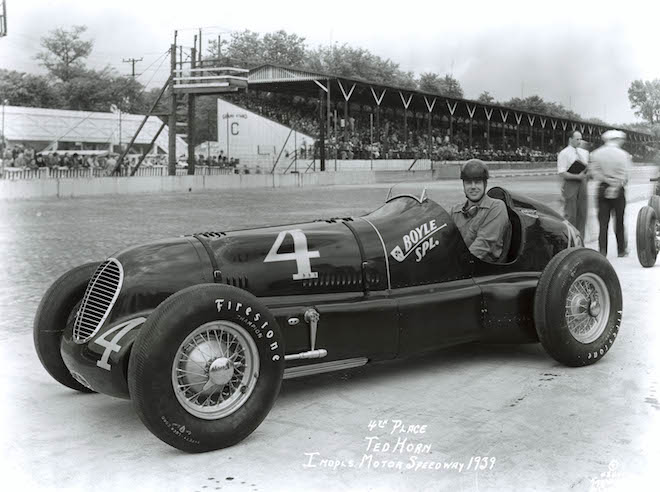
Omitted from the list, however, is Ted Horn. Maybe if the headstone bore more than just a racecar motif and a checkered flag along with his name and years – 1910-1948 – whoever compiled the lineup for Wikipedia might have checked out Horn’s background and deemed him worthy of inclusion in the roll-call of luminaries.
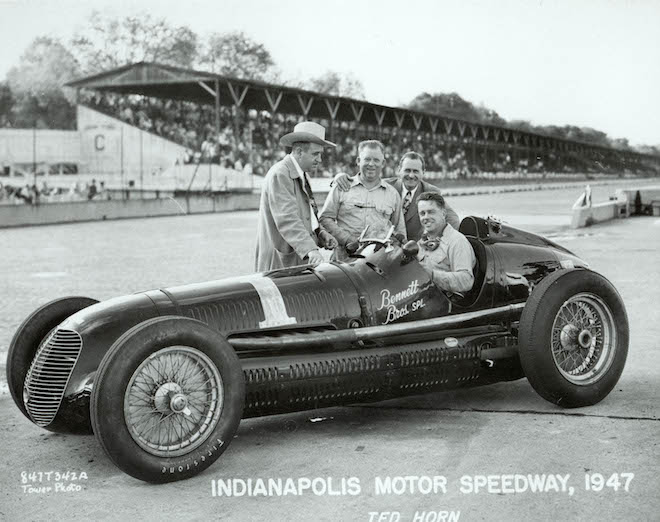
Then again, maybe by never clinching the Indianapolis 500 victory he so craved, Horn was always destined to have his epitaph chiseled in granite as austere as Sonny Liston’s famous “A Man” plaque at Davis Memorial Park crematorium just outside Las Vegas. Tragically, the fact that Horn won three straight AAA (what we now know as Verizon IndyCar) championships, 1946-’48, seems to have little resonance. He didn’t win the “500.” End of story.
I admit I’m sucked into the tornado of excitement surrounding the Indy 500 each and every year. I’ll spend many an evening in the Month of May watching videos of previous editions of the world’s biggest race, cheering along past heroes and cross-referencing with the superb Donald Davidson/Rick Shaffer-penned official history. And it doesn’t matter that I know the results: I still prickle with tension as I hear Tom Carnegie boom, cringe as I see the huge accidents, and lean forward with anticipation if a race is building towards a shootout in the closing stages. I get it. It’s a huge deal. In my first-ever interview with four-time winner Al Unser, he brazenly admitted that he’d gladly relinquish all three of his Indy car series titles to be the Indy 500’s only five-timer. And I know Helio Castroneves, who has three Indy 500s to his name but zero championships, would take a fourth Baby Borg over seeing his name on the Astor Cup.
But should one 500-mile race on Memorial Day Weekend dwarf a 16-race championship in status? I think of series champs who failed to clinch the Indy 500 – drivers of stunning talent such as Horn, Michael Andretti, Tony Bettenhausen, Rex Mays – and think not. Do I consider Bettenhausen a lesser driver than Emerson Fittipaldi, both of whom scored 22 Indy car wins, just because two of Emmo’s came at IMS? No. Even “500” winners will admit that, in order to succeed at the Brickyard – along with all the planning and strategizing, being proactive and reactive, producing pace and patience – there has to be a significant dose of good fortune.
“I know very well how fickle Indy can be,” says one of the event’s most successful drivers, four-time winner/six-time polesitter Rick Mears. “However good you are, however strong your car is, if it’s not your day, it’s not your day. Some of your fate’s in your own hands and it’s up to you as a driver to take control of however much you can. But there’s sheer luck involved, too. In 1979, my first win there, Wally Dallenbach rolls out of pit exit down the back straight and his right-rear wheel falls off…and I juuust have time and space to squeeze between the wheel and the wall before the wheel bounces all the way to the wall. If I’d arrived a split second later, it would have been in my path, unavoidable, and it would have taken a corner off my car and I’d have been done for the day. Well, if you think about it, I had no control over when Wally left the pits, how long his stop took, how well his wheel was attached, or what angle or speed the wheel was moving once it fell off. So what I’m saying is, that was pure dumb luck how things fell and, thankfully, they fell the right way for me that day.”
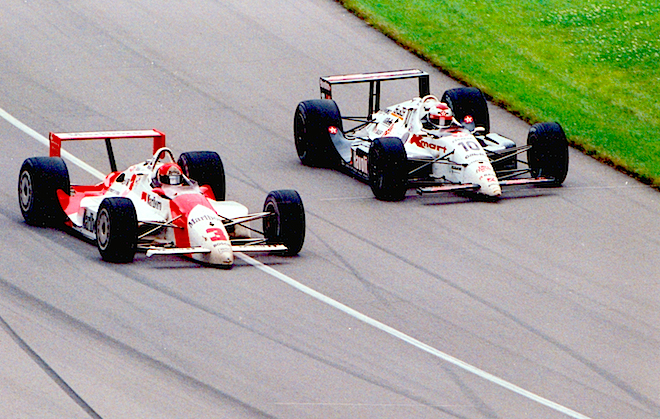
“When Michael Andretti retired, I remember being asked something along the lines of, ‘Does the fact that Michael never won the Indy 500 lessen his status in your eyes?’ I wanted to say, ‘No. That might lessen him in your eyes, if that’s the way you want to think about it….’” Mears chuckles, then adds, “To my mind, Michael is one of the best there’s ever been and the fact it never came right for him at Indy doesn’t change that an ounce.”
That conversation with Rick came to mind when author Gordon Kirby launched a fine book called Second to one, about the 40 drivers in Indy 500 history who finished runner-up but never drank the milk. It’s a great concept for a book, although it’s sad that while Michael Andretti is included, his great rival for the doleful title of “Unluckiest driver at Indy,” Lloyd Ruby, is not. When it went wrong for Rube in May, it went really wrong, and so his highest finish there was third.
I’m not trying to play down the importance of the Indianapolis 500. I’m well aware that nothing I write here will ever alter the fact that it draws in non-IndyCar fans, in much the same way as Le Mans attracts people who don’t give a megajoule about sportscar prototypes for the other 51 weeks a year. As such, the value of these events is unmatchable, and without them, the IndyCar Series and World Endurance Championship would be minor-league affairs that mean a great deal to not a great number of people. But to my mind at least, what gets resolved at Sonoma Raceway on Sunday, August 30, will be no less important than the fight around IMS on May 24. The event itself will doubtless be less exhilarating, certainly less well attended, and has been tainted by the asinine folly of double-points, but the champion of the series will deserve no less praise than the Indy 500 winner. (And yes, I’m aware they may be one and the same.)
It’s about levels of challenge. Indianapolis Motor Speedway is an alluring devil of a track, whose conditions in the dry vary more than any other circuit. When, during practice, you see series veterans – drivers and engineers alike – puzzling over where their speed went from one hour to the next, you really start to appreciate how hellishly tricky it is to keep threading the needle, session after session, day after day at IMS. But is it any more demanding than being consistently fast throughout a whole season to earn a championship? Surely not.
My point is, IndyCar still demands a more malleable talent than any other racing series, and that should be the fact that is most celebrated and promoted in the long off-season. We’re in an era when the IndyCar champ is unlikely to win more than 25 percent of the races – eat ya heart out, Formula 1! – because of how closely matched the cars are and the depth of talent in the driver lineup. Well let's trumpet the achievements of the guy who conquers overall, not just the one who prevails at one (wonderful and storied) oval in May. After all, a triumph in the Daytona 500 is not more highly regarded than clinching the NASCAR Sprint Cup, otherwise Michael Waltrip would be seen as more talented than Tony Stewart. The Monaco Grand Prix winner doesn’t earn more kudos than the Formula 1 World Champion, otherwise Olivier Panis and Maurice Trintignant would be more feted than Jimmy Clark, Nigel Mansell and Alan Jones.
Yeah, exactly: God forbid.
Titles aren’t everything, of course, and I assuredly am not a slave to statistics. That’s why, after each season finale, I write (and commission others to write) their top 10 drivers of the year – to provide context. I have no time for those who ignore circumstances and say, ‘The top 10 drivers were how they finished in the points table.’ That’s lazy, simplistic nonsense which becomes even more absurd when assessing careers. I’d encourage such soulless folk to chew on these two nuggets from the history books: 1) Parnelli Jones has fewer Indy car wins than Scott Sharp, and 2) neither Castroneves nor Don Branson can be described as an Indy car champion, yet Greg Ray can.
Nothing should dent the prestige of the Indianapolis 500, for the reasons stated earlier. But as one crew chief said to me a couple of years back, “You can fluke an Indy win, but you can’t fluke a championship. A lot of circumstances can put you in the right place at the right time at Indy without you doing anything better than your rivals. If you’re fighting for a championship in the final round, that means you got a lot right for a long time over the season.”
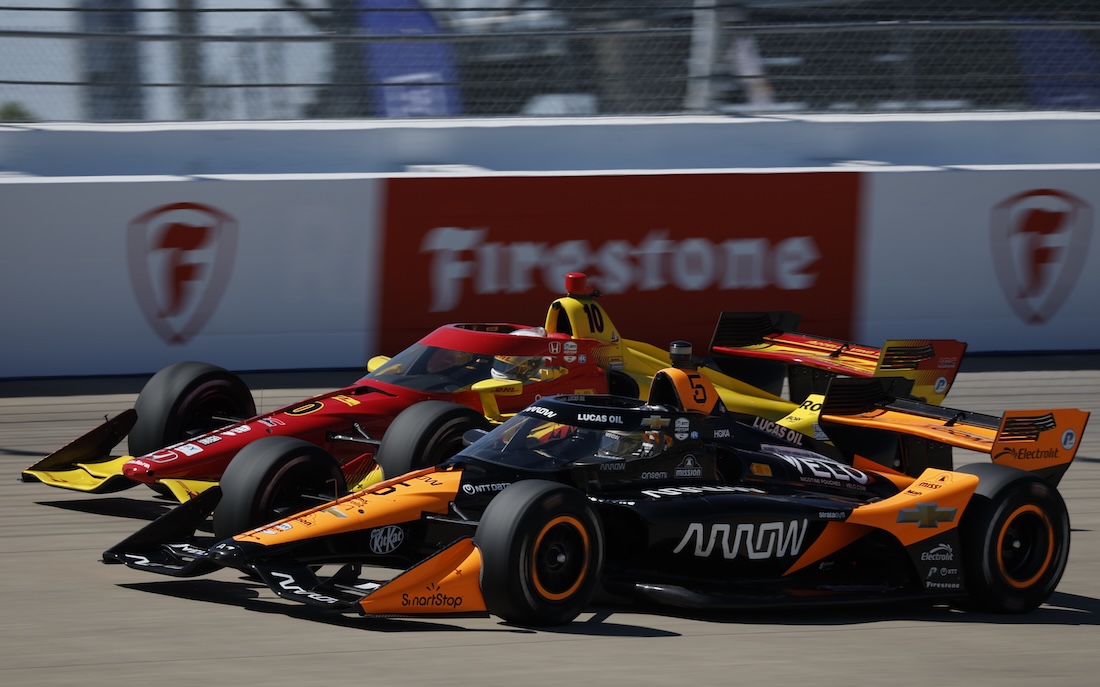
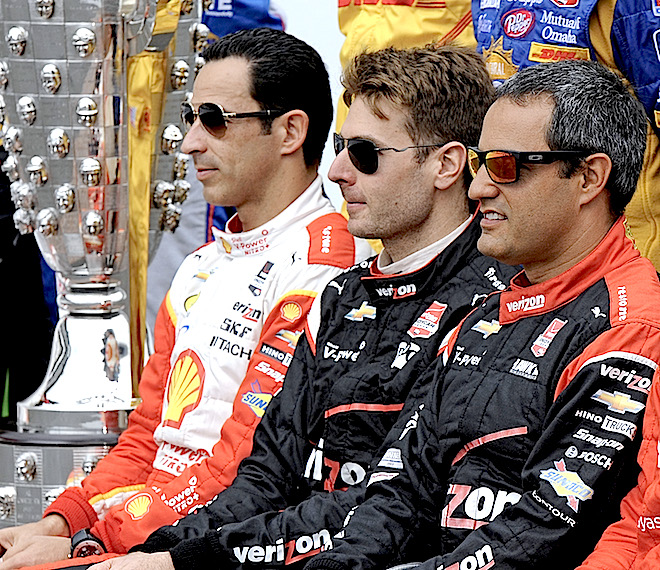
And that’s why I’d hate to see the series slip back to its pre-CART days of treating the championship as ‘Indy and some other races.’ Equally, I hope Juan Pablo Montoya, Will Power, Helio Castroneves (TOP) or Scott Dixon (TOP LEFT) will value the Astor Cup as much as the Borg Warner Trophy. The status of the Indy 500 and the crowd that witness it ensures each winner becomes also the people’s champion, pretty much forever. It’s time to push the series champs to that same level of recognition, so that drivers as talented and successful as Ted Horn never get overlooked again.
available here
.
Latest News

Comments
Comments are disabled until you accept Social Networking Cookies. Update cookie preferences
If the dialog doesn't appear, ad-blockers are often the cause; try disabling yours or see our Social Features Support.