LM24: Le Mans 1989, The One That Got Away
Jaguar won the 1988 and 1990 24 Hours of Le Mans, but it could have been three wins in a row. Tony Dowe, Jaguar's team manager at the time, relates how the 1989 race got away.
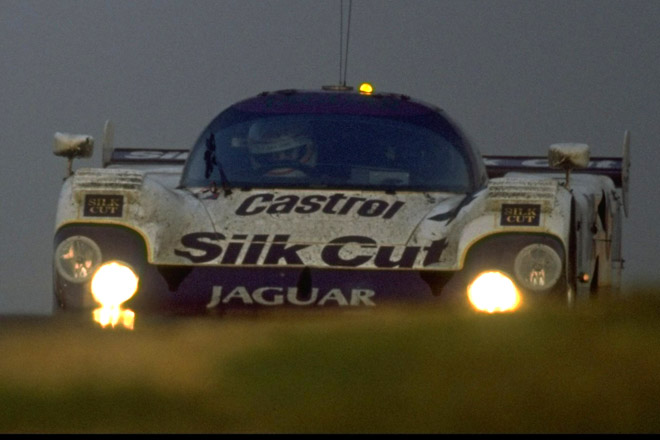
Tom Walkinshaw’s Jaguar team scored one of the most popular victories in decades at the 1988 edition of the 24 Hours of Le Mans, and followed it with another win in 1990. Both wins affirmed the team’s progress, but a curious spate of mechanical and drivetrain failures halted their charge in 1989.
From a breakthrough win, to the depths of a follow-up defeat, and back to the highs of victory, the TWR Jaguar’s three-year run at La Sarthe made for a memorable time in sports car racing. 1990 would mark the brand’s last win at Le Mans, and even with the 25-year anniversary upon us, the unnecessary forfeiture of the 1989 race still haunts former TWR USA team manager Tony Dowe.
“Bluntly, it was greed that did it,” said Dowe (BELOW). “(The late TWR owner Tom) Walkinshaw basically told people that we had to make money on the second year. And the people involved didn't spend the money correctly. You know, if you go back you’ll see that there was things like exhaust headers breaking all over the place. In fact, in one instance it was a set of headers that had been used in a previous race in Spain and had broken and been welded up and reused for Le Mans! Incredible. There was a lot of cutting corners in ’89.”
The frustration of handing a win to Mercedes in 1989 persists today. “It really was meant to be an economy year where the company made money as opposed to doing the job properly,” Dowe continued. “And that was one of the things that drove me for the following year.”
TWR took back its title for 1990 where a highly motivated team and Dowe specifically, opted to break from the team’s party line.
“I got fed up going across to Le Mans to be cannon fodder for the European (TWR) team when they couldn’t even get it right and we had the best car,” he said. “I'd turn native, if you like. I became a rebel in 1990 and did my own thing because we had companies doing the gearboxes that were never right. Even in ’88 we changed two ‘boxes in the race and they certainly weren't right in ’89. So I started working as a bit of an agent of my own to change some things for 1990. I grew tired of going over to Europe and being let down by our European counterparts having to hand me cars they weren’t allowed to make right.”
The areas needing to be improved were not hard to find, according to Dowe.
“Well, there was no development done, we didn't order spare parts or the men responsible for them weren't given the OK to purchase them until it was too late. So things weren't delivered in time for the race and the bottom line was we had a lot of unreliability. The mechanics knew that there was a (financial) squeeze on and so when you arrive and find that the guys are grumbling, the guys are mumbling: 'Well, we haven't got the right bits and we haven't been able to do the right things and we’re using old parts.' To go from a top effort to a bargain program in 12 months time is hard for anyone to adjust to, and there was no reason for it to happen, really.”
Dowe’s TWR USA team and drivers made a spirited run to lead the early portion of the 1989 race. Sadly, a familiar weakness reared its head.
“There you go, the car actually got in the lead. And then it had a selector finger break down the Mulsanne Straight. So there was a gearbox issue straightaway.”
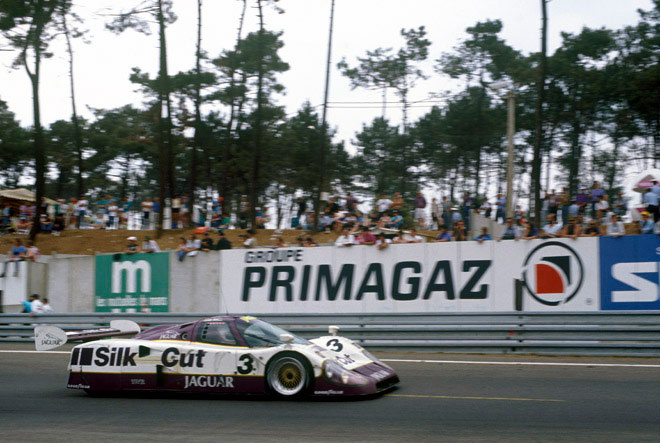
The #3 car, piloted by Davy Jones, Derek Daly and Jeff Kline, sat parked on the Mulsanne as Daly lost a considerable number of laps while making repairs to get back to the pits.
Exactly how the No. 1 car, led by Jan Lammers, made it to the 1989 finish in fourth place is still a mystery to Dowe.
“The fact that Lammers got his car home was a surprise because, frankly, nobody had any confidence that anything was a new part. And there was a very large amount of discontent about the way everything had been organized. The header thing, in particular, continued to be a problem in the race. We had guys with buckets of water and they were plunging the headers into water and trying to fit them on where the old ones had come off. And they were being taken out the back and welded up and repaired. It was a pretty sad, sad deal all round.
“Maybe it was the whole structure was overstressed because they were running too many cars, but it wasn't fun. A best of fourth – missing the podium – after coming first the year before is never good, but add to it the disharmony within the team and it was a pretty miserable year.”
Had TWR’s Jaguars held together, Dowe’s confident they could have given Sauber’s Mercedes a stronger run for the victory.
“They had a lot of horsepower and they certainly were very strong. I didn't get the feeling that we'd done enough to be able to take the race to them, which is what you had to do with the Jaguars. The Mercedes’ didn't have the outright pace and therefore you had to press hard all the time but when we were having parts fail all the time, we weren't able to press.”
Dowe’s tone wasn’t one of sour grapes; knowing what the cars were capable of and seeing watching the entire effort underachieve is a frustrating scenario for any team principal.
One of the other aspects he attributes to TWR’s 1989 loss was the overtaxed R&D department at the team’s base in the UK. With money being diverted from the Le Mans program to fund a new engine package, Dowe says money and development resources were not being focused on the 24 Hours.
“Don’t forget the other side of what you’re talking about here, in terms of money, we were starting to develop the turbo engine. And that clearly had to come out of the same money pot and there I don’t think that there was any extra money for developing the turbo. And the rationale for the turbo was that we needed it to beat the Nissans in the U.S. and the Group C team needed a turbo to beat the Mercedes in Europe. So that was going on at the same time we were still trying to run V12s.”
Tasked with introducing the turbo-powered Jaguar XJR-10 only weeks before Le Mans in 1989, Dowe was well aware of how splintered TWR’s focus and finances had become.
“As an example, the first turbo engine ran at Lime Rock the week before Le Mans. And the center main bearing had broken; it was the old stock block we used until we had our own block, so it needed a lot of work after Lime Rock. I still needed a lot of time and money to get it right. So when I say there was an economy drive on (for Le Mans), that’s probably true for the V12s, and the money was being used to develop the turbo engines and the turbo cars. And therein lies some of the problem because the company was probably well overstretched in terms of personnel, parts ordering, building turbo engines, building V12 engines and going racing. It was too much all at once.
“Stepping back and being polite, yeah, I was pissed off because the (Le Mans) V12 program was put on a budgetary diet at a time when it needed to be the other way around. Get through Le Mans and then move the bulk of the funding over to the turbo program. Instead, we handed Mercedes the win on a platter.”
Tony Dowe’s never been one to sugarcoat things and two decades later, he laments giving up what could have been a three-peat for Jaguar at Le Mans.
“I’d love to say a first, a fourth and a first in three years made us happy, but it quite simply didn’t. That’s the way I felt about it, at least.”
Note: This article is updated from an original story posted by the author in 2009.
• Coverage at the 24 Hours of Le Mans on RACER.com is presented by Circuit of the Americas. Don’t miss the Lone Star Le Mans weekend on September 17-19, 2015 featuring the only World Endurance Championship event in North America and the TUDOR United Sports Car Championship.
http://circuitoftheamericas.com/lslm

Latest News
Comments
Comments are disabled until you accept Social Networking Cookies. Update cookie preferences
If the dialog doesn't appear, ad-blockers are often the cause; try disabling yours or see our Social Features Support.