.jpg?environment=live)
IndyCar: Indy 500 winner Hunter-Reay's likeness unveiled on Borg-Warner Trophy
More than six months after he won the Indianapolis 500, Ryan Hunter-Reay still marvels at the feat.
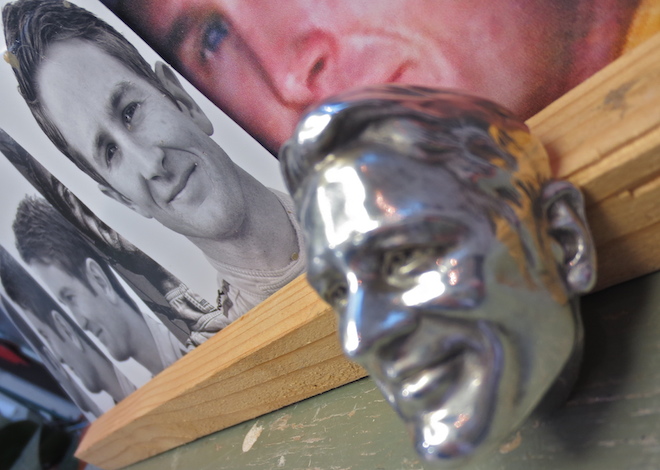
He had another one of those moments of marvel – albeit much larger and more profound – Wednesday night when his sterling silver likeness was unveiled on the Borg-Warner Trophy during a ceremony at Indianapolis Motor Speedway.
The tiny likeness is the 101st face on the trophy and the 25th sculpted by Will Behrends, who was the focus of Hunter-Reay’s praise after the unveiling.
“I was stunned and shocked at how well Will did with it,” Hunter-Reay said of his initial reaction to seeing the face. “It’s so well done. It’s one thing to sculpt something like this, but this is a work of art that stands out from every angle. It’s really beautiful.”
Hunter-Reay won the 98th Indy 500 in a close battle with Helio Castroneves. The ceremony was the first time Hunter-Reay had returned to the Speedway since the post-race awards banquet May 26.
“It has been so busy and so non-stop since then that this is the first time we’ve been able to come back and see Indy again,” Hunter-Reay said by phone between TV interviews while signing autographs for fans. “It’s a very special day.”
Behrends finished the work in his Tryon, N.C., studio while watching his beloved San Francisco Giants beat the Kansas City Royals in the World Series. Among Behrends’ other works are larger-than-life statues of Willie Mays, Willie McCovey, Orlando Cepeda and Juan Marichal that stand outside AT&T Park in San Francisco.
“Because the Borg-Warner face is smaller, you want to strengthen it and make it more vivid,” Behrends said in October before he started to work on Hunter-Reay's likeness. “The strength of Ryan’s jaw works in his favor. The trick is to get it to stand out. You want it to be visible from 10 feet away.”
Much like sculpting a tiny face, the trick of winning the Indy 500 is understanding and capturing the importance of it.
“I’m not sure the magnitude of it will sink in for years,” Hunter-Reay said. “This race transcends motorsports. It’s American sporting tradition. It’s a race that I’ve watched since my earliest memories. Ever since I first got into a go-kart when I was a kid, this was my goal. It's still hard to believe it happened.”
A year after finishing third in the 500 and two years after his first IndyCar Series championship, Hunter-Reay, 33, scored the victory that will forever define his career in silver.
“I feel like I’m lucky to have even had a shot at competing for it,” Hunter-Reay said. “I’m honored to be on the same trophy as some of the biggest names in the history of racing. It’s incredible.”
Among the 101 bas-relief images adorning the Borg-Warner Trophy, all are drivers, except for one. In tribute to his rejuvenation of the track and Indianapolis 500 following World War II, a 24-karat gold likeness of late Speedway Owner and President Anton "Tony" Hulman, Jr., was also added in 1988. In 1924 and 1941, two drivers shared the victory and a spot on the trophy, one for starting the race and the other for finishing it. Two bases have been added to the original trophy, providing added capacity for more winners until 2034.
For more information about the trophies, visit borgwarner.com and choose "The Indianapolis 500" from the "Company" pull-down menu at the top of the home page.

Latest News
Comments
Comments are disabled until you accept Social Networking Cookies. Update cookie preferences
If the dialog doesn't appear, ad-blockers are often the cause; try disabling yours or see our Social Features Support.
