.jpg?environment=live)
Virtual Realities
With simulation techniques becoming ever more sophisticated and accurate, the digital design and testing of racecars is a burgeoning reality.
Winning any race at the pinnacle of motorsports, be it a Formula 1 grand prix or the 24 Hours of Le Mans, requires the best design of car, constant development of that car, and an ongoing ability to optimize it for any given set of circumstances.
That’s always been a given, but how those goals are achieved has seen a fundamental shift in recent years, with a greater reliance on virtual development tools now absolutely essential.
In the rarefied strata of F1 and the World Endurance Championship’s LMP1-H ranks, and to a lesser extent in other blue-chip series, the process of creating a car, building it and testing it at various tracks to quantify the product is antiquated. Instead, there’s a massive reliance on digital packages and processes that have moved big chunks of learning and exploration to data churned out from server farms hidden from sight.
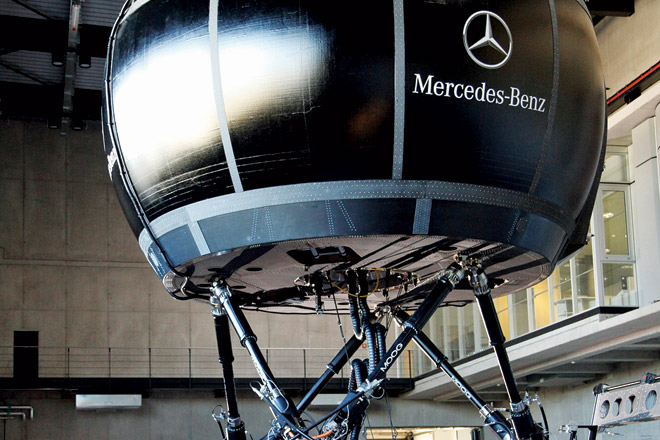
“They’re amazing in simple terms,” says Wirth Research founder Nick Wirth, whose company specializes in digital services. “They’ve had a huge role in our company since 2006, and they’ve been pivotal in development for our more important cars.”
CAD, CFD and FEA have been regular tools for constructors and teams to use since the 1990s, followed by the spike in simulation use and, recently, the growth in multi-million-dollar driving simulators. Both forms of simulation – with and without drivers in the loop – represent the greatest areas of digital racecar advancement.
“The simulator is basically limited by the quality of models it’s running,” Wirth explains. “It will be running models of the car, the suspension, the aerodynamics, tires, tracks, track conditions, etc., and it’s only as good as the information you put in.
“Take a qualifying run simulation at Indianapolis as an example – very often you’ve got a head wind going into Turn 4 and a tail wind into Turn 2. Regardless of anything else in the simulator, if you don’t have your environmental model right, the wind angle and speed in this case, you won’t accurately predict the car’s behavior and speed. It just won’t be right. And aspiring to get every little detail like that right just goes on and on forever.”
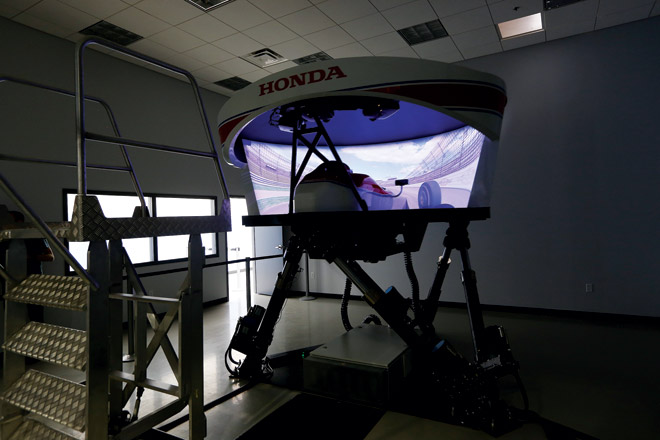
“If you make a change on a racecar – raise a spring, change a tire pressure, whatever – what we try to do in simulation is get all of those changes to affect the behavior of the car in as similar a way as possible to the real racecar,” Wirth explains. “People are successful to varying levels. I can’t go into exactly how successful we are with our simulation, but I’m satisfied with where we are…
To read the full story, you'll need the Fall 2014 issue of RACER magazine: The Technology Issue. Take a video tour of the issue...
click here
, or to buy The Technology Issue online, click here. To learn where to buy RACER in your area,click here
.RACER is also available digitally for Apple, Android and Kindle Fire devices. RACER Digital has the complete content of the magazine's print edition formatted for mobile viewing. With RACER Digital, you'll have access to your RACER content all the time, wherever you are.
The RACER app can be found by searching for "RACER Magazine" in the Apple, Android or Amazon App stores. The app is free and includes issue previews and the RACER.com newsfeed. Individual issues can be purchased for $1.99 and an 8-issue annual subscription is $9.99. Back issues are also available.

Latest News
Comments
Comments are disabled until you accept Social Networking Cookies. Update cookie preferences
If the dialog doesn't appear, ad-blockers are often the cause; try disabling yours or see our Social Features Support.