.jpg?environment=live)
Mustang 1964 Indy 500 pace car "time capsule" up for sale on eBay
up for auction on eBay
by RK Motors Charlotte surely makes a worthy case for it.In 1964, Lee Iacocca was preparing a massive marketing blitz for Ford's newly revealed pony car. Since the company's Falcon compact had already secured pace car duties for the 1964 Indy 500, Iacocca made his newest muse a last-minute substitution. During the first hour of Mustang production, three convertibles were assembled with a combination of Falcon and 1963-coded Ford parts. And, as soon as those cars rolled off the Dearborn assembly line, they were shipped to legendary Charlotte tuner Holman Moody.
In order to pace race the cars needed to safely travel 140mph. So, the first thing Holman Moody did was, with Ford's blessing, replace the cars' stock 260 powerplants with detuned 289s that were being developed for the GT40 Le Mans racer. Next came a lowered and stiffened suspension. And finally, chrome marine handles were, along with custom flag stanchions, added for both form and function.
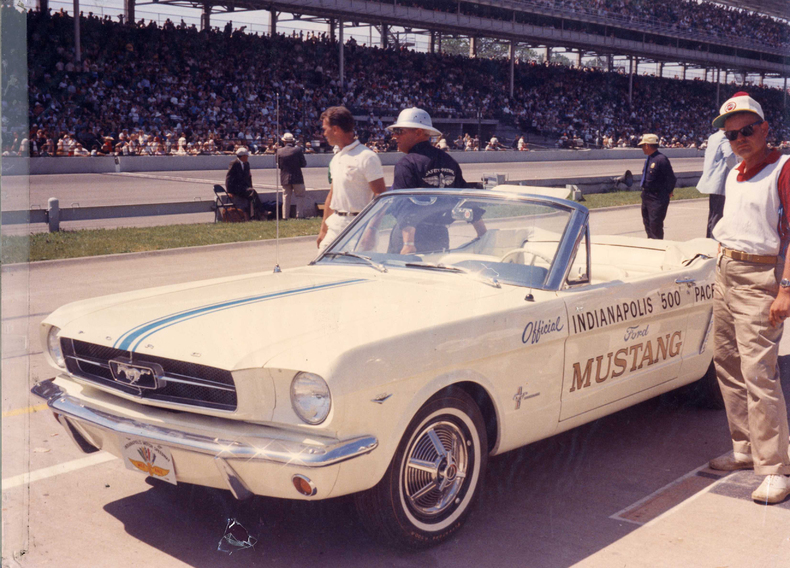
After a big day of speed and photo-ops, the drop-top was unceremoniously returned to Ford, whichpassed it to Sebring International Raceway. Sebring made good use of the Mustang as a parade car and driver loaner for a solid 11 seasons. Then, in 1974, this significant piece of Dearborn history was locked in a raceway storage facility and all but forgotten.
Fast forward to the early 1990s when a Mustang Club of America official learned that a true gem of Mustang history had been stored roughly 20 miles from his house for almost 20 years. After talks with the owner of the track, he became the first, and only, private owner of the car. And, circa 1991, he began a fully documented, NOS restoration that would eventually earn the convertible a perfect score in MCA's exclusive Thoroughbred Class. As far as labor was concerned, the restoration wasn't too difficult, as the car was incredibly solid when purchased. In fact, 95% of its parts, some of them one-of-a-kind originals, were reconditioned and bolted right back up using original and NOS hardware. And the 5% that couldn't be reused was carefully replaced with either NOS or completely custom components. In the final phase of the project, the car's all-original body and frame were walnut-blasted to remove long-dead pigment. And correct, single-stage Ford Fleet White was laid under a metallic blue stripe, Indy tags and authentic pace car decals.
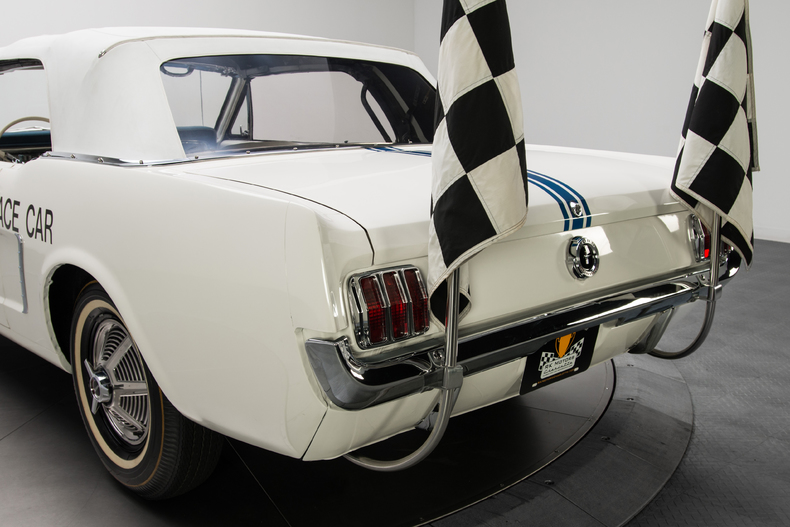
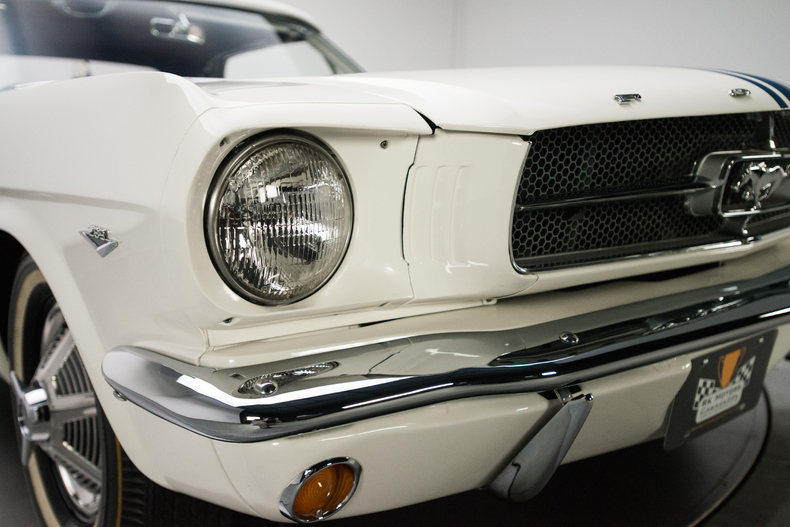
Sporting a look that's 100% true to how it rolled around the Brickyard, the car presents a finished, high-quality appearance which goes far beyond nice paint. At the front its solid body, a bulls eye grille hangs a rechromed horse emblem between NOS headlights, rechromed parking lamps and an original, rechromed bumper. At the top of that grille, original '63 and '64-coded glass rides between original wipers, rechromed trim and a never-folded, NOS canvas roof. At the sides of that glass, traditionally sculpted sheetmetal lays the groundwork for stainless cove trim, patriotic Mustang emblems and old school door handles. And at the back of that sheetmetal, peaked fenders and a second rechromed bumper frame rechromed tail lights, a highly detailed fuel filler and custom-reproduced stanchions.
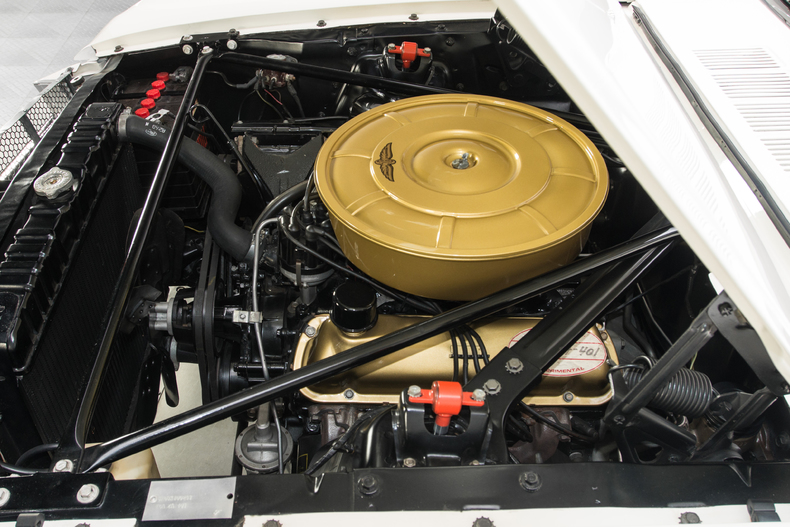
Below those heads, forged pistons and a drop forged crank combine with solid lifters and a C3 cam to create stout 10.5 to 1 compression. At the front of that cam, a reliable points distributor sequences fire through NOS, date-correct plug wires, which snake around correct Fairlane exhaust manifolds. And at the leading edge of those manifolds, NOS V-belts spin correct ancillaries behind a correct Galaxie radiator. Aesthetically, the jet black small block sits in a completely restored engine bay which features factory decals and smooth, Satin Black paint. And nice pieces like NOS plugs, an actual "tar top" battery and tri-angulated, Holman Moody-installed bracing provide unmatched authenticity.
That engine would certainly achieve the speeds required to pace Indy, but could the car's factory chassis efficiently apply all its power to the ground? The pros at Holman Moody seemed to think so, as long as they made a few small mods. Trot this Mustang to a lift and you'll find original, correctly oversprayed floors that are highlighted by factory decals, correct paint marks and a sprinkling of performance hardware. Behind the hot 289, an "experimental" Toploader 4-speed, which wears a familiar C3 bellhousing, turns a narrowed '59 Galaxie limited-slip around 3.25 gears.
At the ends of the car, a fully restored suspension employs a larger sway bar, shortened coils, de-arched leafs and original, mismatched Koni shocks. At the corners of the car, heavy duty, Holman Moody-tweaked drums provide firm, fade-free stops. Stomp the 'go pedal' and the aforementioned manifolds hurl spent gases in to an NOS, resonator-free exhaust system that screams through a date-coded cross-flow muffler. Power meets the pavement thanks to painted steel wheels, which spin NOS 7.75-14 Firestone 500 goldlines around faux stainless knock-offs. And everything under this Ford, from its stainless fuel tank to its road race oil pan, is clean, correct and ready to show!
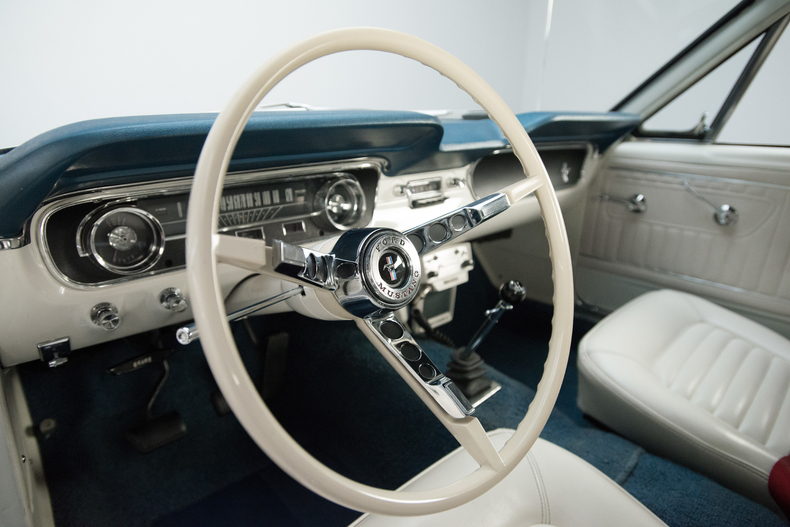
Featured in countless automotive publications, and recently appraised at $1.25 million by a museum curator, this exclusive Ford has plenty of easily accessible provenance. The sale includes a variety of these, including two letters from the former owner of Sebring Raceway (one notarized) authenticating the car's history; a jump drive that contains vintage pictures, vintage articles and a wealth of research and information; copies of two of the aforementioned features; a short summary story, for display purposes; and two die-cast models of the car.
Click here
for more photos of the car and to place a bid.
Latest News
Comments
Comments are disabled until you accept Social Networking Cookies. Update cookie preferences
If the dialog doesn't appear, ad-blockers are often the cause; try disabling yours or see our Social Features Support.