.jpg?environment=live)
The Essence of Sports Car Racing
The following is an excerpt from RACE TIME, a special issue of RACER presented by: |
Multiple drivers, multiple classes and long races mean teamwork and patience are required
Some things are beautiful in their simplicity; others in their intricacy. Compared to many other forms of motorsport, endurance sports car racing falls into the latter category. While IndyCar racing and stock car racing are stunningly fast, there is a directness to them. A single driver, competing against every other driver on the track, trying to cover a set distance in the least amount of time. In sports car racing, drivers are trying to cover the most distance in a set amount of time. It’s perhaps the most subtle of differences between the two.
I think, for the spectators, the things that set sports car racing apart] are the variety of cars and the different classes; therefore, you have a lot of overtaking going on and always a lot of action,” explains Lucas Luhr, driver of the Muscle Milk Pickett Racing ORECA-Nissan prototype in the TUDOR United SportsCar Championship. “From a driver’s point of view, it’s a challenge – how you read your traffic, how you place the guy you need to overtake or, if you’re driving a GT car, how you place it so that you can get overtaken without losing too much time. In many ways, it’s a very complex form of racing. I think that’s what makes it so unique and so special, because there’s so much going on.
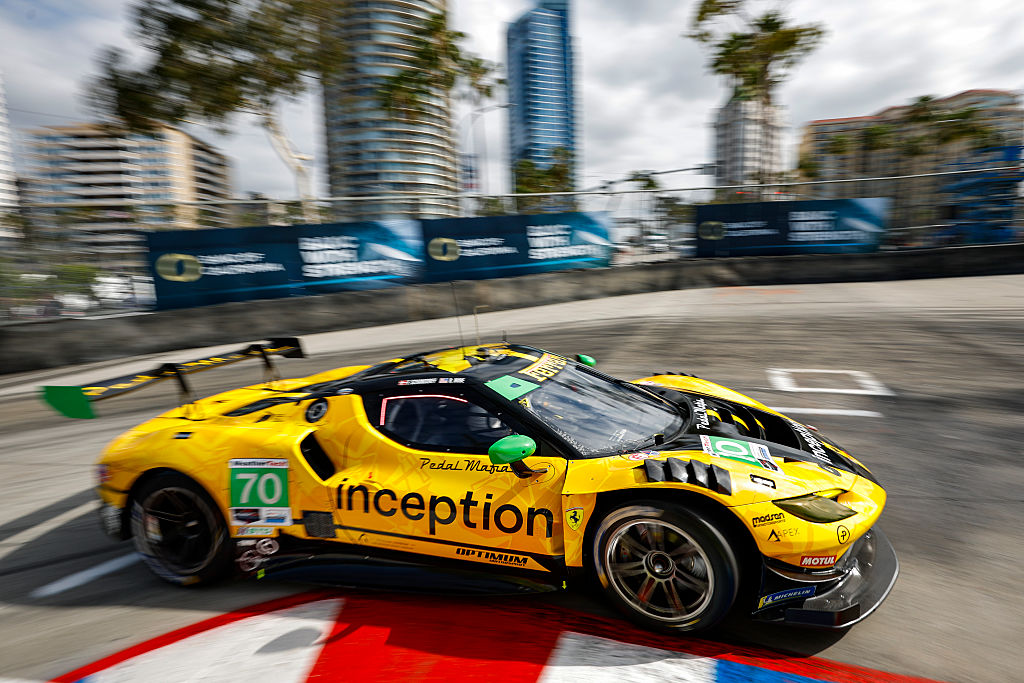
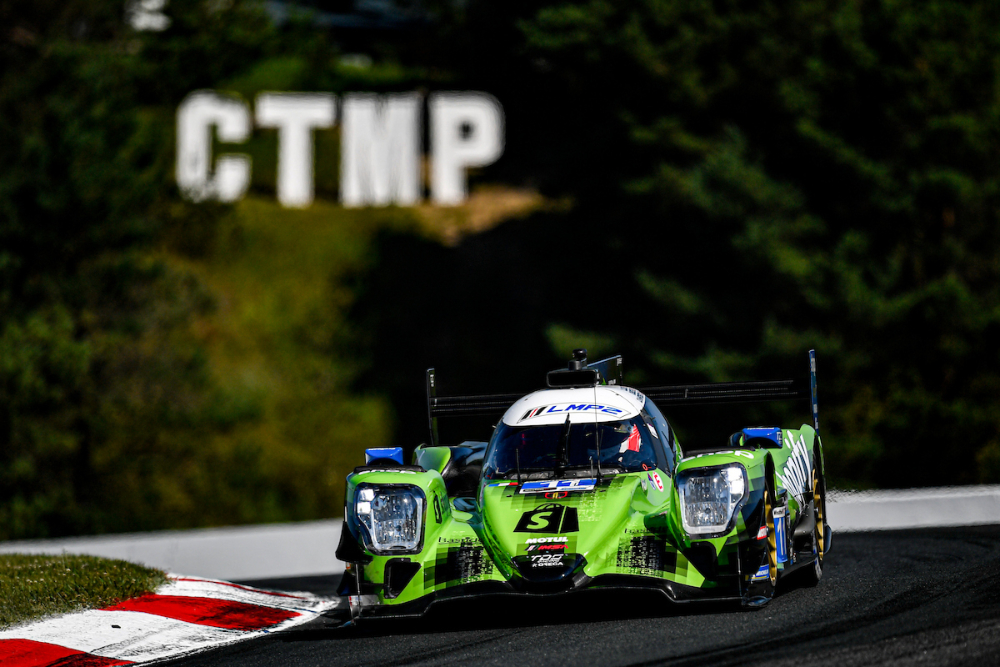
Luhr covers a lot in that statement about what makes sports car racing unique – multiple drivers per car and the resulting driver changes, along with the more complex race strategy that comes when pit stops involve more than tires and fuel; the multiple classes of cars that circulate at different speeds; not to mention race lengths that go from two to 24 hours and often go into, or through, the night.
Luhr’s car is part of the fastest of the four classes in the TUDOR Championship, the Prototype category, which itself combines cars built to two different rulesets. Then, in order of typical lap times, there is the Prototype Challenge class, made up entirely of cars with the same chassis and engine. The GT Le Mans class is based on production road cars such as Chevrolet Corvettes, Porsche 911s, SRT Vipers, Ferrari 458 Italias and BMW Z4s. GT Daytona is similar, only the cars are much closer to their road car origins, and includes Audi R8s, 911s, 458s, Aston Martin Vantages, Vipers and Z4s.
With a lot of cars and a big speed differential, the traffic is heavy and the overtaking constant. That is the aspect of sports car racing that is perhaps most apparent to fans. It also poses a huge challenge to drivers, and helps separate the good from the truly great.
“What makes a brilliant sports car driver is someone who is able to use their experience or genius to see something other than their own perspective, which probably goes in life and teamwork and everything else,” says Patrick Long, driver of the No. 912 Porsche North America Porsche 911 RSR in the GTLM class. “The driver that only thinks of his own agenda is probably pretty high performing, but not respected. There are a lot of high-performing drivers out there who are respected and the way they go through traffic is like art. David Brabham, Scott Pruett, Allan McNish…these are guys that give you more room than the guys who think they want to be these guys and think they need to be more aggressive to be more accepted as a top-line guy.
“Same with a GT guy,” Long continues. “A top GT guy can drive with one eye looking forward and one eye on the mirror, and can manipulate and control when the pass happens. There’s nothing better for a prototype driver than having a GT driver who knows when to open the door and when to close the door. It’s communication. A GT driver can decide if the pass is going to happen or not. He can really conduct the whole activity and the scenario, and a brilliant GT driver can protect everybody out there. It’s a really, really fine art.”
Like Long, Jonathan Bomarito races in the GTLM class. Being in the middle in terms of speed, GTLM drivers are both passing fairly often and being passed with similar frequency. That, in itself, can create some pretty hairy situations.
“We have the slower GTD cars that we’re always trying to pass, and that usually happens in the braking zone for a corner, and also the faster prototypes that you’re looking for in the mirror,” says Bomarito. “A lot of times you can position yourself to force a prototype to wait until after you pass the GTD car. But in some situations, when it’s wide enough and the timing works out perfectly, you go three-wide down into the corner toward the apex. You’re holding your breath and hoping everybody knows how many cars are in the mix.”
For the GT Daytona drivers, the slowest on the track, their concentration is continually interrupted – “You’re on a balance beam and someone pushes you, and now you have to refocus,” is how Long describes it – by overtaking cars.
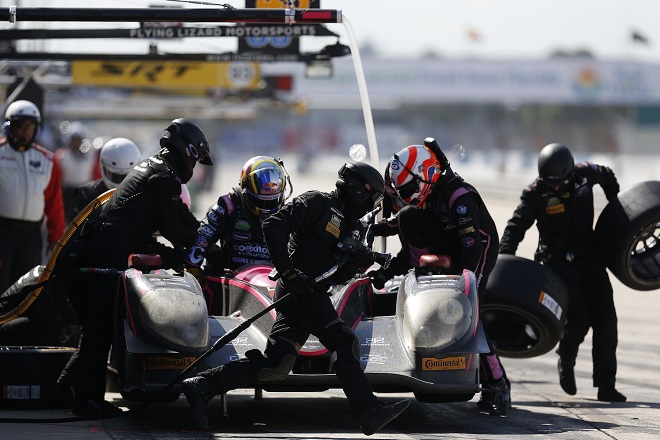
“How you play the game is really important,” explains Dion von Moltke, driver of the Flying Lizard Motorsports/PR Newswire/UBM Tech/eSilicon Audi R8 in GTD. “Every corner is a little bit different and every time you get overtaken by traffic, it’s slightly different – you never have the same situation twice. Driving a fast lap is already pretty challenging, but throw in traffic and it’s a big mental battle out there.” That is especially true when you don’t know what the overtaking driver is going to do, or he or she doesn’t do what you expect them to do, he notes.
“Indecisiveness is annoying – they pull out, then they kind of go and you don’t know what they’re doing and you both kind of slow down. But really, when they shove it in there late and you’re braking, you’re committed and all of a sudden you see a flash in the mirrors and they’re trying to stuff it down there even though you’ve turned in. That, to me, is the worst because it shows no regard.”
Extreme Speed Motorsports HPD ARX-03b prototype driver and owner Scott Sharp offers the other side of the coin. Often the fastest guy on track at any given moment, how he passes someone changes with the situation. It depends on what kind of battle he’s in at the moment, and the attitude of the driver he’s passing.
“Some drivers are totally cool about it and embrace the concept of ‘the quicker I let you by and more efficiently I let you by, it’s better for you and better for me.’ Then there are some guys that don’t want to let you by, period,” Sharp says.
When a driver is in the middle of his or her own race, whether they are passing or being passed, every move takes on greater urgency.
“You certainly develop more of an ‘I’m not taking any BS’ attitude,” says Sharp, “and I’m going by one way or the other. It might be risky, we might touch, but I’m going by.”
Traffic can be a problem, but it can also be a blessing if a driver can use it wisely. Traffic has separated many a close battle in sports car racing, to one driver’s chagrin and another’s delight.
“You will not only not [lift on the straight to let a faster car by], you might park it in the middle of a corner extra slow, so he gets the guy chasing you and you get to drive off and you’ve got one corner in between where you’ve kind of split yourselves up,” says Andy Lally, who drives the 12 Hours of Sebring GTD class-winning Magnus Racing Porsche 911 GT America. “The strategy in doing that is an art in itself – how efficiently you work traffic and set picks. Not only how you open a gap to a guy that’s behind you in class, but if there’s a guy in front of you, you can set something up with the car that’s coming by you. If you can think ahead enough turns, where to let him by so that you know that the next corner, when he gets to the [your competitor], it’s going to be tricky for him to pass.”
The art of passing and using traffic to put someone between you and a competitor is complicated by the fact that a driver of one car may not know who is in the other car, and vice-versa, and therefore less sure of what to expect. Each car is shared by at least two drivers, and as many as four or more for the longer races. In addition to that issue, it complicates things for the team as well. They must manage the drivers’ time so that none are in the car too long, either per the rules or their own stamina; pit stops must be planned to accommodate driver changes, adding another layer to race strategy; and drivers must be paired appropriately.
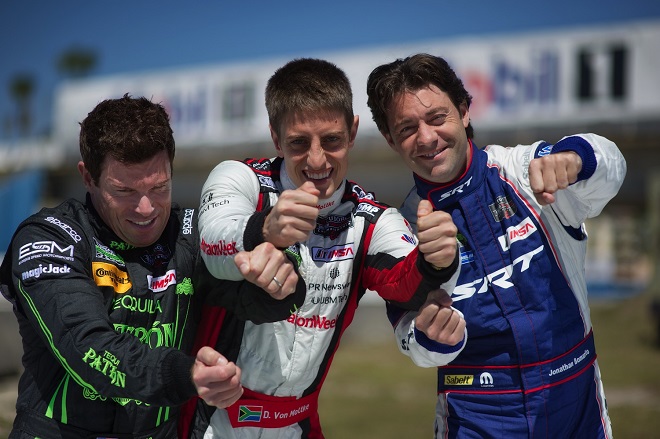
“I don’t know if [having drivers who like the same setup] is the key to success, but I know it’s a disaster if drivers like exactly the opposite,” says Christian Fittipaldi. Fittipaldi is one of the drivers of the No. 5 Action Express Racing Corvette Daytona Prototype. Joao Barbosa is his co-driver and Sébastien Bourdais joins them for the longer races such as the Rolex 24 at Daytona, which they won overall. “Luckily enough, even our seating position is exactly the same. To be honest, if I was driving the car by myself, I would have the car like it is now.”
“We like pretty much the same car,” echoes Barbosa. “Because Christian is a left-foot braker and I’m a right-foot braker, there are slight differences. But overall we work in the same direction and we look for the same kind of feel for the car.”
It’s not always that way, but drivers of vastly differing sizes seldom last long as partners, even if all are willing to compromise. Small compromises are possible; bigger ones are uncomfortable. Notes Long: “You’re never going to have the car completely tuned to your last wish; you’re never going to have the cockpit built around you. If you’re used to sports car racing, you’re groomed and you have a thick skin to compromise.”
The closer the cockpit preferences are, though, the easier and faster driver changes are going to be. While there is a lot to deal with – belts, drink bottles, radio, air hoses – they don’t have to rush; fuel delivery will almost always take longer than the driver change.
“It’s not really critical we do it in 12 seconds,” explains Fittipaldi. “So what? Fuel is going to take 23. But it’s important to always do it in 16, 17 seconds so we have a little breather if something goes wrong. We’re not really worried about ultimate speed; we’re worried about making sure that everything goes flawlessly every time we do a driver change.”
The driver change isn’t going to determine the length of the pit stop. But when a driver needs to go into the car is going to affect race strategy. That’s where the engineers with computers and spreadsheets come in. Their calculations start with how fast they go through a tank of fuel and the length of the race and go from there, says Tom Brown, engineer and race strategist for CORE autosport, which won the Prototype Challenge class at both the 2014 Rolex 24 at Daytona and Mobil 1 12 Hours of Sebring.
“You’ve basically got your fuel burn: 80 liters and you can do 43 to 45 minutes,” he explains. “You’ve got your platinum drivers who do a lap time, gold drivers and silver drivers do different lap times – not only on the racetrack, but how they come in the pits, how they exit the pits, how they run the whole pit gambit. You put that into one big mathematical algorithm and run numerous scenarios. There’s a minimum time the drivers must make – two hours, 15 minutes [at Sebring]; and no more than four hours in six that they can drive. You put all that in, plus the time lost in the pits getting up to speed. And you run it for what you think is a green race, then you look up the history and see where the yellows have come out and where you should place your drivers.”
Brown arrives at the track with a plan, but almost as soon as the green flag falls, that plan is being altered by events – caution periods, a problem with the car, a problem with a driver, an off-track excursion…any and all of those will affect the plan as it sits. So the plan is always being revised. It sounds like a lot of work, but Brown says he enjoys it.
“The advanced strategies and the way you operate it and the length of the races, that’s a huge amount of fun as an engineer, because it gives you so much more to play with. Twelve-hour races and even 24-hour races, the way these cars are prepped and the way the guys are running and how good this series is, there’s never really a moment where you take a breath,” he says.
There are so many things to consider. Not only does what’s happening with your own car go into the mix – where you are in relation to the leader, or are you the leader, when the yellow comes out, for example – but also what’s going on with the competition. Who’s in the car? Are they double stinting the tires? Are they looking to get a lap-down wave-by? All are questions that must be answered to make strategic decisions. Those calls made from the pits, the multiple drivers chasing the same goal, are all a reminder that endurance sports car racing, more so than almost any other form of motorsport, is a team effort. Engineers, drivers and crew are all legs of the tripod that holds up a winning team. If one fails, the whole thing falls down.
These unique elements that sports car racing incorporates – the long races, driver changes and, perhaps most of all, the multi-class racing with its challenges of traffic and frequent overtaking – are why it appeals to so many, spectators and drivers alike.
Download the entire of issue of RACE TIME a special issue of RACER presented by TUDOR

Latest News
Comments
Comments are disabled until you accept Social Networking Cookies. Update cookie preferences
If the dialog doesn't appear, ad-blockers are often the cause; try disabling yours or see our Social Features Support.