.jpg?environment=live)
IndyCar: Hulman Motorsports CMO, C.J. O’Donnell on marketing the Verizon IndyCar Series
He only got the job of chief marketing officer for Hulman Motorsports in November 2013, but how does C.J. O’Donnell assess the first half of the IndyCar season from a marketing standpoint? He spoke to RACER editor David Malsher.
DM: You’ve been involved in automotive marketing and product development positions with various Ford brands, and you’ve also been a club racer in SCCA. Have either of those backgrounds had much carryover to your current role and what first attracted you to this gig?
C.J. O'Donnell (IndyCar photo)CJOD: A long time ago I raced Formula Ford and Sports Renault, and I’ve always drawn on that experience. It gave me at a young age a very interesting perspective on motorsport but also on business and on marketing. When I came out of grad school, I got a job with Ford that led to more than 25 years of service. That’s where I formed my views on brand strategy, advertising, PR…and the desire to revive businesses that are underperforming. At the time, you’d say Mazda, Jaguar and Lincoln all went through periods when they weren’t delivering on their potential and the communication plan wasn’t conveying the strength of their products. So I regard it as a privilege to be part of the team that went in to decide what was wrong, defined a recovery plan, then delivered it and gave the brand traction.
I think those two elements of my background did set me up for a good interview with [Hulman & Co. CEO] Mark Miles. I met Mark through Bobby Rahal and Mike O’Driscoll, who currently helps run Williams F1 team. I look at IndyCar in the same way as I suspect many people do. There’s been a lot of change in management, and therefore an inconsistent delivery of message and execution of strategy. I’m following a line of pretty talented people so I don’t know if any person, even if they had a strategic plan, really had a chance to put it into action, so I was cautious of the situation at first, I’ll admit it.
Then I met Mark and the directors and I saw that the business was going ahead in a different direction with new leadership and I quickly gained confidence. And I like the challenge of helping IndyCar fulfill its potential; if it was already really strong, my job would be to just maintain that strength which would be less interesting to me. I saw in IndyCar a tremendous product that more people need to be made aware of and appreciate.
Yeah, the first 45 days were pretty packed. Those first few weeks we set in motion several initiatives that we ended up calling “Destination 2018” which was taking a long-term view of what IndyCar should aspire to be. It’s a five-year plan, it’s methodical and structured and designed to lead us to a better place. But we also defined 13 imperatives that were to be put in place ASAP, and I can assure you not a word of them has changed in the past six months. Diligently, we’re chipping away at the rock and making progress, and I feel our team’s hard work is beginning to pay off.
Based on viewership and ratings data alone, we’re seeing improvements, but there’s a difference between improvement and success and this is not yet a success; there is still a lot to do. Through Detroit, we’ve shown pretty significant year-to-date gains – 44 percent improvement in ratings points, on average, and 50 percent improvement in viewership. That’s a year-to-date improvement of 522,000 viewers per race to put a more precise figure on it. But like I say, there’s a lot further to go; we’re only defining this as the start of positive momentum.
The Grand Prix of Indianapolis, as well as being a decent inaugural event in itself, also seemed to create more interest in the Month of May as a whole, after being dead in the water for some years. Not sure I saw more people on qualifying weekend but Carb Day looked a vast improvement. What did you learn from the GP of Indy and what did you think of the fan and media reaction?
We had a great deal of work to do to define the diversity of the sport and expand their interest in what else IndyCar racing has to offer. That struck us very hard – that we needed to show the non-hardcore fans that there were other ways to enjoy IndyCar if we were to successfully establish a new road course race in the region.
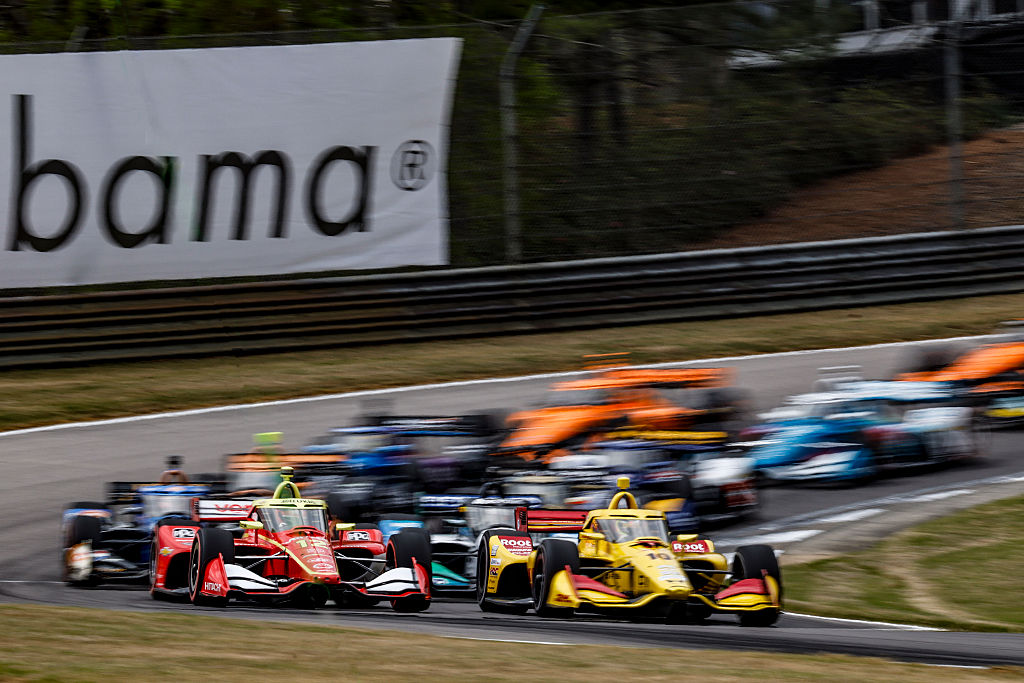
So we really threw our weight behind marketing this new event and it led to some very positive attendance figures, exceeding our goals for walk-up crowd and advanced ticket sales. And it led to our best TV rating of the year to that point. The strategy was pretty clear for us: we wanted to reinvent the Month of May at Indianapolis Motor Speedway; we wanted to kick off with a keynote event; we wanted, off the back of that, to modify the practice schedule and the qualifying format; and we wanted to therefore lead into the “500” with more momentum. And on reflection, I think we were satisfied with most of that. We recognize we need to keep growing the Grand Prix, so we don’t have difficult second and third years where there’s no buzz about a new event.
So we shattered a tradition, but created a whole new format and got far more people in the gates or tuned into their TVs than we’ve had for many Months of May in the past. I think it was the right thing to do, but hats off to the IMS team; I’m not taking credit for all that. Collectively we came up with a solution to elevate the Month of May.
One of the criticisms regularly aimed at IndyCar’s marketing people in the past – and this was also aimed at marketing departments of IRL, Champ Car and CART, I guess because at some point we all hurt the ones we love – was that there was too much focus on the short term and not enough forethought shown for 12, 18 or 24 months down the road. How do you improve that?
Well let’s talk on a philosophical level first. We need to be faster, more innovative and daring in the way we conduct our business. And it’s appropriate because those are the words we attribute to the brand itself. As a company and a culture, we need to continue to push the envelope and take the same kind of risks we took by re-inventing May. So that’s definitely what’s required to restart this sport and re-engage our fans.
From the marketing and communication standpoint, all our brand studies and research results point to the fact that we need to 1) thrill our fans and 2) champion our heroes. Our entire business plan for the next year or two really surrounds defining the IndyCar brand for everything that it is – an absolutely first-grade form of motorsport, the most innovative in the U.S. today. Every time we engage a fan, we need to have the hair stand up on the back of their neck, get their hearts racing, get the adrenaline flowing. And then we need to elevate the personalities, the celebrity level, of our driver athletes. There’s probably little future for IndyCar if we can’t promote the drivers to the fans and then the broader public. People will not tune in each weekend to track our progress if they don’t emotionally engage with the driver behind the wheel.
So that’s central to our thinking, that’s what drives our team each day. Now there are 100 little things that make those aims become reality but those are our twin pillars.
Speaking of heroes, there are regular mentions from fans and sections of the media that IndyCar needs more American drivers. Is attracting more domestic drivers something you see as a vital move to gain audience?
What I have learned in the last six months is an American winner of the Indy 500 gives you another arrow in your quiver, another element to the marketing mix which you can use to your advantage. That’s not a knock on our international drivers; Tony Kanaan has over 600,000 followers on Twitter, he’s a star, he has a fanbase he deserves and we can leverage that popularity to IndyCar’s advantage. This is an international sport with driver athletes from around the globe and we will continue that tradition in the years ahead. Most of the prominent drivers, most of the currently most popular drivers, are foreign-born and they’ve earned that through success on the track. But an American champion like Ryan Hunter-Reay gives you an extra way to connect with fans and build a fanbase even further, and we had a pretty successful post-Indy 500 media tour. We had Ryan on The Today Show, had him on Wall Street opening the stock exchange, had him on The Late Show with David Letterman, we even had TMZ chasing him. So we must be doing something right. But I’m aware we have several months more that we must use wisely to leverage Ryan’s Indy win.
How crucial are rivalries to this audience engagement? Obviously we’ve seen the first #IndyRivals promotion with Simon Pagenaud and Will Power, but is a rivalry something you can force or is it just something you have to jump on when it naturally happens?
I think it’s something that naturally happens and we’re just raising it to the surface to make people more aware of it. The #IndyRivals campaign is about furthering people’s interest in our sport, because if you’re going to have competition, you need to have rivalry, people giving everything they’ve got in order to win, and that’s what we’re trying to express here. There isn’t a trophy for everyone; at the end of a race someone’s going to be drinking the champagne – or milk – and someone’s going to be disappointed. We want to convey how aggressively these guys will fight and if we can’t bring forward the stories that exist in the pit and paddock today, then we’re not doing our job.
I’d say the jury’s still out; I think there are signs that the way the schedule is laid out this year is helping our viewership from weekend to weekend, as people track the season and how the championship will resolve itself. But you’re right, it will be a big challenge to fill the gap between the end of this season and the start of the next. There are a lot of interesting things going on in the off-season which we will need to communicate…but yeah, the time frame is a bit of a challenge for us, when we’ll really need to earn our keep.
As a marketer, I’ll tell you it’s important to attract fans in new markets, expand our schedule, and that’s the direction we need to head in. But for today, I think our priority is to engage fans, get in a position of strength. This isn’t the place to go into it, but I can tell you that next year’s schedule will be longer and contain more events.
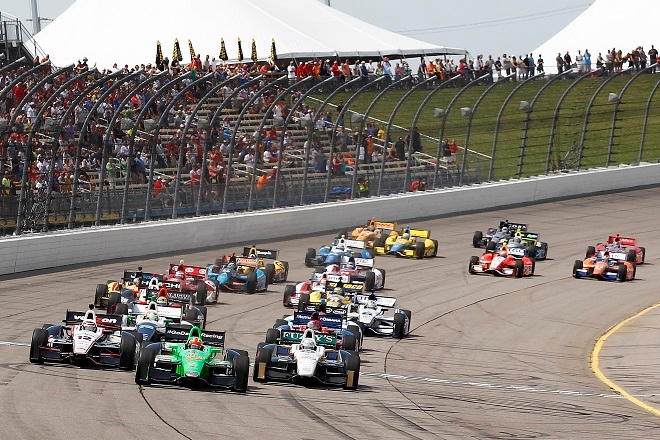
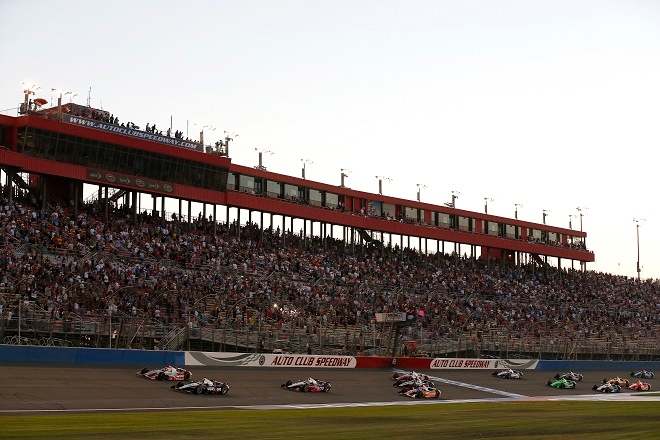
It’s that track diversity which makes us unique, offers such a strong challenge to our drivers; when you succeed in IndyCar, you’ve truly been tested and it validates them. Re-establishing a points system that includes extra weight on our 500-mile Triple Crown events at Indianapolis, Pocono and Fontana is a way to elevate the stature of those races going forward. But I don’t agree with you that attendance has dropped. We see a lot of people in the stands, and although I know we need to grow that attendance, that’s not a duty limited only to ovals; I believe we need to apply that to the whole schedule.
Finally, are the sponsors themselves doing enough promotion of the sport that they’ve spent millions to be involved in? Aside from Verizon, which has obviously stepped it up since becoming sponsor of the series, I haven’t seen as many sponsors activating this year on TV, websites or print media.
Well, let’s start with Verizon: there’s a sponsor who was already engaged with the sport, they understood the potential of this business as a platform to not only increase brand awareness but also leverage us as a platform for innovation. IndyCar is a demonstration of what they can do with their technology. Their commitment to us is a positive reflection of where we’re headed, and we couldn’t be more grateful for the support they’ve shown already – and there’s more to come.
I see Honda and Chevrolet on air during and outside our broadcast windows, promoting our sport. It’s natural that I’d like to see more of that but I believe we have to give them reason to make that investment; we need extra eyeballs on our product to encourage them to run that extra ad spot. It’s a two-way street; we have to do our part in order to expect them to do theirs.
The other important thing to remember is that sponsors don’t engage in a sport just for ad value. B2B initiatives and other forms of spend at the track are the priorities for a lot of the sponsors who get engaged with IndyCar, and we’re grateful for them all because they all contribute to our success. We need to make ourselves stronger to attract more sponsors of all kinds, and that’s my duty – to put us on a path that leads to that position of strength. Success breeds success.
Presented by:

Latest News
Comments
Comments are disabled until you accept Social Networking Cookies. Update cookie preferences
If the dialog doesn't appear, ad-blockers are often the cause; try disabling yours or see our Social Features Support.