.jpg?environment=live)
Favorite racecars: Marshall Pruett's picks
{igallery id=7210|cid=58|pid=5|type=category|children=0|addlinks=0|tags=|limit=0}
Following RACER editor David Malsher's and Robin Miller's picks of their personal favorite racecars of all time earlier this week, Marshall Pruett recalls five of his personal favorites.
There are the obvious picks that would top most lists: Dan Gurney's T1G 1967 Spa winner could be the most beautiful racecar ever produced. Gary Anderson's Jordan 191 might run a close second. Jim Hall's Chaparral 2J “sucker car,” his high wing 2E and the stunning 2K “yellow submarine” all deserve a nod. There's more than 100 years of Indy cars to choose from; Harry Miller's designs could easily fill my top-5. The same is true for rallying's Group B era. Gurney's IMSA GTO Toyota Celicas and all-conquering Eagle Mk III GTP belong in any top-5 list. Gordon Murray's Brabham BT-55 wasn't a winner, but conceptually, it was without peer. Lessons learned from the BT-55 went into his McLaren MP4/4, which is a mortal lock for any list of favorite racing cars. I could go on and on…
I've gone with a list of five that made an indelible mark on me thanks to their looks, sounds, or technology. A few even managed to hit the trifecta by standing out in all three categories. Coincidentally, they all fall within a similar time period—one where creativity ruled.
If RACER ever asks for my top-50 favorites, I'll happily delve into the full roster of racecars that live in my personal pantheon of great designs.
1982-1985 Jaguar XJR-5: IMSA GTP
I asked the XJR-5's designer Lee Dykstra whether he set out to incorporate cat-like styling into Group 44's most famous and stunning prototype, and to my surprise, he said it never crossed his mind. From the side, the interaction between the fenders, roof and sidepods give the big cat a look of something feral and ready to pounce. I see a Jaguar crouched and stalking its prey—the only time I've come across a car where its name matches its shape. The white body with Group 44's gorgeous tone-on-tone green stripes never looked better, and beneath the engine cover, one of the most glorious sounds I've ever heard—thanks to its 6.0-liter V12—continues to make me smile.
[vimeo 14130581 w=640 h=375]
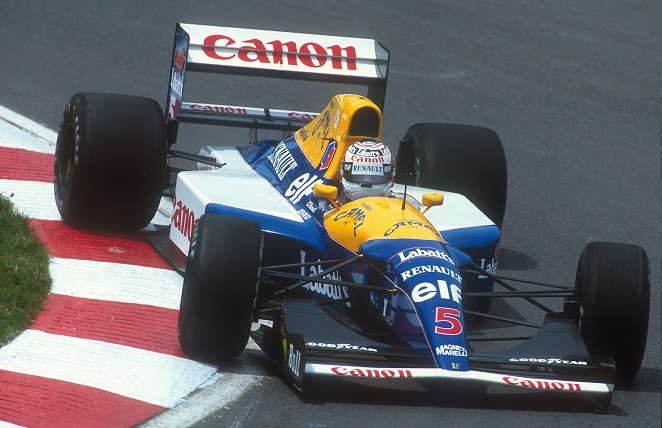
If you love seeing technology pushed to its limits in motor racing, the FW14B sits alone at the mountain top.
Patrick Head and Adrian Newey were just showing off with their new active suspension at the Kyalami season opener in 1992. The first mainstream images to come out of South Africa showed the FW14B, the height of what could be achieved with an electronics-laden F1 car, rocketing head-on toward the camera at the end of the front straight and turning hard to drivers' right. Sparks trailed from the titanium rub strips at the bottom of the front wing endplate…the RIGHT FRONT endplate.
Thanks to the programmable suspension, tipping the FW14B into the corners was an option, Newton and his apple were given a Renault-powered middle finger, and the technology ceiling was raised once again. The chassis takes 10 wins from 16 races, Nigel Mansell scores an easy title—his one and only—and like the Chaparral 2J, the rule-makers start to look for ways to cleanse the sport of innovation once things start to get fun. Everything that came before the FW14B was completely obsolete, and few cars have come anywhere close to capturing our collective imagination since.
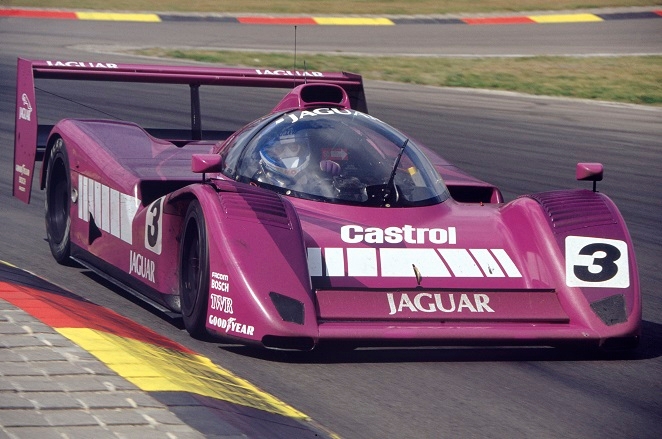
Another stunner with an “XJR” in the name. Like the FW14B, Ross Brawn's XJR-14 drew a line in the sand, sending every other prototype design to the retirement home. Up to that point, the XJR-14 produced more downforce than any other prototype, weighed less than the rest and used a Ford-Cosworth F1 V8 engine to wreak havoc on the WSPC championship. As many have said since its launch, the XJR-14 was a fendered, closed-top F1 car and its staggering performance delivered the title with ease in 1991. It looked like a spaceship then, still looks like one today, and despite the tobacco branding, the purple Silk Cut livery is unforgettable.
[vimeo 3441756 w=640 h=375]
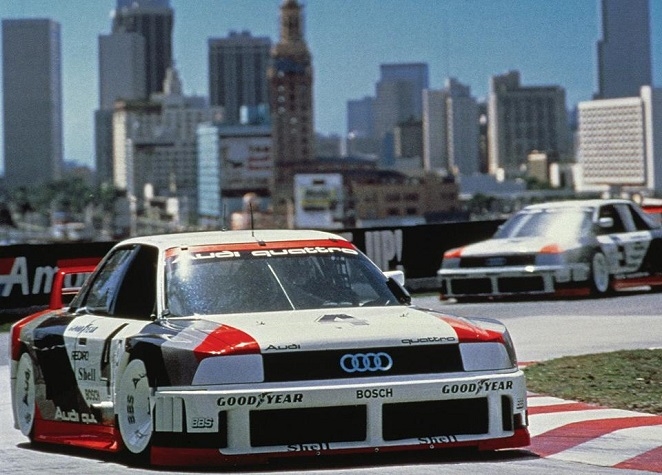
Tubeframe Mustangs, Camaros and even a Celica ruled the IMSA GTO class until, well, Audi showed up with a turbo five-cylinder sporting a single exhaust the size of a Howitzer barrel, glowing wastegates that chirped like an endless Ornette Coleman solo, and ran away with the show. That Audi 90, in the crossed hands of Hans Stuck, threw the final shovel's worth of dirt on the notion that muscle cars, with their raw power and simplicity, would always come out ahead. Its all-wheel-drive system, just as it demonstrated in the SCCA Trans-Am series in 1988, put the Audis into a class of their own. If I had to choose just one automotive soundtrack to listen to, this would be it.
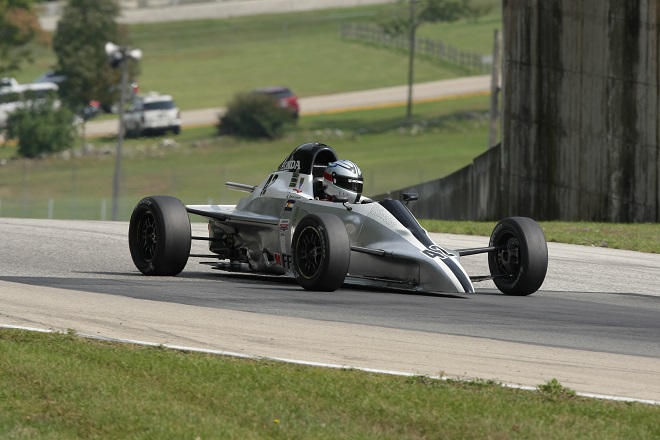
What a beautiful, beautiful little car. To think I actually fit in this little David Bruns-designed arrow at one point in my life... Formula Fords launched many future Indy car and F1 champions, and with this Southern California product, the bar was moved higher than it had ever been before. Its frame was incredibly stiff, compact, and allowed Bruns to wrap in bodywork that looked like it was best friends with the wind. It was a delight to work on, a sight to behold in motion and at rest, and a perfect reminder that looks don't always have to be sacrificed in the name of performance.

Latest News
Comments
Comments are disabled until you accept Social Networking Cookies. Update cookie preferences
If the dialog doesn't appear, ad-blockers are often the cause; try disabling yours or see our Social Features Support.