David Phipps/Sutton via Getty Images
How Indy cars have evolved
Here’s the evolution of the Indy car, era by era:
1911–1920s: The pioneer era
The first Indianapolis 500 in 1911 was run by big, heavy production-based cars – front-engined, riding on wooden or wire wheels, often with a riding mechanic alongside the driver to watch for traffic and pump oil pressure by hand. Speeds were around 74 mph for the winning average. Cars were essentially modified road/racing cars from manufacturers like Marmon, and the sport was closely tied to the auto industry testing its engineering in public.
1930s–1950s: Front-engine roadsters
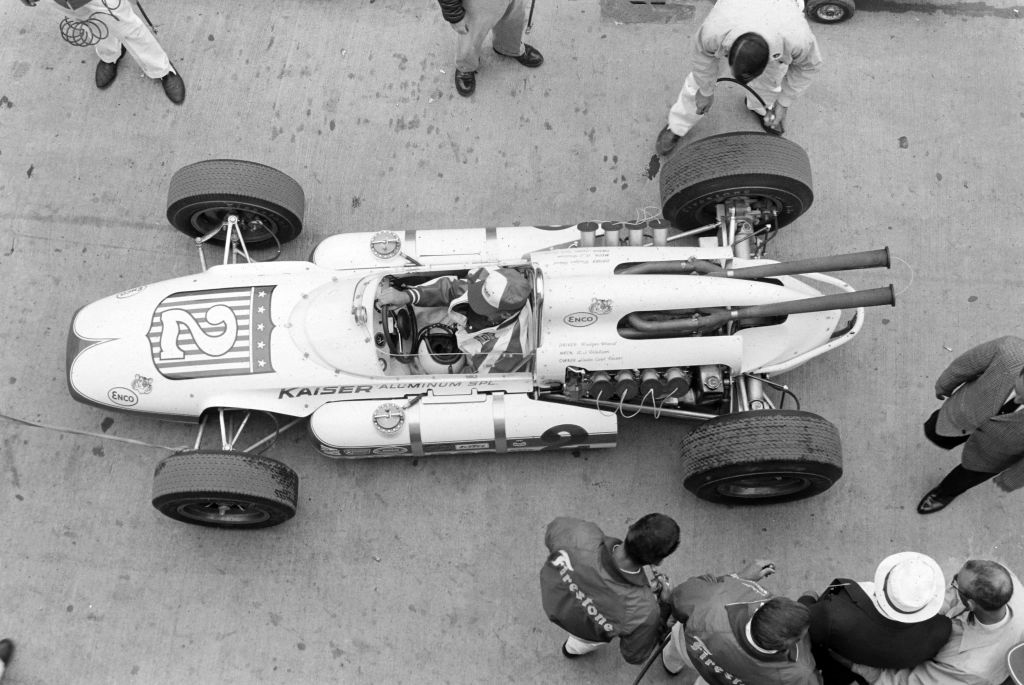
The classic Indy roadster era. Cars were front-engines, low-slung, purpose-built racers, often powered by the legendary Offenhauser ("Offy") four-cylinder engine, which dominated for decades. Riding mechanics were eventually banned. Speeds climbed steadily – into the 130-140 mph range by the late 1950s. This is the look most people picture when they think of “vintage Indy cars” – cigar-shaped bodies, offset for oval racing, exposed wheels.
1960s: The rear-engine revolution
European influence, especially from Formula 1 and Lotus, with Jim Clark and Colin Chapman, brought rear- and mid-engined layouts to Indy, mirroring the same revolution happening in F1. Rear-engined cars had better weight distribution and handling, and by the mid-1960s they'd completely replaced the front-engined roadster – Parnelli Jones's 1963 roadster win was essentially the last gasp of the old layout. Turbocharging also began appearing on the Offy engines late in the decade.
1970s: Turbo power and aerodynamics
Turbocharged engines (Offy and the Ford-based Cosworth DFX) became dominant, massively boosting horsepower. Wings and ground effect aerodynamics started appearing, borrowed again from F1 developments, pushing speeds well past 190 mph by the end of the decade. This era also saw a real technical arms race between chassis builders (Eagle, McLaren, Lola) and engine suppliers.
1980s: Ground effects and March/Lola dominance
Ground effect aerodynamics (venturi tunnels under the car generating downforce) matured and speeds kept climbing: pole speeds at Indy topped 220 mph by the late ‘80s. March and Lola chassis, paired with Cosworth and Ilmor-Chevrolet engines, dominated. This was CART’s golden age, with strong car counts, an international field of drivers and big manufacturer involvement.
1990s: CART’s peak, then The Split
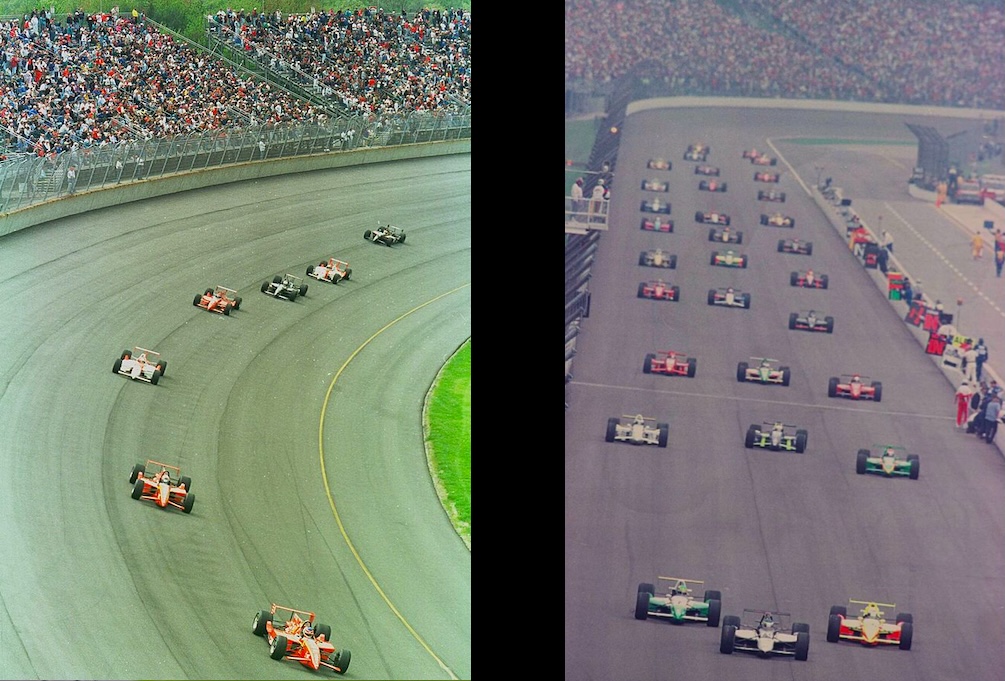
Technically the most sophisticated era of American open-wheel racing, with carbon fiber chassis, sophisticated aero, big manufacturer engine programs (Honda, Toyota, Mercedes), and speeds so high (Arie Luyendyk's 236 mph qualifying lap in 1996) that officials began looking at ways to slow the cars for safety. This peak was cut short by the 1996 IRL/CART split, fracturing the sport into two competing series just as it was at its technical and popularity height.
2000s: Spec-ification begins
Both post-split series moved toward more standardized equipment to control costs. The IRL mandated a spec Dallara or Panoz chassis and a normally aspirated V8 (first Oldsmobile/Aurora-badged, then Chevy/Honda/Toyota) – a deliberate step back from the CART engineering arms race, reflecting Indianapolis Motor Speedway boss Tony George's original vision of controlling costs and keeping racing closer.
2008–2011: Reunification and the “IndyCar” era begins
Champ Car and the IRL merged in 2008, racing on the IRL's Dallara IR-05 chassis with a spec Honda engine. This era was the most homogenized the sport had ever been, largely for cost reasons after years of financial damage from the split.
2012–present: The modern spec era
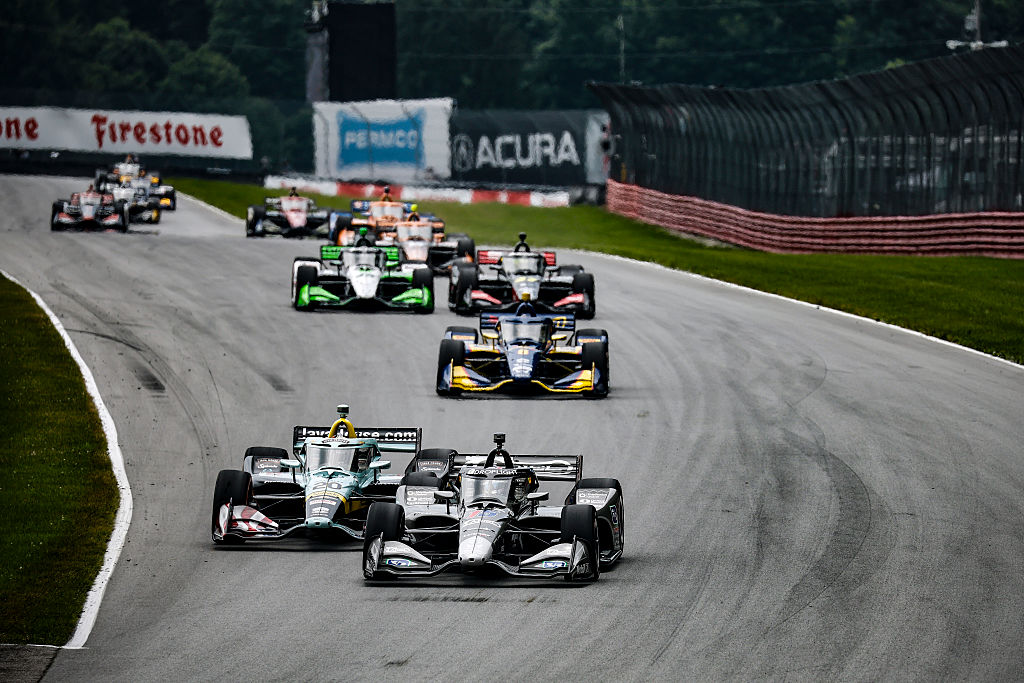
The Dallara DW12 (now IR-18 after 2018 aero updates) chassis was introduced in 2012, bringing back two competing engine manufacturers (Chevy and Honda) within a spec chassis. There was initially a third – Lotus – but its trouble-plagued program shut down just a few races into its debut season. This is essentially the philosophy that still governs IndyCar today: one chassis supplier and two engine manufacturers, aiming to keep costs down and competition close by making the car itself less of a competitive lever. Key updates since include the aeroscreen (2020) for cockpit protection and hybrid power units (2024), adding electrification for the first time.
2028 and beyond
A new chassis (IR-28) and larger 2.4-liter hybrid V6 engines are set to arrive, continuing the same fundamental philosophy - spec chassis, dual engine suppliers and incremental hybridization, but further optimized from the current version.
Latest News
Comments
Comments are disabled until you accept Social Networking Cookies. Update cookie preferences
If the dialog doesn't appear, ad-blockers are often the cause; try disabling yours or see our Social Features Support.