The RACER Mailbag, November 18
Welcome to the RACER Mailbag. Questions for any of RACER’s writers can be sent to mailbag@racer.com. We love hearing your comments and opinions, but letters that include a question are more likely to be published. Questions received after 12pm ET each Monday will be saved for the following week.
NOTE: Among the casualties from the recent Microsoft outage were some of the emails sent to our Outlook-based email system. If you sent a letter for this week's Mailbag and it didn't run, feel free to re-send it for inclusion in next week's edition.
Q: The reason F2 and Indy NXT have become testing grounds for FE, WEC, and IMSA is the same. Advanced car technology and simulators have extended the competitive careers of seasoned top drivers, which has reduced opportunities for rookies and led teams to view signing rookie drivers as a risk.
To be honest, as long as it remains a fair and impartial sport, I feel it’s only right that opportunities for rookies are extremely limited. If the truly talented drivers – those with the ability to compete in the top series for over a decade – are properly earning their places, what’s the problem if other drivers quickly move on to other series?
I don’t believe feeder series need any mechanism beyond scholarships, which provide champions with strong enough support to compete full-time in the top series for a year.
Hayashi, Japan
MARSHALL PRUETT: I'm struggling to agree with a lot of what's presented here.
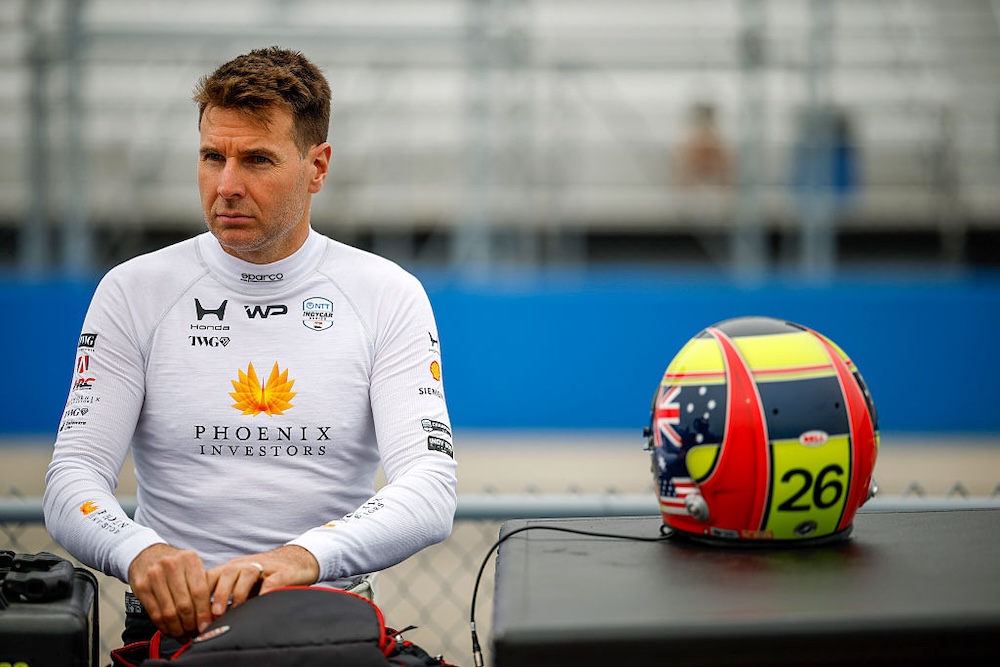
Scott Dixon and Will Power and the other IndyCar elders aren't racing into their 40s because of advanced car technology and simulators. Not much has advanced with technology on the model they drive today, unless you believe adding a hybrid has somehow extended their range? They're racing into their 40s just like so many of their predecessors did in the 1980s and 1990s and 2000s based on enduring talent and hunger to compete.
Improvements in safety have definitely helped, as today's elders have not missed considerable periods of time due to broken bones in the same way the Andrettis and Foyts and others did in their eras. The biggest career-extender for today's senior drivers is health and fitness. Power looks thinner and stronger than he was 15 years ago; same for Dixon. We're seeing this across all sports, where the elite have added years to their careers through high-level training and dietary changes.
Age is just a number. Mike Levitt/Getty Images
On not seeing anything wrong with limited opportunities for rookie, why would racing be treated in a different manner than any other sport where real talent is provided with real opportunities? Indy NXT has a capped grid of 24 cars. As noted in the response last week, it's looking like two of those 24 from 2026 will make their way into IndyCar in 2027. That's an 8.3 percent graduation rate.
It was the same last season, when two of 24 from 2025 made it into the series in Dennis Hauger and Caio Collet. I realize F2 is no better in that regard, but I don't cover F2; my focus is IndyCar and NXT where the other number – the 91.7 percent chance your son or daughter won't make it into IndyCar after spending upwards of $1.7m – is the scarier one to acknowledge in a tough financial climate.
Unless I was ridiculously wealthy and truly believed my kid was the next Palou/Kirkwood/Pato, I'd say there's no way on earth I'd burn a million-plus dollars on a 92 percent chance of failure. It's a terrible investment at those odds. Most of the parents funding their kid's NXT program aren't insanely wealthy, which makes forking out $1.5m or more a major commitment.
To know, while going in, that the odds are so stacked against you is the kind of thing that will make fields of 24 turn into fields of 20, and then 16, and so on. The problem with spending a lot of money in NXT to become part of the 92 percent is it's a waste of time and money. If your kid has a better chance of making it in IMSA, NASCAR, SRO, etc., go train in the discipline where they're headed.
This is where the concept of an IndyCar B Series/Sprint Series to give emerging drivers and castoffs a chance to learn and show their talent continues to strike me as a worthy exercise. There's two key issues to address. The first is the state of preparedness for a top-tier NXT driver. With the bare minimum of ovals on the next NXT schedule (just two), the series is placing the onus on IndyCar teams to continue and complete a huge part of that education. Approximately one-third of the IndyCar schedule is ovals every year, so this is a terrible look for NXT to treat oval training as an afterthought. Every IndyCar owner knows a proper NXT talent can handle road and street courses. The differentiator is whether they have oval talent, and if a kid doesn't stand out on those two occasions, an IndyCar team is likely to have concerns.
And those aren't concerns about whether the kid has the potential to become an excellent oval driver, but about how much of a project they'll need to take on with the kid and how many seasons they'll need to burn while waiting for that driver to learn everything they never got in NXT. Then there's the other aspect, which is the time needed for even the best NXT talents to reach almost all of their potential in IndyCar. In all but the rarest instances, it's at least two to three years, which makes sticking with a proven veteran—even the ones who've never won, or rarely win—an easier decision to make that heavily contributes to the tiny NXT graduation rate.
There's the other factor where funded drivers are taken primarily due to the money they bring, which is one more fact of why a kid like Enzo Fittipaldi, after placing second in the NXT standings, is gone and relegated to Formula E. He even had some of a budget to bring, but couldn't find a home.
It's time to take an honest look at NXT's shortcomings and see what can be changed to improve the graduation rate. Is it more mileage? Is it more oval training? An IndyCar team will absolutely sign a young driver if they believe that kid is something special. That hasn't changed. But what has changed is the state of readiness to perform at a high level as a rookie, which was once possible when more testing was allowed in NXT (in its previous iterations) and in IndyCar. Restoring that ability for next-gen drivers is where the conversation starts to change and more young talent gets welcomed into the big series. Until that happens, the graduation rates are going to be a problem.
Presented by:

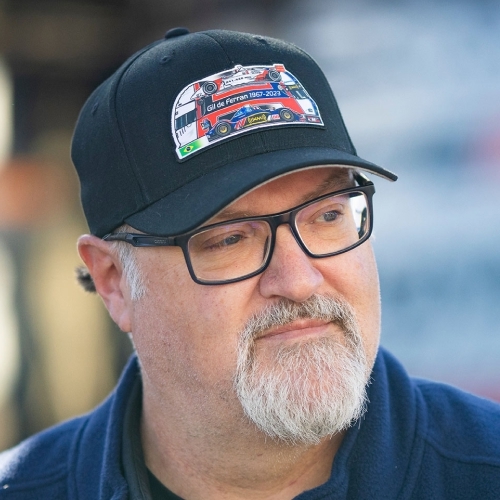
Marshall Pruett
The 2026 season marks Marshall Pruett's 40th year working in the sport. In his role today for RACER, Pruett covers open-wheel and sports car racing as a writer, reporter, photographer, and filmmaker. In his previous career, he served as a mechanic, engineer, and team manager in a variety of series, including IndyCar, IMSA, and World Challenge.
Read Marshall Pruett's articles
How the Blue Oval tamed the Green Hell
Latest News
Comments
Comments are disabled until you accept Social Networking Cookies. Update cookie preferences
If the dialog doesn't appear, ad-blockers are often the cause; try disabling yours or see our Social Features Support.